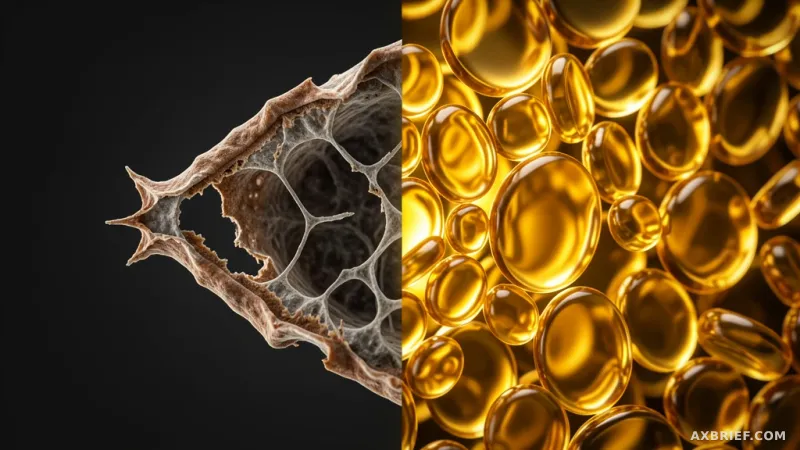
Every morning, as you reach for your coffee, your body relies on hundreds of thousands of mitochondria to convert nutrients into the energy required to start your day. These organelles, which likely began as independent bacteria billions of years ago, serve as the essential power plants of our cells. Yet, as we age, these power plants inevitably degrade. Their energy efficiency plummets, and they begin to leak reactive oxygen species, turning from vital energy sources into sources of cellular inflammation. For years, researchers have sought to understand why these biological engines fail and whether that decline can be reversed.
The Link Between Mitochondrial Aging and Phosphatidylcholine
A research team recently published findings in arXiv that identify a specific metabolic culprit behind this decline. By analyzing data from *C. elegans*—a transparent nematode frequently used in genetic research—and human tissue samples, the team discovered that the ability to synthesize phosphatidylcholine (PC), a critical phospholipid that forms the backbone of cell membranes, diminishes significantly with age. The researchers observed that the expression of SAMS-1, an enzyme responsible for creating the methyl donor SAM, alongside PMT-1 and PMT-2, which facilitate the methylation process to synthesize PC, drops sharply in aging organisms. In humans, the expression of the PEMT gene, which encodes phosphatidylethanolamine N-methyltransferase, similarly declines across various tissues as we grow older, directly correlating with the loss of mitochondrial function.
Rethinking the Mechanism of Cellular Decay
Historically, the scientific community viewed mitochondrial aging primarily through the lens of oxidative phosphorylation or broad shifts in gene expression. This study shifts the paradigm by demonstrating that a deficiency in phosphatidylcholine acts as a structural trigger for mitochondrial collapse. Rather than the power plant itself failing due to internal wear, the outer wall—the membrane—lacks the necessary materials to maintain its integrity, causing the entire structure to destabilize. When the research team used genetic manipulation to inhibit PC synthesis in young subjects, they observed mitochondrial fragmentation and respiratory decline identical to those seen in aged subjects. This confirms that aging is not merely an abstract passage of time, but a cumulative process of specific molecular depletion.
By identifying this specific metabolic pathway, the study suggests that supplementing choline, the precursor to phosphatidylcholine, could serve as a viable intervention to mitigate age-related mitochondrial dysfunction. This research transforms the concept of cellular health from a vague goal into a precise, actionable target for maintaining structural integrity at the microscopic level.