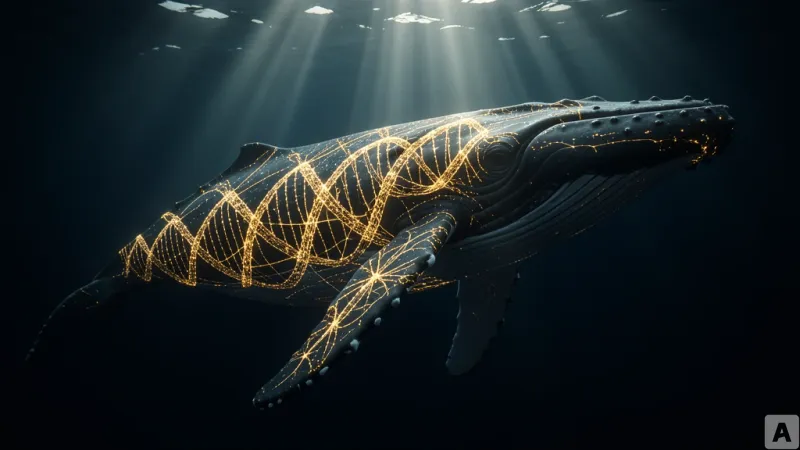
Every morning, trillions of cells in your body undergo division, a high-stakes replication process where even a minor transcription error can lead to oncogenic mutations. Logic dictates that larger, longer-lived organisms should be walking cancer magnets, as their cells divide more frequently and have more opportunities to fail. Yet, nature frequently defies this mathematical expectation, a phenomenon known as Peto's paradox. As researchers and computational biologists increasingly treat the genome as a complex, error-prone software system, the focus has shifted toward the bowhead whale—a creature that routinely survives for over two centuries without succumbing to the cellular corruption that claims shorter-lived mammals.
The Genetic Architecture of Longevity
For years, the scientific community looked to the elephant as the gold standard for cancer resistance. Elephants possess multiple copies of the TP53 gene, which acts as a biological watchdog, detecting cellular damage and triggering apoptosis to prevent the propagation of errors. However, recent genomic sequencing of the bowhead whale reveals a surprising departure from this strategy. Despite their immense size and longevity, bowhead whales do not share the TP53 duplication seen in elephants. According to research published in Molecular Oncology, the whale’s resistance to cancer is not a result of gene redundancy, but rather an exceptionally robust system for maintaining genomic integrity. While the elephant relies on a 'kill switch' to eliminate damaged cells, the whale appears to prioritize the prevention of damage in the first place.
DNA Repair Efficiency as a Biological Algorithm
If the number of tumor-suppressor genes is not the primary variable, the difference must lie in the efficiency of the underlying repair mechanisms. When comparing the cellular performance of a bowhead whale to that of a mouse, the distinction is stark: the whale’s cellular machinery identifies and corrects mutations with a speed and precision that far outstrips smaller mammals. This is less about having more hardware and more about having a more sophisticated error-correction algorithm. In the same way that a software engineer optimizes a codebase to reduce technical debt and runtime errors, the bowhead whale has evolved a biological framework that prioritizes the high-fidelity preservation of its genetic information. The system is not just detecting errors; it is preventing them from ever being written into the permanent record of the cell.
This shift in understanding represents a fundamental change in how we approach longevity and oncology. The research community is moving away from the blunt instrument of gene editing and toward the more nuanced goal of enhancing genomic maintenance systems. While replicating these natural repair mechanisms in humans remains in its infancy, the potential for developing therapies that mirror the whale’s internal stability is significant. By treating the genome as a system that requires constant, high-quality maintenance rather than just damage control, we may finally unlock the biological framework necessary for healthy human aging.
True cancer resistance is not found in the quantity of genetic material, but in the uncompromising integrity of the information being preserved.