For millions of patients living with chronic knee pain, there is a frustrating clinical void. These individuals find themselves trapped in a middle ground where their symptoms are too severe for conservative physical therapy to provide relief, yet not debilitating enough to justify the risks and recovery of a total knee replacement. For years, the standard medical response to this gap has been a strategy of managed decline, where patients are told to endure the discomfort or wait until the joint degrades sufficiently to qualify for major surgery. This period of waiting often results in a steady erosion of quality of life, as patients gradually abandon the exercise and mobility that keep them healthy.
The 5-Year Evidence for AGILI-C
Recent longitudinal data released by medical technology firm Smith+Nephew suggests this gap is finally closing. The company has published five-year follow-up results for CARTIHEAL AGILI-C, a regenerative cartilage implant designed to support the growth of new tissue in damaged joints. The study, published in the American Journal of Sports Medicine, tracks patient outcomes across multiple metrics including pain levels, mobility, and the restoration of daily function. The findings indicate that AGILI-C consistently outperformed standard surgical treatments at every measured time interval over the five-year period.
The most striking metric is the impact on patient discomfort. Patients treated with AGILI-C recorded a reduction in pain scores that was twice as high as those who received the current standard of care. Crucially, this benefit was not limited to a specific subset of patients. The data shows that the implant remained effective regardless of whether the patient had underlying osteoarthritis, suggesting that AGILI-C provides a viable surgical alternative for mild to moderate osteoarthritis cases that were previously underserved by existing surgical protocols.
From Subtraction to Regeneration
To understand why these results differ from previous treatments, one must look at the fundamental shift in surgical philosophy. For decades, the primary approach to cartilage damage was subtractive. Surgeons typically employed techniques that involved scraping away damaged tissue or drilling holes into the bone to stimulate a limited bleeding response, hoping to trigger a rudimentary repair. These methods focused on removing the problem rather than restoring the anatomy.
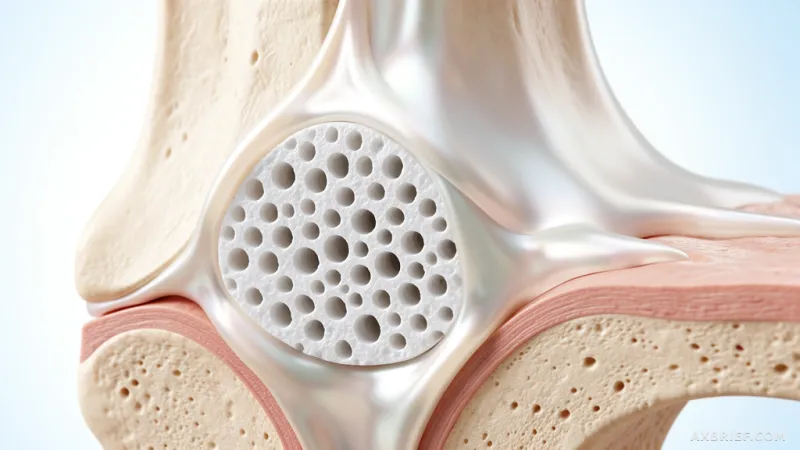
AGILI-C represents a pivot toward regenerative medicine. The implant utilizes aragonite, a natural mineral component, to create a structural scaffold. When inserted into the site of the cartilage lesion, this scaffold does not simply act as a filler or a patch. Instead, it serves as a temporary biological framework that encourages the body to grow its own new cartilage and bone. The implant provides the necessary environment for cellular regeneration, eventually integrating with the body's own tissues. This shift from a removal-based approach to a growth-based approach is reflected in the long-term stability of the results. Over the five-year observation window, the failure rate remained low, and patients maintained their functional improvements without the typical degradation seen in traditional repair methods.
Beyond the biological mechanism, the real-world application of this technology is expanding. While many previous clinical trials in this space excluded patients with osteoarthritis to ensure cleaner data, AGILI-C has secured FDA approval for a broader range of indications. This allows clinicians to treat a much wider demographic of patients who are currently suffering in the aforementioned treatment gap.
The transition from a clinical success to a standard of care often hinges on reimbursement. In a significant move for the adoption of this technology, a Category I CPT code for the AGILI-C procedure is scheduled for implementation in January 2027. By integrating into the American medical billing and service classification system, the procedure becomes eligible for insurance coverage, removing the financial barriers that often prevent patients from accessing advanced regenerative therapies. This systemic change allows Smith+Nephew to position AGILI-C not just as a niche product, but as a strategic tool to delay or entirely replace the need for invasive total joint replacements.
This evolution in joint care suggests that the goal of orthopedic surgery is shifting from the replacement of failed parts to the preservation of original function. By extending the period during which a patient can maintain natural mobility, regenerative scaffolds like AGILI-C contribute to a broader strategy of healthy longevity, ensuring that the aging process does not inevitably lead to a loss of independence.