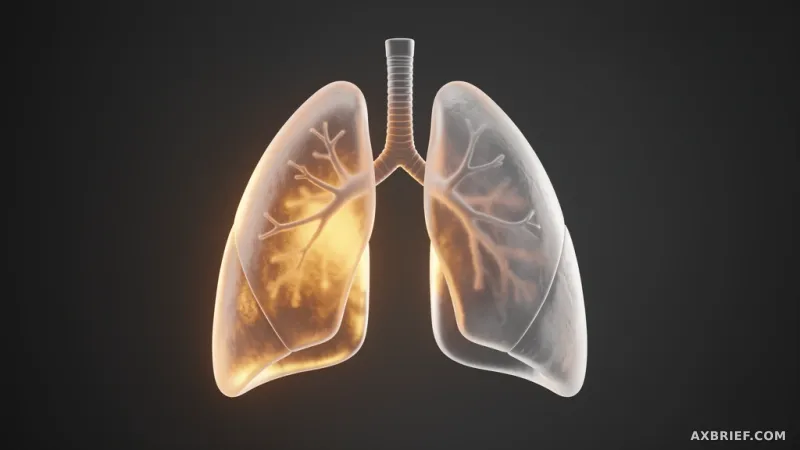
For thousands of patients living with idiopathic pulmonary fibrosis, every morning begins with a precarious calculation of breath. The disease, characterized by the progressive scarring of lung tissue for unknown reasons, transforms the simple act of inhalation into a grueling struggle. With an average survival rate of only three to five years following diagnosis, the medical community has long searched for a way to do more than just manage the decline. In the United States and Europe alone, approximately 233,000 people are currently fighting this condition, trapped in a therapeutic landscape where the only available options act as brakes on a falling object rather than a way to stop the fall entirely. This week, a new candidate emerged from the clinical pipeline, having cleared a critical administrative and recruitment hurdle faster than anticipated.
The Architecture of the AURORA Study
Calluna Pharma has officially announced the completion of patient enrollment for the AURORA study, a global Phase 2 clinical trial evaluating CAL101. The scale of the recruitment effort is significant, involving 161 adult patients across more than 50 clinical institutions spanning the United States, the United Kingdom, the European Union, Turkey, and South Korea. The trial is structured as a double-blind, randomized, placebo-controlled study, a gold standard designed to eliminate bias and ensure that any observed efficacy is attributable solely to the drug. Patients have been assigned to groups in a 3:2 ratio, with the majority receiving CAL101 and the remainder receiving a placebo.
The protocol begins with a 28-day screening period to ensure patient eligibility and baseline health metrics. Following this, participants receive monthly intravenous infusions of either CAL101 or the placebo over a six-month duration. The primary metric for success in this trial is the change in Forced Vital Capacity (FVC), which measures the maximum amount of air a person can exhale after a deep breath. FVC is the critical benchmark for lung function in IPF trials because it directly correlates with the patient's ability to breathe and their overall quality of life. By completing enrollment more than six months ahead of the original schedule, Calluna Pharma has accelerated its timeline, with the company now projecting the release of topline data in the first quarter of 2027.
Shifting the Paradigm from Slowing Decline to Targeted Intervention
To understand why the AURORA study matters, one must look at the limitations of the current standard of care. The existing approved therapies, such as Pirfenidone and Nintedanib, function by broadly inhibiting inflammation or the fibrosis process. While these drugs are valuable because they slow the rate at which lung function deteriorates, they do not address the underlying biological drivers of the disease. They are essentially palliative in their trajectory, delaying the inevitable rather than reversing or halting the scarring process. CAL101 represents a fundamental shift in strategy by moving away from broad inhibition and toward precision targeting.
CAL101 is a monoclonal antibody designed to specifically target the S100A4 protein. In the context of lung injury, S100A4 is overexpressed, acting as a catalyst that promotes the proliferation of myofibroblasts and the subsequent deposition of collagen that scars the lungs. By neutralizing S100A4, CAL101 aims to block the core mechanism of fibrosis at its source. The company's Phase 1 data already indicated a favorable safety profile and predictable pharmacokinetics, meaning the drug moves through the body and is metabolized in a consistent, manageable way. Furthermore, preclinical research has demonstrated that the drug can both prevent and treat fibrosis in laboratory models. This positions CAL101 not as another incremental improvement, but as a potential first-in-class therapy that targets a previously unaddressed pathway in the IPF disease state.
Beyond the immediate implications for lung health, the success of a S100A4-targeting antibody opens a broader door for the treatment of systemic fibrosis. Because the mechanisms of scarring are often similar across different organs, a successful result in the AURORA study could provide a blueprint for treating renal fibrosis in the kidneys or hepatic fibrosis in the liver. The rapid enrollment of 161 patients suggests a high level of urgency and unmet need within the patient community, signaling that the market is primed for a therapy that offers more than just a slower decline.
If a single monoclonal antibody can prove that it preserves lung function by silencing a specific protein, it will do more than just provide a new treatment option; it will rewrite the design of the entire antifibrotic drug pipeline.