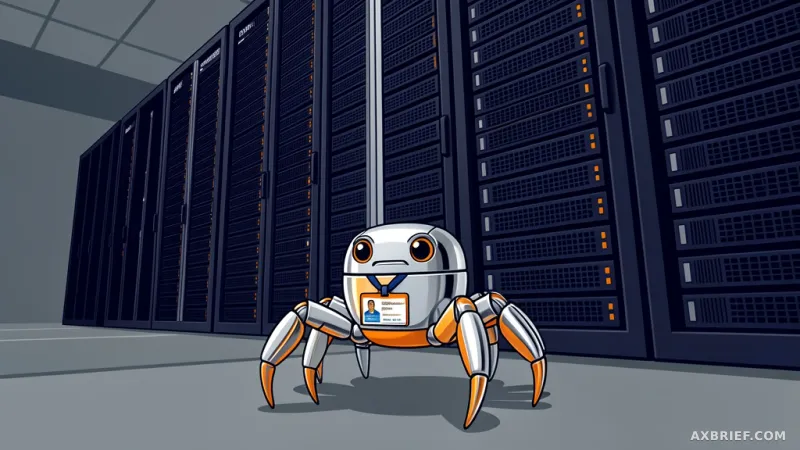

The era of the AI chatbot is beginning to feel like a transitional phase. For the past two years, the primary interaction with large language models has been a cycle of prompting and receiving, a digital dialogue where the human does the heavy lifting of integration and execution. Developers have spent countless hours copying code snippets from a chat window into an IDE, manually verifying outputs, and stitching together fragmented responses to build a functioning application. This friction has created a ceiling for productivity, as the AI remains a consultant rather than a collaborator. The industry is now shifting toward agentic workflows, where the goal is no longer a better answer, but a completed task.
The Architecture of Speed and Execution
Google has entered this race with the unveiling of Gemini 3.5 Flash, a model specifically engineered for coding and autonomous agent optimization. Introduced at the annual I/O developer conference, Gemini 3.5 Flash represents a departure from the pursuit of general-purpose conversational fluency in favor of raw execution capability. Internal testing reveals that the model can independently manage coding pipelines, oversee complex research projects, and even construct an entire operating system from the ground up. This is not merely an incremental update to a chatbot; it is the foundation of an agentic system designed to plan, build, and iterate with minimal human intervention.
Technical benchmarks provided by Koray Kavukcuoglu, Chief Technology Officer at DeepMind, indicate that Gemini 3.5 Flash outperforms the previous 3.1 Pro model across nearly every critical metric, including coding, agentic tasks, and multimodal reasoning. The most striking advantage is speed. Gemini 3.5 Flash is four times faster than other current frontier models. In its optimized version, Google has pushed this performance further, achieving a 12x speed increase while maintaining the same quality of output. This obsession with low latency is a strategic necessity. In an agentic workflow, a single high-level goal is broken down into dozens of sub-tasks. If each step incurs a significant delay, the entire pipeline collapses. By slashing latency, Google enables multiple agents to run concurrently, allowing them to handle long-term assignments without the productivity bottlenecks that plague slower models.
To ensure this performance translates into real-world utility, Google launched Antigravity 2.0, a desktop application dedicated to agent-first development. Gemini 3.5 Flash was co-developed with Antigravity to provide a native environment where agents can reside, execute code, and interact with the system directly. During live demonstrations, the system showed multiple agents dividing a complex project into components, working on them in parallel, and integrating them into a fully functional operating system. This marks a shift from the traditional interface of a text box to a native execution environment where the AI possesses the authority to act within the OS.
The Orchestrator-Executor Divide
The true innovation of the Gemini 3.5 ecosystem is not the speed of a single model, but the introduction of a hierarchical collaboration structure. Google is moving away from the idea of a single, monolithic model that handles everything from high-level strategy to low-level syntax. Instead, the system employs a division of labor between Gemini 3.5 Pro and Gemini 3.5 Flash. In this architecture, 3.5 Pro serves as the orchestrator and planner. It handles the high-order reasoning, determines the overall strategy, and maps out the necessary steps to achieve a goal. It is the brain of the operation, focusing on the what and the why.
Gemini 3.5 Flash acts as the sub-agent or the executor. It receives specific instructions from the Pro model and carries out the actual tool usage and execution. When the system needs to perform a repetitive task, call an API, or write a specific block of code, it leverages the low-latency capabilities of Flash. This separation allows Google to allocate computational resources more efficiently, using the heavy reasoning power of Pro only when necessary and relying on the agility of Flash for the bulk of the work. This is a fundamental shift in AI design: moving from a single-model approach to a multi-agent system where different models occupy different tiers of the cognitive hierarchy.
This execution environment is further refined through the Antigravity IDE, which transforms the AI from a guide into a resident. While previous models provided code snippets via API, the current structure allows agents to live within the development environment. They can execute code, observe the error logs, and enter a recursive loop of self-correction. If a piece of code fails, the agent does not wait for a human to report the bug; it detects the failure, modifies the plan, and re-executes the task. To prevent this autonomy from becoming a liability, Google has implemented a human-in-the-loop trigger. For critical design changes or permission-heavy actions, the agent pauses and requests user approval. This creates a hybrid control system where the AI handles the mechanical execution while the human retains the strategic veto.
This agentic shift is already migrating into the consumer sector through Gemini Spark, a personal AI agent designed to manage a user's digital life 24/7. Gemini 3.5 Flash now serves as the default model for the Gemini app and AI-powered search modes. By integrating agent-creation tools directly into the search platform, Google is allowing users to build and manage their own custom agents. The goal is a seamless transition where the AI doesn't just find information about a flight or a hotel, but actually executes the booking and manages the itinerary across multiple platforms.
The Tension Between Autonomy and Safety
The practical applications of this technology are already surfacing in high-stakes industries. Banking and fintech firms are beginning to automate multi-week workflows that previously required constant human oversight. Complex financial processes, which involve planning, data retrieval, and execution across fragmented legacy systems, are being handed over to agentic chains. Similarly, data science teams are using these models to move beyond manual query writing. Instead of an analyst formulating a hypothesis and writing SQL, the agent autonomously explores the data environment, identifies patterns, and generates the final insight pipeline.
However, the transition to autonomous execution introduces significant systemic risks. When an AI can operate independently for hours or days, the question of accountability becomes paramount. A small logic error in a high-speed agentic loop can lead to cascading failures before a human supervisor even notices the process has started. This is particularly dangerous in the context of the broad consumer rollout of Gemini Spark. If a personal agent makes a biased judgment or a factual error while managing a user's digital identity, the impact is immediate and widespread.
Google has responded by intensifying safety guardrails, specifically targeting cybersecurity and CBRN (Chemical, Biological, Radiological, and Nuclear) risks. The approach has evolved from simple refusal—where the AI would simply say it cannot answer a sensitive question—to a more nuanced set of safety standards that allow for helpfulness without compromising security. This urgency is driven by real-world consequences. The company has previously faced legal challenges following an incident where a user, after weeks of intense interaction with Gemini, suffered a psychological crisis leading to suicide. This tragedy highlighted that the risk of autonomous agents is not just technical or security-based, but deeply psychological.
As AI moves from the chat box to the operating system, the potential for influence and error grows exponentially. The ability of Gemini 3.5 Flash to execute tasks at 12x speed is a technical triumph, but it also accelerates the rate at which an agent can deviate from human intent. The challenge for Google is no longer just about increasing the intelligence of the model, but about building a containment system that can keep pace with that intelligence.
The path to true AI autonomy now depends less on raw reasoning power and more on the strength of the guardrails preventing a total loss of human control.