
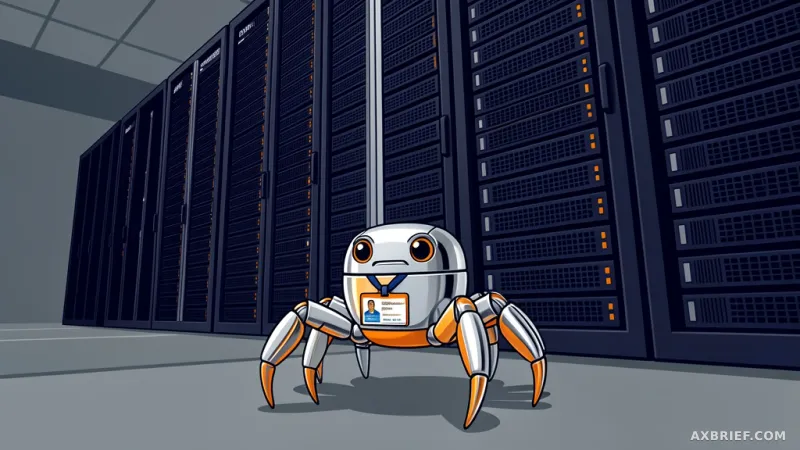
Chief Technology Officers are currently facing a paradox of productivity. The promise of autonomous AI agents—tools that can manage calendars, draft contracts, and execute API calls—is tantalizing, yet the security risks are paralyzing. Most enterprises are hesitant to grant an LLM write-access to their corporate email or cloud infrastructure because the current safety layer relies almost entirely on prompt engineering. This approach is essentially a polite request for the AI to behave, a fragile defense that collapses under the weight of a sophisticated prompt injection attack. The industry is searching for a way to move beyond the chatbot and toward a reliable digital employee, but the missing link has always been a verifiable security architecture that does not sacrifice the agent's utility.
The Strategic Rise of NanoCo AI
NanoCo AI is positioning itself as the infrastructure layer for this transition, focusing on the creation of a secure second brain for the enterprise. The company recently closed an oversubscribed seed round of $12 million led by Valley Capital Partners. The cap table reads like a directory of modern infrastructure giants, featuring strategic investments from Docker, Vercel, monday.com, and Factorial Capital. Notably, Clem Delangue, the CEO of Hugging Face, joined as a strategic investor, signaling that the project has significant backing from the core of the AI and DevOps ecosystems. Founded by brothers Gavriel Cohen, a former Wix.com engineer, and Lazer Cohen, founder of Concrete Media, the team is leveraging a deep understanding of cloud infrastructure to solve the trust problem in AI agents.
The market response to their primary tool, NanoClaw, has been immediate and aggressive. Since its release, the framework has surpassed 250,000 downloads and amassed approximately 29,000 stars on GitHub. This growth is not merely a result of developer curiosity but reflects a bottom-up adoption pattern. Many corporate executives have begun using NanoClaw personally to multiply their own efficiency by two or three times, subsequently pushing for team-wide integration. This organic spread suggests that the utility of a personalized AI agent is high enough to override initial corporate hesitation, provided the security concerns are addressed.
To ensure NanoClaw becomes the industry standard for enterprise agents, NanoCo AI has adopted a dual-track commercial strategy centered on the MIT License. By keeping the core framework open source, they allow any organization to modify and deploy the code without restrictive licensing hurdles. However, recognizing that not every company possesses the internal engineering talent to optimize and maintain a custom AI infrastructure, NanoCo AI offers a managed services model. This allows enterprises to outsource the operational burden—including system health monitoring, integration, and continuous security patching—while retaining the flexibility of an open-source foundation.
From 400,000 Lines to 500: The Auditability Twist
Most enterprise software follows a trajectory of increasing complexity, but NanoCo AI took a radical reversal. While its predecessor, OpenClaw, consisted of roughly 400,000 lines of code, NanoClaw compresses its core logic into approximately 500 lines of TypeScript. This is not a exercise in minimalism for the sake of aesthetics; it is a calculated security strategy. In the world of cybersecurity, complexity is the enemy. A codebase of 400,000 lines is a haystack where vulnerabilities can hide for years. A codebase of 500 lines, however, can be audited by a human security team in about eight minutes. By physically removing the surface area for bugs and backdoors, NanoCo AI has replaced the uncertainty of prompt-based control with the certainty of code-level verification.
This philosophy extends into the infrastructure layer through a partnership with Docker. NanoClaw does not run agents in a shared environment; instead, it deploys them within Docker Sandboxes powered by MicroVMs. This architecture creates a hard boundary around the agent. If a prompt injection attack successfully tricks the AI into attempting a malicious action, the impact is strictly confined to that specific container and its designated communication channels. The attack cannot leap from the agent to the host system or migrate to other agents. This is a shift from software-level defense to infrastructure-level isolation, effectively implementing a zero-trust environment where the agent is treated as a potentially compromised entity from the start.
To manage the actual execution of sensitive tasks, NanoCo AI implemented the OneCLI Rust Gateway. This gateway acts as a secure intermediary, ensuring that the AI agent never has direct access to API credentials. When an agent needs to perform a high-risk write operation—such as deleting an email or changing a cloud configuration—the Rust Gateway intercepts the request. Instead of executing the command automatically, the system triggers an interactive approval card sent via Slack, Microsoft Teams, or WhatsApp. The operation remains paused until a human user explicitly clicks the approve button. Only at that moment does the gateway inject the necessary credentials to complete the task. By using Rust for the gateway, NanoCo AI further minimizes the risk of memory-related vulnerabilities, ensuring the communication bridge is as secure as the sandbox it protects.
This combination of a minimal codebase, MicroVM isolation, and a human-in-the-loop gateway transforms the AI agent from a risky black box into a supervised junior employee. The agent can do the heavy lifting of drafting and organizing, but the human remains the sole holder of the execution key.
The practical application of this second brain concept is already visible at the highest levels of government. Dr. Vivian Balakrishnan, Singapore's Minister for Foreign Affairs, has integrated NanoClaw into his workflow, utilizing it to synthesize emails, documents, and call records into a dynamic knowledge base. This mirrors the LLM Knowledge Base concept proposed by AI researcher Andrej Karpathy, where the AI does not just retrieve information but builds a structured, evolving map of the user's professional context. Because the agent learns the specific nuances of a user's role and style, it can move beyond generic responses to produce high-fidelity drafts for contracts, code reviews, and account management that are tailored to the individual's exact requirements.
During a live demonstration with 300 concurrent users, the Zero Trust Gateway proved its efficacy by instantly blocking malicious attempts to access private emails and delete calendar events. Simultaneously, it allowed legitimate requests, such as scheduling a coffee chat, to proceed seamlessly. This balance of security and convenience demonstrates that the bottleneck for AI adoption is not the intelligence of the model, but the reliability of the control mechanism. When the risk of unauthorized action is eliminated at the infrastructure level, the AI can finally be trusted with the keys to the enterprise.
Ultimately, the success of NanoClaw suggests that the next era of AI will not be defined by larger models, but by tighter constraints. For an AI agent to move from a laboratory experiment to a core component of a corporate codebase, it must be verifiable, isolatable, and subservient to human approval. By shrinking the code and hardening the infrastructure, NanoCo AI has provided the blueprint for how autonomous agents can actually enter the workforce.