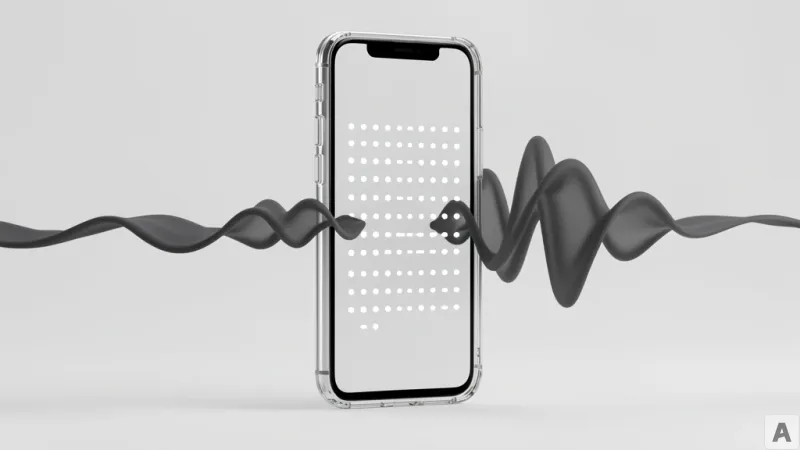
The modern smartphone experience is defined by a persistent bottleneck: the keyboard. While mobile interfaces have evolved toward gesture-based navigation and high-refresh displays, the primary method of input remains a digital grid of letters that requires precision and patience. On average, a human types roughly 36 words per minute on a mobile device, yet the human voice can convey information nearly four times faster. This gap between thought and input has created a fertile ground for AI-driven dictation, but until now, these tools have largely existed as fragmented layers sitting on top of the operating system.
The Architecture of Essential Voice: Beyond Simple Dictation
On April 10, Nothing announced the launch of Essential Voice, an AI-powered dictation tool designed specifically for its ecosystem of devices. Unlike traditional voice-to-text features that simply transcribe audio phonetically, Essential Voice utilizes AI to refine the output in real time. The tool focuses on the removal of filler words, such as ums and ahs, ensuring that the resulting text is clean and professional without requiring manual editing. This positions it alongside a new wave of high-fidelity transcription tools like Wispr Flow, SuperWhisper, Willow, and Monologue, which aim to bridge the gap between spoken conversation and written documentation.
Beyond simple transcription, Nothing has introduced a system of voice shortcuts that allow users to map specific spoken phrases to complex data strings. Users can assign voice commands to trigger the insertion of links, templates, or frequently used phrases. For instance, a user can configure the phrase my address to automatically populate their full physical address into any text field. This functionality transforms the dictation tool from a passive transcriber into a productivity macro system. The rollout is phased by hardware: the feature is currently available on the Nothing Phone (3), with support for the Phone (4a) Pro arriving by the end of this month and the standard Phone (4a) following next month.
From Third-Party Apps to System-Level Integration
To understand the significance of Essential Voice, one must look at the friction inherent in current AI dictation workflows. Most existing solutions require the user to either open a dedicated application or switch their active keyboard to a third-party AI variant. This context-switching creates a cognitive load that often outweighs the speed benefit of speaking over typing. Nothing has attempted to solve this by embedding Essential Voice directly into the system architecture. Users can activate the tool via a dedicated Essential key on the device or through a direct trigger within the keyboard, eliminating the need to navigate menus or switch apps.
This approach mirrors a recent move by SuperWhisper, which recently enabled iPhone users to map the device Action Button to a dictation keyboard. However, Nothing is pushing the integration further by adding a real-time translation engine that supports over 100 languages. This turns the device into a bidirectional communication tool rather than just a note-taking utility. The company also plans to introduce app-specific tone modulation. In this upcoming update, the AI will analyze the destination app to determine the appropriate register; a message sent via a professional email client will be edited into a formal tone, while a text sent via a messaging app will maintain a casual, conversational style.
The shift from app-level to system-level integration represents a fundamental change in how AI is deployed on mobile hardware. By moving the AI trigger to a physical button and integrating it into the OS core, Nothing is treating AI dictation as a primary input method rather than a secondary feature. This move coincides with Google's recent release of an offline dictation app, suggesting that the industry is moving toward a future where the keyboard is an optional fallback rather than the default interface.
Nothing has established a new baseline for how smartphone manufacturers can integrate AI into the physical and digital fabric of a device. The success of this approach will likely determine how quickly other OEMs move to replace traditional input methods with system-integrated AI.