Elon Musk recently used the Q1 earnings call not as a victory lap for vehicle deliveries, but as a strategic warning to his investors. The atmosphere shifted when Musk announced a massive escalation in capital expenditure, signaling a move that transcends simple factory expansion. By declaring a target of 25 billion dollars in capital expenditure for 2026, Musk is effectively announcing the end of Tesla as a primary automotive company and its rebirth as an AI and robotics powerhouse.
The Blueprint for a 25 Billion Dollar Infrastructure
The financial scale of this pivot is staggering when viewed against Tesla's historical spending patterns. The projected 2026 Capex of 25 billion dollars represents a nearly threefold increase over recent years. For context, Tesla spent 8.9 billion dollars in 2023, 11.3 billion dollars in 2024, and is pacing for 8.5 billion dollars in 2025. Even the aggressive estimate of 20 billion dollars provided in January was deemed insufficient, leading to the current 5 billion dollar upward revision. While Q1 spending has remained stable at approximately 2.5 billion dollars per quarter, the trajectory for the coming years suggests a total departure from previous fiscal norms.
This capital is not destined for more assembly lines for the Model 3 or Model Y. Instead, the funds are earmarked for a comprehensive AI ecosystem. This includes the design of proprietary AI silicon, the construction of massive data centers, and the expansion of computing infrastructure necessary to train the next generation of neural networks. A critical piece of this puzzle is the new semiconductor research fab in Austin, which will serve as the heart of Tesla's chip design efforts. Simultaneously, the company is pouring resources into the operating system that will power its Robotaxi fleet, ensuring the software and hardware are developed in lockstep.
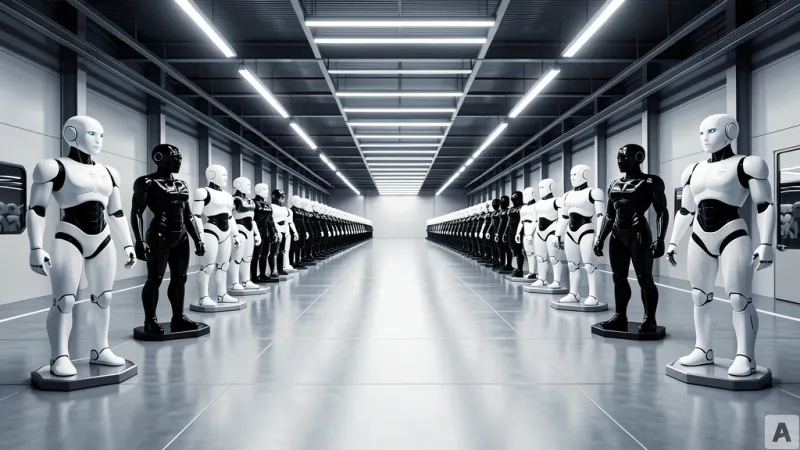
Perhaps the most visceral sign of this shift is the repurposing of physical assets. The Fremont factory in California, long a symbol of Tesla's automotive rise, is slated to stop production of the Model S and Model X. In their place, the facility will be converted into a mass-production hub for Optimus, Tesla's humanoid robot. To complement this, Tesla has already secured land for dedicated Optimus manufacturing facilities near its Austin plant. The roadmap for Optimus is clear: scale internal production for rigorous testing and deployment within Tesla's own walls, then move toward external commercial availability by next year. This entire operation is supported by a reinforced supply chain spanning batteries, energy storage, and specialized AI silicon.
The Gamble of Vertical Integration and Negative Cash Flow
The strategic logic here is a move toward total vertical integration. Tesla is not merely building a robot; it is building the chips that think, the data centers that train those chips, and the factories that assemble the physical bodies. This mirrors a broader trend among the world's wealthiest corporations. Amazon is projected to invest 200 billion dollars into AI, chips, robotics, and low-earth orbit satellites by 2026, while Google is expected to spend between 175 billion and 185 billion dollars in the same timeframe. Tesla is playing the same game, but with a different set of tools.
This ambition comes with significant financial volatility. Tesla currently holds 44.7 billion dollars in cash and cash equivalents, providing a substantial cushion. However, the sheer scale of the 2026 investment means that free cash flow is likely to turn negative starting in the second half of this year. In traditional automotive terms, this would be a red flag. In the context of the AI arms race, it is a calculated risk. The prevailing logic in the AI sector is that the speed of infrastructure deployment directly correlates to future market dominance. Those who wait for a positive cash flow cycle often find themselves locked out of the ecosystem by those who spent aggressively to capture the frontier.
What separates Tesla from the likes of Google or Amazon is the marriage of digital intelligence and physical manufacturing. While Big Tech excels at the cloud and the chip, they lack the legacy of mass-producing complex hardware at scale. Tesla is leveraging its existing automotive footprint to bypass the steepest part of the robotics learning curve. By converting existing car plants into robot factories, Tesla optimizes its infrastructure costs and accelerates its execution speed. The company is essentially using its automotive shell as a Trojan horse to enter the robotics market with a manufacturing capability that no other AI lab possesses.
Tesla's valuation is no longer a function of how many cars it can deliver per quarter. The company has entered an era where its market cap will be decided by the performance of its AI silicon and the adoption rate of its humanoid robots.