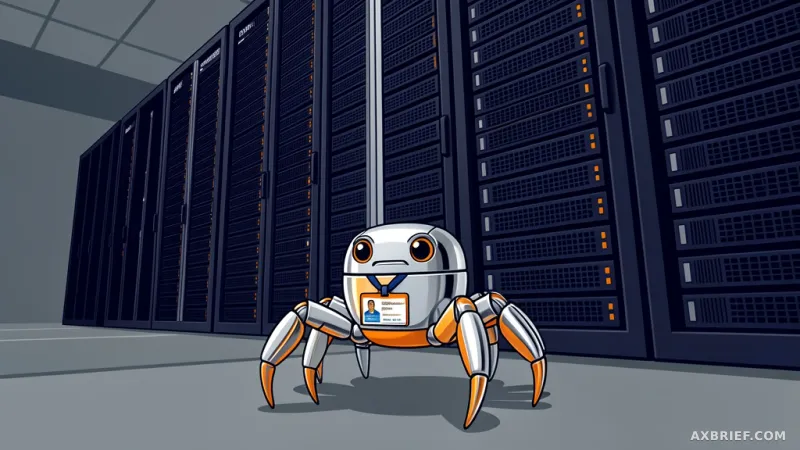

As AI agents move from experimental prototypes to enterprise-grade deployments, the underlying infrastructure is hitting a wall. Rowan Trollope, CEO of Redis, recently noted that companies will soon manage orders of magnitude more agents than human employees. This shift creates a massive bottleneck: traditional retrieval systems, built to handle human-scale traffic, are buckling under the constant, high-frequency data requests generated by autonomous agents. Redis is responding to this structural strain with the launch of Redis Iris, a platform designed to move beyond simple Retrieval-Augmented Generation (RAG) toward a more robust "context architecture."
The Five Pillars of the Redis Iris Context Platform
Redis Iris is built to bridge the gap between agent demand and data accessibility by consolidating five core components into a single, unified memory and context layer. At the foundation is Redis Data Integration (RDI), which is now generally available. RDI utilizes Change Data Capture (CDC) pipelines to synchronize data in real-time from sources including Oracle, Snowflake, Databricks, and Postgres. This ensures that the data agents access is never stale.
To manage how agents interact with this data, the platform introduces Context Retriever (currently in preview). It uses pydantic models to define semantic business data, automatically generating Model Context Protocol (MCP) tools. This allows agents to query data directly at runtime rather than relying on pre-loaded datasets. For state management, Agent Memory (preview) maintains both short-term and long-term context, preventing the inefficiency of re-deriving state during every interaction.
Underpinning these features is Redis Flex, a re-engineered storage engine. By placing 99% of data on SSDs and reserving 1% for RAM, Redis Flex achieves sub-millisecond latency even at petabyte scale, effectively reducing costs to one-tenth of traditional pure in-memory storage. Finally, Redis Search and LangCache provide the semantic caching layer. LangCache optimizes LLM performance by caching prompt responses, significantly reducing redundant model calls and latency. Together, these components ensure that agents have immediate, low-latency access to the live context required for complex operations.
From Push-Based RAG to Pull-Based Context Architecture
Standard RAG operates on a "push" model, where developers anticipate potential questions and pre-load data into a pipeline. While effective for static human queries, this approach fails when agents generate hundreds of times more requests than a human user. The physical limitations of pre-loaded datasets cannot keep pace with the dynamic, real-time needs of autonomous agents. This has triggered a shift toward a "pull" architecture, where agents fetch only the specific information they need at the exact moment of execution.
This transition is reflected in recent market data. According to the Q1 2026 VB Pulse RAG Infrastructure Market Tracker, interest in hybrid search adoption surged from 10.3% in January to 33.3% by March. Furthermore, the share of organizations building their own custom search stacks rose from 24.1% to 35.6%. This trend suggests that generic, off-the-shelf solutions are no longer sufficient to meet the complex, specialized data requirements of modern enterprise agents. Companies are moving away from treating search as a secondary evaluation task and are instead prioritizing it as a core investment.
Governance and the Future of Agentic Data
Real-world application demonstrates the necessity of this infrastructure. Mangoes.ai, a real-time voice AI platform, has integrated Redis Iris to manage complex session states during group therapy sessions. By centralizing search, memory, and session state within Redis, they have eliminated the overhead costs associated with stitching together disparate tools. This infrastructure-level integration ensures that the real-time context required for sensitive environments remains uninterrupted.
Beyond performance, the battle for agent viability is increasingly defined by governance. HyperFRAME Research highlights that agents can quickly become uncontrollable cost centers or security risks if they lack proper access controls. Redis is addressing this by expanding its ecosystem, including the launch of Iris on the Snowflake marketplace with native connectors. By positioning itself as a low-latency context layer rather than a replacement for legacy databases, Redis aims to provide the governance and security necessary to turn agents into reliable business assets. As enterprises shift focus from raw model inference to controlled, low-latency context delivery, the ability to manage semantic layers as infrastructure will become the primary differentiator for successful AI deployment.