Independent developers and AI startups are currently staring at a recurring nightmare: the monthly cloud billing statement. As model parameters grow and training requirements skyrocket, the cost of server rentals and electricity has reached a critical tipping point. The industry is witnessing a paradox where the software is evolving at light speed, but the physical infrastructure—the land, the power grids, and the cooling systems—is struggling to keep pace. This infrastructure bottleneck is no longer just a financial burden; it is a ceiling on innovation.
The Orbital Ambition and the $1.75 Trillion Valuation
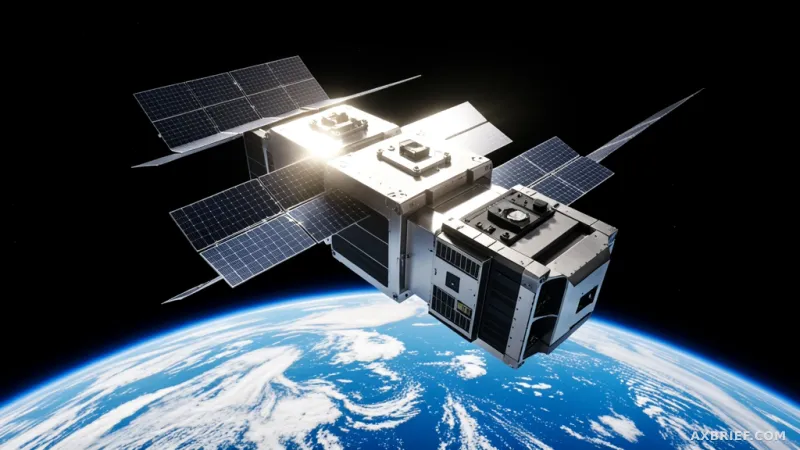
Google and SpaceX are now discussing a radical solution to this terrestrial limit by exploring the construction of data centers in Earth's orbit. This move comes as SpaceX prepares for an initial public offering (IPO) valued at $1.75 trillion by the end of this year. To attract investors, SpaceX is positioning orbital data centers not as a futuristic fantasy, but as the most viable path to drastically reducing AI computation costs over the next several years. This strategy is already taking shape through a series of calculated terrestrial moves. Last week, SpaceX reached an agreement with Anthropic to utilize data center resources from xAI, an AI research firm located in Memphis, Tennessee. This collaboration is particularly significant because SpaceX acquired xAI in February, effectively internalizing its compute resource acquisition system. The Memphis operation is viewed by industry analysts as a transitional model, a terrestrial proving ground that establishes the operational logic required before moving the hardware into orbit.
Google is not a newcomer to this partnership. The search giant established a strategic foundation in 2015 with a $900 million investment in SpaceX. This long-standing capital relationship has evolved beyond simple venture investment into a collaborative framework for massive infrastructure projects. By leveraging SpaceX's launch capabilities and Google's computational expertise, the two entities are attempting to bypass the physical constraints of Earth entirely.
The Economic Paradox of Space-Based Compute
The drive toward space is fueled by a growing friction on the ground. Traditional data centers face mounting social costs, primarily in the form of intense local opposition during site selection. Community pushback over water usage for cooling and the massive strain on local power grids has made expanding ground-based infrastructure a political and legal minefield. Orbital data centers offer a clean break from these regional conflicts, operating in a vacuum where zoning laws and neighborhood protests do not exist. Elon Musk has leaned into this narrative, claiming that the operational costs of space-based centers will eventually drop below those of terrestrial facilities.
However, a sharp divide exists between Musk's vision and current economic reality. Most analysts argue that when the combined costs of satellite manufacturing and launch logistics are factored in, ground-based infrastructure remains significantly more economical. The capital expenditure required to put a server in orbit still dwarfs the cost of building a warehouse in a remote desert. Recognizing this risk, Google is diversifying its strategy. While maintaining its ties with SpaceX, Google is actively engaging with other rocket launch companies to avoid vendor lock-in. Simultaneously, Google is advancing Project Suncatcher, an initiative to launch prototype satellites by 2027 that utilize solar energy. This project allows Google to test the feasibility of independent orbital infrastructure and energy harvesting, ensuring they are not solely dependent on a single partner's ecosystem.
The race to solve the AI compute crisis has evolved from a battle of algorithms into a desperate scramble for physical territory beyond the atmosphere.