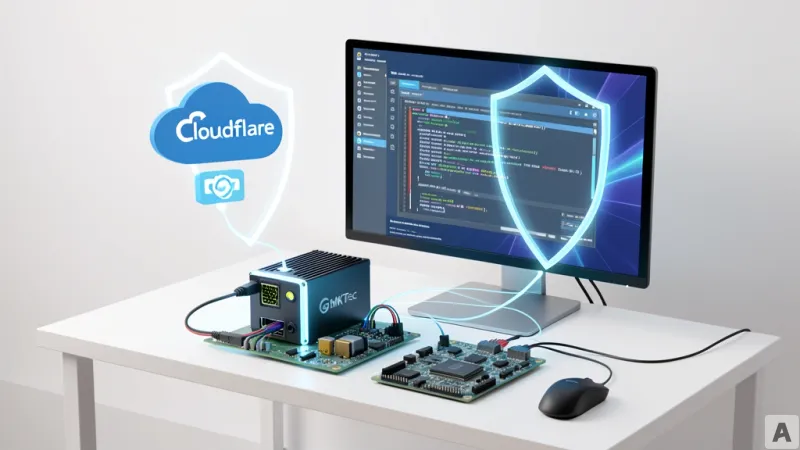
In the ever-evolving landscape of technology, a notable trend is emerging among developers: the rise of home labs. As more individuals seek to harness the power of self-hosting, the community is witnessing a surge in innovative setups. This week, discussions on GitHub reveal a growing number of users combining low-cost hardware with free cloud tunneling solutions to run a variety of services, from media streaming to AI applications. This shift not only showcases the advancements in technology but also highlights a growing desire among users to maintain control over their data and operate services independently of vendor restrictions.
Hardware Configuration and Operational Principles
The journey to building a home lab often begins with selecting the right hardware. One notable example involves upgrading from an OrangePI 5 to a GMKTec NUC, which boasts 32GB of RAM and a 1TB NVMe SSD. Powered by an AMD Ryzen 7 5700U CPU, the GMKTec NUC offers two M.2 slots for easy expansion of both RAM and storage. This setup provides a stable operating environment, particularly for services requiring 24/7 uptime, which are often run on separate Hetzner virtual machines.
The guiding principle behind these home labs is Infrastructure-as-Code (IaC), allowing users to automate as many configurations as possible through scripts. This approach ensures reproducibility, enabling quick reconstruction of infrastructure in the event of failures. Given that many of these projects are pursued as hobbies, ease of use is paramount, with a preference for standard and familiar methodologies.
Network Architecture and Service Operation
In terms of network architecture, many home lab enthusiasts are adopting Cloudflare Tunnel to facilitate external exposure of their services. This method creates an outbound-only connection from the server to the Cloudflare network, eliminating the need to open inbound ports on firewalls. Once the tunnel is established, bi-directional traffic flows seamlessly, and by linking the domain to Cloudflare DNS, users can map specific ports and protocols for each subdomain. This solution is not only completely free but is also regarded as a superior alternative to ngrok.
To manage services, Docker containers are utilized extensively. Security is enhanced through the use of Ansible, an infrastructure automation tool, and SOPS (Secrets OPerationS) for managing sensitive information. Each service is defined by its role, with media management tools like Prowlarr, Radarr, and Lidarr secured behind an Authentik Single Sign-On (SSO) platform.
Current Services and Future Plans
Currently, the home lab hosts a variety of services including media management, AI chat applications, and photo and file management. Open-source solutions like Jellyfin, an open-source media server, and Navidrome, a music streaming server, are employed to deliver these services, while Syncthing facilitates data synchronization. However, the absence of a backup solution poses a risk of data loss, and challenges related to RAID configurations and cloud independence remain unresolved.
Ultimately, building a home lab is about achieving a balance between technical understanding and enjoyment. It emphasizes the importance of maintaining data ownership with minimal vendor lock-in. Every experience gained throughout this process contributes to a valuable learning journey.