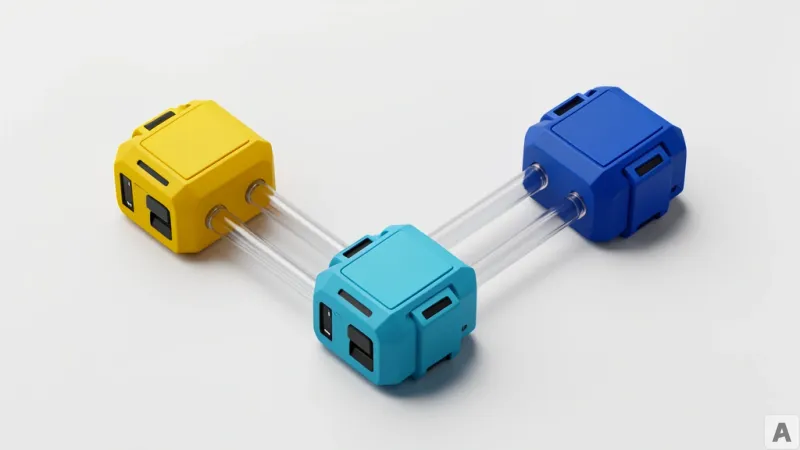
The industry is rapidly shifting from single-prompt LLMs to autonomous agentic workflows, turning the developer's role from a writer of code into an orchestrator of AI swarms. As teams integrate multiple specialized agents like Claude Code, Codex, and OpenCode into a single pipeline, they encounter a critical visibility gap: the black box problem has evolved into a black swarm problem. When one agent delegates a task to another, which in turn spawns a third sub-agent to handle a specific bug, the trail of logic quickly vanishes. This is why observability tools for AI agents are no longer a luxury but a necessity for production-grade software engineering.
Unifying the Fragmented Agent Experience
Modern AI-assisted development often feels like managing a chaotic boardroom where every participant speaks a different language and keeps their own private notes. A developer might use Claude Code for high-level architecture, a specialized Codex instance for boilerplate generation, and OpenCode for open-source integration. Traditionally, these agents operate in isolated environments or separate terminal windows, forcing the human operator to manually piece together the sequence of events. When a bug emerges, the developer must hunt through disparate logs to figure out which agent made the fatal change and why.
Lazyagent solves this by introducing a unified Terminal User Interface (TUI) that aggregates the activity of all active coding agents into a single, cohesive stream. By focusing on the project folder as the primary anchor, Lazyagent treats every action—regardless of which AI performed it—as part of a shared narrative. Instead of jumping between windows, developers see a chronological ledger of every tool call, user command, and system response. This TUI approach is intentional; it provides the high-density information developers crave without the overhead of a heavy graphical interface, keeping the workflow centered in the command line where the actual coding happens.
Mapping the Hidden AI Hierarchy
One of the most complex aspects of agentic AI is the recursive nature of delegation. In a sophisticated setup, a lead agent acts as a project manager, breaking down a complex feature request into smaller tasks. It then spawns subordinate agents to execute those tasks. These subordinates may, in turn, call upon specialized helper agents to perform narrow functions like linting, unit testing, or documentation. This creates a deep organizational hierarchy that mirrors a corporate structure, complete with executives, managers, and associates.
When this chain breaks, identifying the point of failure is notoriously difficult. If the final output is incorrect, the fault could lie with the lead agent's initial plan, the manager's misinterpretation of that plan, or the associate's execution of the code. Lazyagent transforms this invisible chain of command into a visible tree structure. By visualizing the relationship between agents, it allows developers to trace a specific line of code back through the delegation chain to the original prompt.
This mapping capability turns the debugging process from a guessing game into a surgical operation. Developers can see exactly where a directive was misunderstood or where an agent went off the rails. By treating the agent swarm as a manageable organization rather than a chaotic cloud of API calls, Lazyagent provides the governance necessary to scale AI autonomy without sacrificing reliability.
From Raw Logs to Surgical Precision
Even with a unified log, reading raw JSON payloads or endless streams of text is an inefficient way to audit code changes. Most developers spend more time trying to find what changed than actually reviewing the change itself. Lazyagent addresses this by implementing inline diffs, a feature that highlights exactly which lines were added or removed in real-time. This transforms the auditing process into a visual comparison, allowing the human reviewer to spot hallucinations or logic errors instantly.
Beyond simple diffs, the tool provides a powerful search mechanism for event payloads. In a complex project, a developer might know that a specific configuration file was modified but may not remember which agent handled it or what the reasoning was. By searching for the filename within Lazyagent, the user can instantly retrieve every interaction related to that file, including the internal monologue of the agent and the specific tools it invoked.
This functionality effectively acts as a CCTV system for the codebase. Developers can monitor the AI's work in real-time or playback the entire sequence of events after the task is complete to conduct a post-mortem analysis. This shift in workflow is fundamental; it moves the developer away from blind trust in AI outputs and toward a model of continuous verification. By reviewing the thought process and the execution steps side-by-side, engineers can refine their prompts and constraints to ensure higher quality results in future iterations.
As we move toward a future where AI agents handle the bulk of initial implementation, the primary skill for software engineers will be the ability to audit and orchestrate these systems. The transition from coder to manager is already underway, and tools like Lazyagent are providing the essential infrastructure for this new era of development. The ability to track, visualize, and audit the conversations of a robot army is what will ultimately separate successful AI integrations from expensive, unmanageable technical debt.