The current bottleneck in AI agent development is not the intelligence of the underlying models but the rigidity of how they interact. Most developers today build multi-agent systems using a top-down hierarchy where a single orchestrator agent issues commands to a set of subordinate assistants. This command-and-control structure effectively turns sophisticated LLMs into simple function calls, stripping them of their autonomy and creating fragile pipelines that break the moment a requirement changes. The industry needs a shift from rigid hierarchies to modular composition if we are to build truly autonomous, scalable agentic workflows.
Breaking the Command-and-Control Bottleneck
The prevailing architecture for AI agents relies on a vertical dependency. In these systems, the lead agent holds all the logic and state, while the assistant agents act as mere extensions of the lead's capabilities. This creates a significant problem for scalability and reusability. When an assistant agent is tightly coupled to the specific instructions and context of a lead agent, it becomes nearly impossible to port that assistant into a different project without rewriting the entire interaction logic. The assistant is not a standalone entity but a disposable tool tailored to one specific boss.
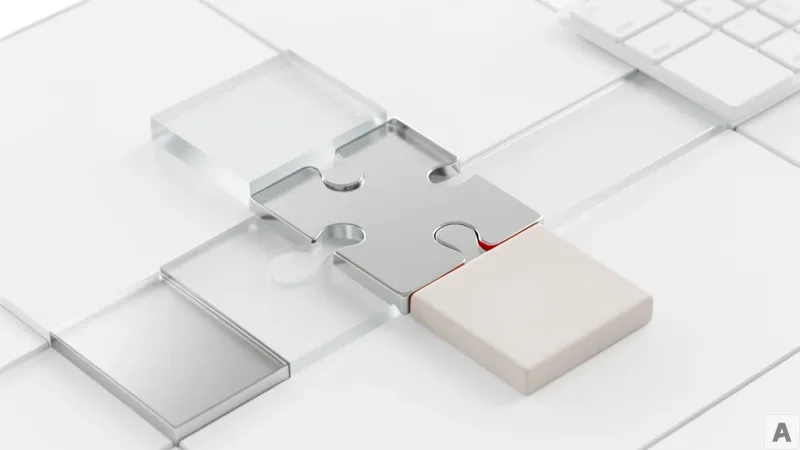
This is where dance-of-tal introduces a fundamental paradigm shift. Instead of viewing agents as roles in a corporate hierarchy, dance-of-tal treats them as modular components that can be assembled like Lego blocks. By decoupling the identity of the agent from its capabilities and the environment in which it operates, the framework allows developers to build a library of reusable AI components. This transition from a command-based system to an assembly-based system means that the focus shifts from who is in charge to how the components are combined to achieve a goal.
The Anatomy of a Modular Agent
To achieve this modularity, dance-of-tal breaks the concept of an AI agent into four distinct units: Tal, Dance, Performer, and Act. This taxonomy allows for a level of granularity that traditional agent frameworks lack. The first unit, Tal, defines the personality and identity of the agent. It is the essence of who the agent is, encompassing its persona and behavioral guidelines. By isolating the identity into a Tal unit, developers can swap personalities without changing the underlying skills the agent possesses.
The second unit, Dance, represents the reusable skills or capabilities. If Tal is the who, Dance is the what. A Dance unit is a set of instructions or a tool-use pattern that can be applied to any agent regardless of its personality. For example, a data-analysis skill can be a Dance unit that is shared between a financial analyst agent and a scientific researcher agent. This separation ensures that a high-performing skill developed for one agent can be instantly deployed across an entire ecosystem of agents.
When a Tal and a Dance are combined with a specific LLM model, a Model Context Protocol (MCP) for external data access, and a runtime environment, they form a Performer. The Performer is the actual execution unit—the living agent that can perform work. Finally, the Act defines the choreography. The Act is the high-level orchestration that determines how multiple Performers interact, move, and collaborate to complete a complex task. This four-tier structure transforms the agent from a hard-coded script into a dynamic assembly of interchangeable parts.
From Hard-Coded Logic to Visual Orchestration
The practical application of this modularity comes to life through DOT Studio. Traditionally, defining the relationship between AI agents requires writing extensive amounts of glue code, managing complex state transitions, and debugging nested prompts. When a developer wants to change the flow of a multi-agent conversation, they often have to tear down and rebuild large sections of the codebase. DOT Studio replaces this manual coding process with a visual canvas.
In DOT Studio, developers can drag and drop Tal and Dance units onto a workspace, connecting them to create a visual map of the agentic workflow. This visual approach does more than just simplify the UI; it changes the way developers think about AI architecture. By seeing the connections between agents as a graph rather than a sequence of code lines, it becomes obvious where bottlenecks exist and where new capabilities can be injected. The relationship between agents evolves from a chain of command into a collaborative dance, where the flow of information is fluid and easily adjustable.
This visual orchestration is integrated with OpenCode, providing an environment where agents with different system prompts and MCP configurations can be tuned in real-time. Developers can experiment with different combinations of personalities and skills on the fly, observing how a change in a Tal unit affects the overall output of an Act. This drastically increases the speed of iteration and reduces the likelihood of configuration errors that typically plague complex AI pipelines.
As the industry moves toward more complex agentic workflows, the ability to compose rather than code will become a competitive advantage. The shift initiated by dance-of-tal suggests a future where AI agents are not just tools we prompt, but a sophisticated ecosystem of modular capabilities that we orchestrate. By moving away from the boss-assistant model, we open the door to truly collaborative AI systems that are as flexible and scalable as the software architectures that preceded them.