Every morning, thousands of gig workers log into platforms to feed the hunger of large language models, recording their voices and uploading government IDs to verify their identity. It is a routine exchange of personal data for a paycheck, a cornerstone of the modern AI training pipeline. This routine turned into a security nightmare on April 4, 2026, when the hacking collective Lapsus$ published a massive cache of internal data from Mercor, a platform specializing in AI data collection and labeling. The leak is not merely a breach of records but a blueprint for identity theft on an industrial scale.
The Anatomy of the 4TB Leak
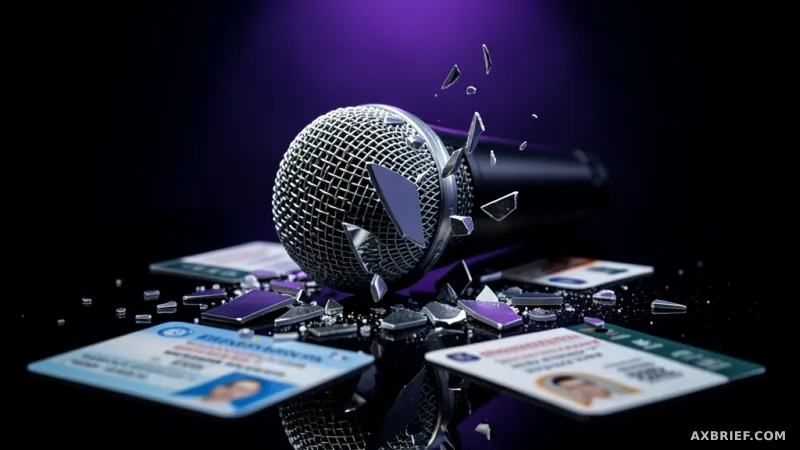
The scale of the exposure is staggering. Lapsus$ released 4 terabytes of data containing the personal information of more than 40,000 contract workers. The leaked database is meticulously organized, with each entry pairing a government-issued identification document—such as a passport or driver's license—with a webcam selfie and high-fidelity audio recordings. These audio files consist of workers reading scripts in quiet environments, resulting in studio-grade samples that range from two to five minutes per person.
The timing of the leak has already triggered a legal firestorm, with five class-action lawsuits filed within ten days of the disclosure. The plaintiffs argue that Mercor failed to adequately warn participants that their voice data could serve as a permanent biometric identifier. The technical risk is grounded in the rapid evolution of generative AI. According to reports from February 2026, high-quality voice cloning now requires as little as 15 seconds of clean reference audio to create a convincing synthetic replica. With an average of two to five minutes of audio per user, the Mercor dataset provides attackers with a surplus of material, far exceeding the threshold required for perfect cloning.
The Convergence of Biometrics and Identity
To understand why this breach is qualitatively different from previous leaks, one must look at the relationship between the stolen assets. In the past, data breaches were typically fragmented. A call center hack might leak voice recordings, or a document broker might leak a database of driver's licenses and selfies. While dangerous, these leaks required attackers to perform the tedious work of cross-referencing disparate datasets to build a complete profile of a victim.
The Mercor incident represents a shift toward converged identity theft. By bundling the biometric key—the voice—with the legal proof of identity—the ID card—in a single database, Lapsus$ has provided a turnkey solution for bypassing modern authentication. An attacker no longer needs to find a voice sample and then search for a corresponding ID to pass a Know Your Customer (KYC) check. They now possess both the tool to mimic the person and the credentials to prove who that person is. This synergy transforms the leaked data from a collection of private files into a powerful instrument for fraudulent account takeovers and synthetic identity fraud.
For the security community, this event signals that voice data can no longer be treated as simple media. It must be managed with the same rigor as a master password. Unlike a password, a voice cannot be reset once it is compromised. The only viable defense is to migrate away from voice-based authentication for any account linked to the compromised identity.
Forensic analysts are currently working to identify victims by searching for the microscopic artifacts and errors typical of synthetic speech. Contract workers who suspect their data was part of the Mercor leak can access free analysis reports through ORAVYS, a forensic service specializing in voice authenticity. The ORAVYS platform provides a comprehensive audit including watermark detection, anti-spoofing scores, and a detailed artifact checklist to determine if a voice has been cloned.
The fusion of biometric data and government identification in a single breach effectively weaponizes the very tools used to secure the AI economy, rendering traditional identity verification systems obsolete.