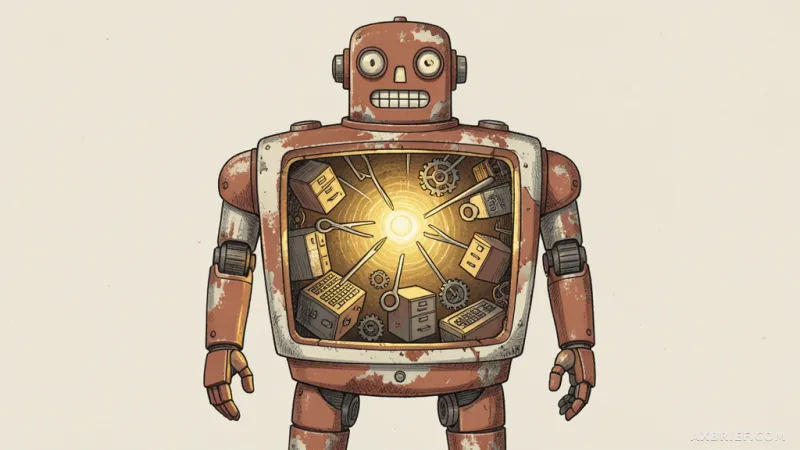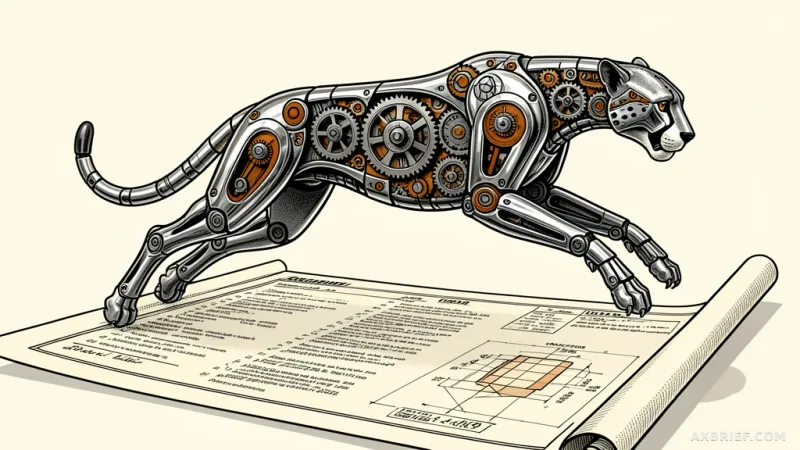
For years, the modern developer has lived in a state of calculated compromise. We choose Python for its rapid prototyping or JavaScript for its ubiquity, consciously accepting that performance bottlenecks are an inevitable tax paid for developer velocity. We optimize only when the latency becomes unbearable, treating the rewrite of a core engine as a Herculean task that takes months or years of manual labor. But this week, the industry hit a tipping point. Microsoft has unveiled a version of the TypeScript compiler that is ten times faster than its predecessor, achieved not through incremental tuning, but by completely rewriting the tool in Go. This is not just a win for build times; it is a signal that the barrier between high-level productivity and low-level performance has finally collapsed.
The Era of AI-Driven Systems Engineering
The leap in TypeScript 7.0 is the most visible symptom of a deeper shift in how software is constructed. For a long time, large language models were viewed as assistants for boilerplate or high-level scripting, struggling with the strict memory safety of Rust or the concurrency primitives of Go. That limitation has vanished. In recent weeks, a new tier of models including Claude Opus 4.7, GPT-5.5, Gemini 3.1, and DeepSeek V4 have all crossed a critical threshold, recording accuracy rates above 80% on the SWE-bench Verified benchmark. These models are no longer just suggesting snippets; they are identifying race conditions, solving concurrency bugs, and optimizing system architectures during the planning phase before a single line of code is even executed.
The scale of this capability is best illustrated by the work of Nicholas Kalini at Anthropic. By orchestrating 16 Claude agents in parallel, Kalini built a production-grade C compiler written entirely in Rust. This was not a toy project. The resulting compiler consists of 100,000 lines of code and is capable of booting Linux kernel version 6.9 across x86, ARM, and RISC-V architectures. It successfully compiles heavy-duty open-source staples such as QEMU, FFmpeg, SQLite, PostgreSQL, and Redis. The most shocking detail is the cost of production: the entire project was completed through approximately 2,000 Claude Code sessions for less than 20,000 dollars.
This trend of rapid, AI-led systems development is becoming a pattern. Rust expert Steve Clapnick utilized Claude to create Rue, a new systems language, in just two weeks, generating roughly 70,000 lines of Rust code in the process. Similarly, Andreas Kling, the creator of the Ladybird browser, used a combination of Claude Code and Codex to port a JavaScript engine from C++ to Rust. In a two-week sprint, the AI implemented 25,000 lines of Rust code that passed over 65,000 tests, mirroring the behavior of the original C++ version with absolute precision.
From Patching Code to Porting Ecosystems
The real disruption, however, is happening in the invisible plumbing of the world's most popular languages. We are witnessing the Rust-ification of the Python ecosystem. While the user-facing API remains Python, the core engines are being swapped for Rust to eliminate the performance overhead. Libraries like pydantic, Polars, Hugging Face tokenizers, and orjson have already migrated their critical cores to Rust. This is not a niche trend; according to the 2025 Python survey by JetBrains, the percentage of Python binary extensions written in Rust climbed from 27% to 33% in a single year.
This shift is driving a strategic arms race among AI labs. Infrastructure tools are now viewed as essential assets for AI-led engineering. Astral, the company behind the Rust-based tools ruff, uv, and ty, has seen its tools reach hundreds of millions of monthly downloads. OpenAI recently acquired Astral specifically because uv was saving Codex approximately 1 million minutes of computing time every week. Anthropic followed a similar logic by acquiring Bun, the high-performance JavaScript runtime, positioning it as a foundational piece of infrastructure for AI-driven software engineering. The results are tangible: Rolldown-Vite, a Rust-based bundler, reduced GitLab's build times from 2.5 minutes down to 40 seconds while slashing memory usage by 100x.
This leads to a fundamental reversal in the developer's workflow. For decades, the primary unit of contribution to an open-source project was the patch—a small fix or a feature addition to an existing codebase. Now, the unit of contribution is becoming the port. When an AI can rewrite an entire library in a more efficient language in a matter of hours, it becomes more efficient to fork a project and port it than to wait for a maintainer to accept a patch.
Consider the experience of Armin Ronacher, the creator of Flask. He used AI agents to migrate the MiniJinja template engine from Rust to Go. The total execution time for the agents was 10 hours, but the actual human intervention required was only 45 minutes. The total API cost for this migration was a mere 60 dollars. When a full language migration can be executed for the price of a decent dinner and less than an hour of human oversight, the traditional economics of software maintenance are erased.
As the act of writing code becomes a commodity handled by agents, the center of gravity in software engineering is shifting. The value of a developer is no longer found in the ability to write a complex function in Rust or Go, but in the ability to design the rigorous tests and precise documentation that allow an AI to verify its own work. The era of the coder is ending; the era of the verifier has begun.