The developer experience is currently shifting from simple code completion to full-scale agentic autonomy. For years, the industry relied on models that could write a clean Python function or a React component in isolation, but the real bottleneck has always been context. Developers are tired of copying and pasting snippets into a chat window; they want an AI that can ingest an entire GitHub repository, understand the architectural dependencies, and execute a multi-file refactor without losing the thread. This demand for repository-level intelligence has traditionally required massive, cloud-based models with exorbitant costs and latency, leaving local execution as a distant dream for most engineering teams.
The Hybrid Architecture of Qwen3.6-27B
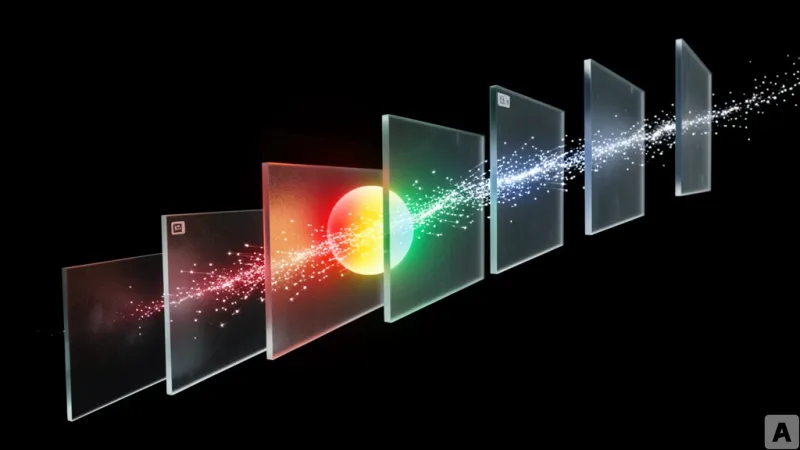
Qwen3.6-27B enters this landscape as a causal language model designed specifically to bridge the gap between local efficiency and frontier-level performance. The model is built with 27 billion parameters distributed across 64 layers, but its true innovation lies in its hybrid layout. Rather than relying solely on standard attention mechanisms, it integrates Gated DeltaNet—a structure that utilizes linear attention to significantly increase computational efficiency—alongside Gated Attention. In a typical 16-cycle repetition, the model employs three Gated DeltaNet layers and one Gated Attention layer, all coupled with a standard Feed-Forward Network (FFN). This specific arrangement allows the model to maintain high precision while reducing the memory overhead typically associated with large-scale context processing.
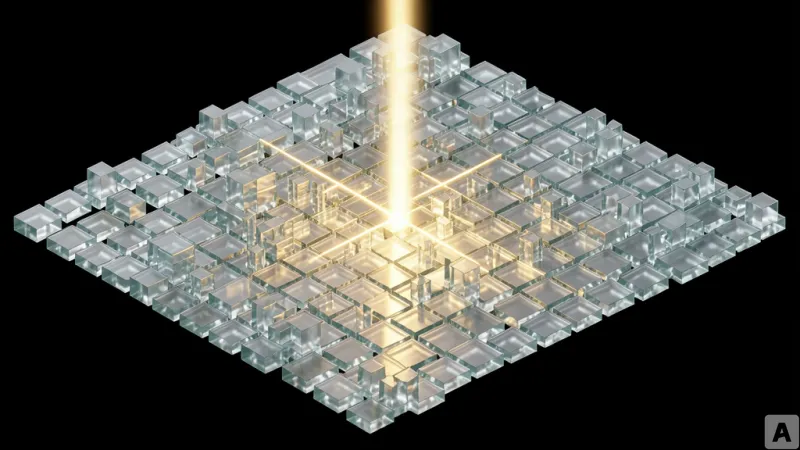
Context window management is where Qwen3.6-27B separates itself from its predecessors. The model natively supports a context length of 262,144 tokens, which can be extended to 1,010,000 tokens through specific configurations. In practical terms, this means a developer can feed an entire codebase containing tens of thousands of lines of code into the model in a single pass. To further optimize the speed of these massive inferences, the model utilizes Multi-Token Prediction (MTP) during training, allowing it to predict multiple subsequent tokens simultaneously and drastically reducing the time to first token during generation.
For developers looking to integrate this into their local environment, the model is accessible via the Hugging Face Transformers library. The environment can be established using the following commands:
pip install transformers accelerate
huggingface-cli download Qwen/Qwen3.6-27B
Implementing a basic inference pipeline requires minimal boilerplate code, as shown in the following example:
from transformers import AutoModelForCausalLM, AutoTokenizermodel_name = "Qwen/Qwen3.6-27B"
tokenizer = AutoTokenizer.from_pretrained(model_name)
model = AutoModelForCausalLM.from_pretrained(model_name, device_map="auto")
prompt = "Write a React component for a dashboard."
inputs = tokenizer(prompt, return_tensors="pt").to("cuda")
outputs = model.generate(**inputs, max_new_tokens=512)
print(tokenizer.decode(outputs[0], skip_special_tokens=True))
From Benchmarks to Agentic Reasoning
While raw parameter counts and context windows provide the foundation, the actual utility of Qwen3.6-27B emerges when it is deployed as a coding agent. The industry is moving toward Agentic Coding, where the AI does not just suggest code but uses tools to solve problems autonomously. The performance of Qwen3.6-27B on the SWE-bench Verified benchmark—which measures a model's ability to resolve real-world GitHub issues—demonstrates this shift. The model scored 77.2%, a notable increase over the 75.0% achieved by Qwen3.5-27B. This puts a 27B parameter model in direct competition with models several times its size.
Beyond software engineering, the model's logical reasoning is validated by its performance on the AIME26 (American Invitational Mathematics Examination) dataset, where it achieved a score of 94.1%. This mathematical proficiency is not a vanity metric; it is the engine that allows the model to handle complex algorithmic logic and edge-case debugging in production code.
However, the most significant breakthrough for daily workflows is the Thinking Preservation option. In traditional LLM interactions, the reasoning process is often lost once a response is generated, forcing the model to re-derive its logic during every subsequent turn of a conversation. Thinking Preservation allows the model to maintain the internal reasoning context from previous interactions. During a massive refactoring project, for instance, the model remembers exactly why it chose a specific design pattern in the first file when it begins modifying the tenth file. This eliminates the cognitive overhead of repetitive prompting and allows for a seamless collaboration between the human architect and the AI agent.
To ensure this power is accessible without requiring a server farm, Qwen3.6-27B is fully compatible with the current ecosystem of high-speed inference engines. It integrates natively with vLLM for high-throughput serving, SGLang for structured language generation, and KTransformers for efficient execution on limited GPU hardware. This compatibility ensures that enterprises can deploy a high-reasoning coding agent within their own secure infrastructure without sacrificing speed.
The convergence of massive context windows and preserved reasoning suggests that the era of the monolithic, cloud-only coding assistant is ending in favor of specialized, local agents that truly understand the codebase.