Designers and developers have spent the last year fighting a losing battle with AI-generated text. While diffusion models can now render a photorealistic mountain range or a cinematic portrait in seconds, the moment a user asks for a specific sign that says Welcome Home or a precise UI layout, the system often collapses into a soup of gibberish characters and warped geometry. This gap between aesthetic beauty and structural precision has remained the primary hurdle for integrating generative AI into professional commercial workflows where a single typo renders an entire asset useless.
The Architecture of Precision
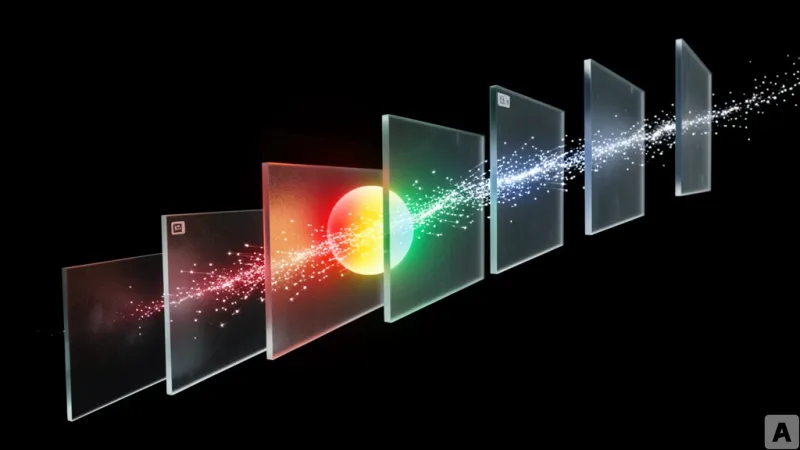
Baidu's ERNIE-Image team has addressed this instability by moving away from traditional architectures in favor of a single-stream Diffusion Transformer (DiT). This approach integrates the scaling capabilities of transformers directly into the diffusion process, allowing the model to better understand the spatial relationships between objects and the precise placement of characters. Despite its high performance, the model is surprisingly lean, operating with 8 billion parameters. To bridge the gap between vague user inputs and high-fidelity outputs, the system employs a Prompt Enhancer, a dedicated tool that automatically expands short, simplistic prompts into rich, structured descriptions before they reach the generation engine.
The model is deployed in two distinct configurations to balance quality and speed. The standard ERNIE-Image is a Supervised Fine-Tuning (SFT) model designed for maximum instruction fidelity and general-purpose generation, typically requiring 50 inference steps to reach its final output. For users prioritizing velocity, ERNIE-Image-Turbo utilizes Distribution Matching Distillation (DMD) and Reinforcement Learning (RL) to compress the generation process. This turbo version achieves high aesthetic quality in only 8 inference steps, drastically reducing latency without a proportional loss in visual coherence. From a hardware perspective, the model is optimized for accessibility, requiring 24GB of Video RAM (VRAM), which allows it to run on high-end consumer GPUs like the RTX 3090 or 4090.
From Aesthetic Art to Commercial Tooling
The significance of ERNIE-Image lies in its shift from generating pretty images to executing precise instructions. In the GENEval benchmark, which measures how accurately a model follows complex prompts, ERNIE-Image achieved a comprehensive score of 0.8856 without even utilizing its Prompt Enhancer. This puts it ahead of significantly larger or more established competitors, including Qwen-Image at 0.8683 and FLUX.2-klein-9B at 0.8481. The data suggests that parameter count is no longer the sole determinant of instruction following; rather, the efficiency of the transformer integration and the quality of the fine-tuning process are the new primary drivers of performance.
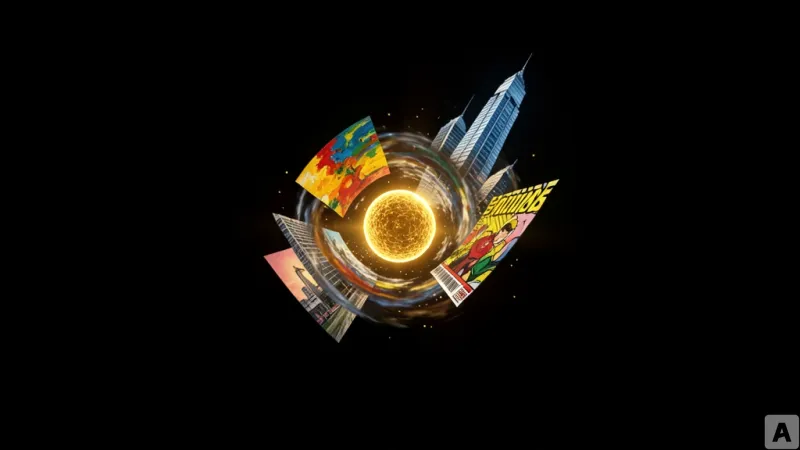
This technical edge manifests most clearly in text rendering and layout control. While previous models struggled with high-density text or layout-sensitive typography, ERNIE-Image handles long strings of characters and complex spatial arrangements with high accuracy. This makes the model a viable tool for producing commercial posters, detailed infographics, and user interface mockups where text is the central element rather than a decorative afterthought. Furthermore, the model excels at multi-object composition, maintaining the correct relative positions of various elements within a scene. This capability is critical for creating storyboards, comic panels, and any visual content that requires a strict organizational structure across the canvas. By supporting a spectrum of styles from hyper-realistic photography to cinematic digital art, the model transforms from a creative toy into a production-ready asset.
The industry is moving toward a paradigm where the ability to control a model is more valuable than the model's ability to surprise the user.