Imagine walking through a digitally generated room where the architecture shifts the moment you turn your back. You see a mahogany table to your left, but as you step forward and rotate the camera, the table has morphed into a blurred smudge or vanished entirely. This is the current state of generative 3D environments. For years, the developer community has struggled with the inherent instability of AI-generated spaces, where the model fails to remember the geometry it just created. This phenomenon, known as spatial forgetting, combined with temporal drift—where coordinates slowly misalign over time—has kept the dream of a persistent, explorable 3D world born from a single image just out of reach.
The Architecture of Lyra 2.0
NVIDIA is addressing these consistency failures with the introduction of the Lyra 2.0 framework. At its core, Lyra 2.0 is built upon WAN-14B, a sophisticated video generation model. The system utilizes a Transformer architecture with 14 billion parameters, integrating the strengths of Convolutional Neural Networks (CNN) for efficient image feature extraction and the attention mechanisms of Transformers to manage complex data relationships. To initiate the generation process, the model requires a specific set of inputs: a single image with a resolution of 480x832 and a sequence of 81 frames containing camera parameters, which define the position and angle of the virtual observer.
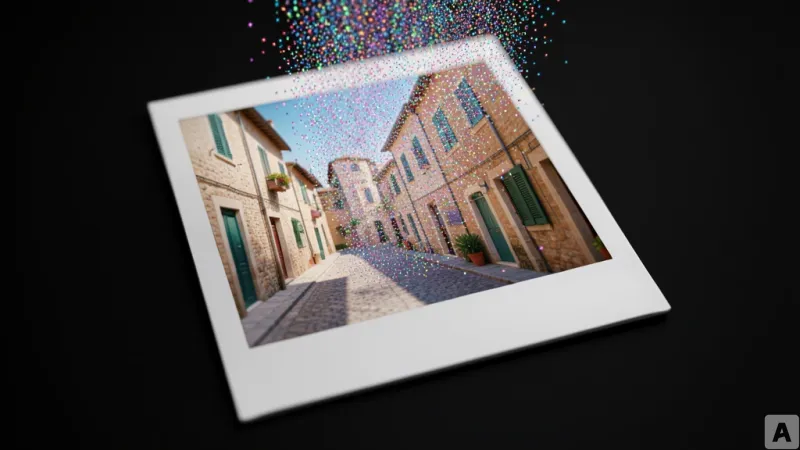
The output of this process is not a simple video file but a 3D Gaussian Scene. This method represents spatial points as ellipsoids, allowing for high-fidelity, real-time rendering. The final data is exported as a `.ply` point cloud file, providing a tangible geometric structure that can be manipulated in 3D software. For those looking to examine the implementation, the model details are hosted at `https://github.com/nv-tlabs/lyra/tree/main/Lyra-2`. It is important to note that the framework is released under the NVIDIA internal scientific research and development model license, which strictly prohibits commercial use, distribution, or deployment in production environments.
Solving the Memory Gap in Generative Space
While previous models attempted to guess the next frame of a video to simulate 3D movement, Lyra 2.0 introduces a fundamental shift by separating generation from reconstruction. The system first synthesizes a long-range video that emphasizes global geometric consistency. Once this sequence is established, the model reconstructs the video into an explicit 3D representation. This two-step approach ensures that the world is not just a series of images, but a coherent volume of space.
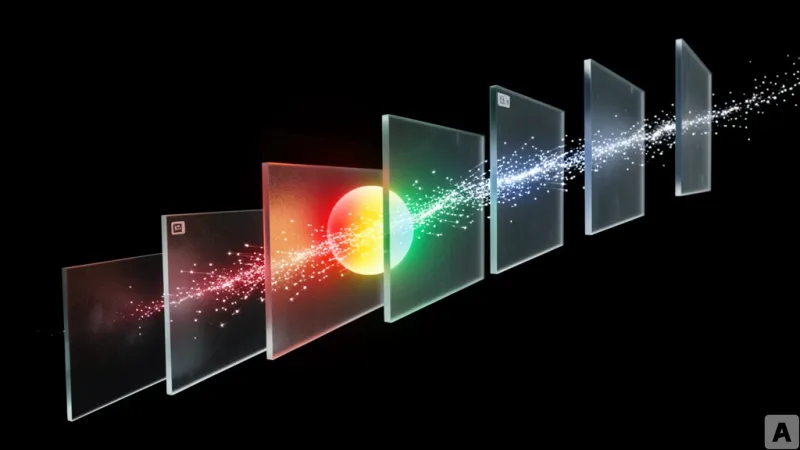
The real breakthrough lies in how Lyra 2.0 handles information routing to kill spatial forgetting. Instead of treating each frame as a new prediction, the model maintains the 3D geometric structure across frames. It actively retrieves relevant information from previous frames and establishes dense correspondences between the current viewpoint and the historical data. In this setup, the generative pre-trained model handles the visual aesthetics, while the 3D geometric data acts as a rigid skeleton that prevents the environment from warping.
To combat temporal drift, NVIDIA implemented a technique called self-augmented histories. The model is trained using its own degraded outputs, essentially forcing the AI to recognize its own errors and correct them in real-time. By learning from these failures, the model develops a self-correcting mechanism that maintains coordinate stability even during extended exploration of the generated world. By leveraging 14 billion parameters to map these complex spatial relationships, Lyra 2.0 transforms a single, static image into a persistent environment that does not collapse under the weight of user movement.
This framework establishes a new benchmark for single-image 3D scene generation and proves that real-time, consistent rendering is finally viable.