The current pace of generative AI development creates a precarious environment for developers who must choose a foundational model for their applications. A model that leads the industry in reasoning capabilities on Monday might be surpassed by a leaner, faster competitor by Friday. For most engineering teams, switching providers traditionally requires rewriting integration code, updating API keys, and renegotiating billing contracts. This friction creates a dangerous lock-in effect where companies stick with inferior models simply because the cost of migration is too high.
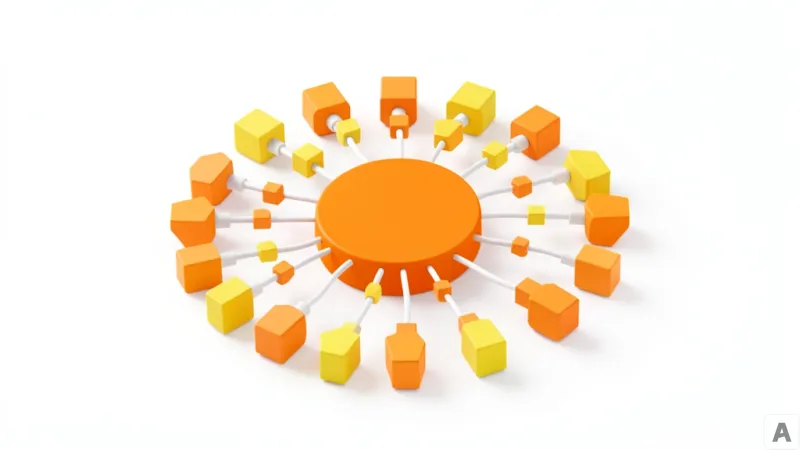
Cloudflare addresses this volatility by positioning itself as the universal translation layer for the AI era. By introducing the AI Gateway, the company provides a single point of entry that connects to over 70 different models from more than 12 leading AI providers. This shift transforms the AI stack from a rigid set of dependencies into a modular system where the underlying model becomes a swappable component rather than a permanent architectural decision.
Eliminating the Integration Tax
Integrating multiple AI providers usually involves managing a fragmented ecosystem of SDKs and authentication protocols. When a developer wants to test whether Anthropic's Claude performs better than OpenAI's GPT-4o for a specific task, they typically have to implement two different API structures. Cloudflare AI Gateway removes this integration tax by unifying these disparate services under a single API. In practice, this means a developer can switch the brain of their application by changing a single line of code.
This consolidation extends beyond simple text generation. The gateway supports a multimodal array of capabilities, including image generation, video synthesis, and voice processing. By centralizing these connections, Cloudflare also solves the administrative nightmare of AI procurement. Instead of managing twelve separate invoices and usage quotas across various platforms, organizations can monitor and manage their total AI spend and traffic through one centralized dashboard. This allows teams to focus on prompt engineering and user experience rather than the plumbing of API management.
Solving the Latency Compound Effect for AI Agents
While simple chatbots operate on a one-to-one request-response cycle, the industry is rapidly moving toward AI agents. These agents do not just answer questions; they execute complex workflows by planning, reasoning, and iterating. A single user request to an AI agent often triggers a chain of ten or more internal API calls as the agent breaks down a task, verifies its own work, and corrects errors in real-time.
In these agentic workflows, latency is not just a nuisance; it is a compounding failure. If each individual API call suffers a 100-millisecond delay due to physical distance between the server and the model provider, a ten-step agentic process adds a full second of lag to the final response. This creates a sluggish user experience that can make sophisticated agents feel unusable.
Cloudflare leverages its massive global infrastructure to mitigate this problem. With data centers spanning 330 cities worldwide, Cloudflare minimizes the physical distance between the end user and the AI model. By optimizing the routing and reducing the time to first byte, the AI Gateway ensures that the iterative loops required by AI agents happen as close to the edge as possible. This infrastructure turns the global internet into a local network for AI, ensuring that the speed of the agent is limited by the model's inference time rather than the speed of light across fiber optic cables.
Standardizing Custom Model Deployment with Cog
Beyond managing third-party APIs, many enterprises require custom models trained on proprietary data. The challenge here is the notorious difficulty of AI environment configuration. Deploying a custom model typically involves a grueling process of matching CUDA versions, managing Python dependencies, and configuring GPU drivers. This environment fragility often leads to the it works on my machine syndrome, where a model performs perfectly in a research notebook but fails in production.
To solve this, Cloudflare utilizes Cog, a tool designed to package AI models into standardized containers. Cog eliminates the manual configuration of the underlying hardware stack by wrapping the model and its dependencies into a single, portable image. Once a model is containerized via Cog, it can be deployed directly to Workers AI, Cloudflare's serverless GPU platform.
This approach brings the efficiency of serverless computing to the world of heavy AI workloads. To further optimize this, Cloudflare is developing GPU snapshot technology. Currently, loading a large model from storage into GPU memory creates a cold start delay. GPU snapshots will allow the system to save the state of a loaded model and wake it up almost instantaneously. This means custom, high-performance models can be deployed with the same agility as a simple JavaScript function.
By treating AI models as interchangeable modules and solving the underlying latency and deployment hurdles, Cloudflare is effectively building the operating system for the agentic web. The ability to swap models with a single line of code ensures that developers are no longer tethered to a single provider, fostering a competitive environment where the best model always wins based on performance rather than the strength of its vendor lock-in.