The gap between a visionary product idea and a tangible prototype has historically been a graveyard of lost time and miscommunication. For decades, the process of bringing a digital interface to life required a rigid relay race where product managers wrote specifications, designers created mockups, and developers translated those visuals into code. Each handoff introduced the risk of interpretation errors and costly revisions. Anthropic is effectively closing this gap with the launch of Claude Design, a visual collaboration tool powered by the Claude Opus 4.7 model. This is not merely another AI image generator but a structural shift in how software and presentations are conceived, allowing users to move from a text prompt to a high-fidelity prototype in seconds.
Beyond Static Image Generation
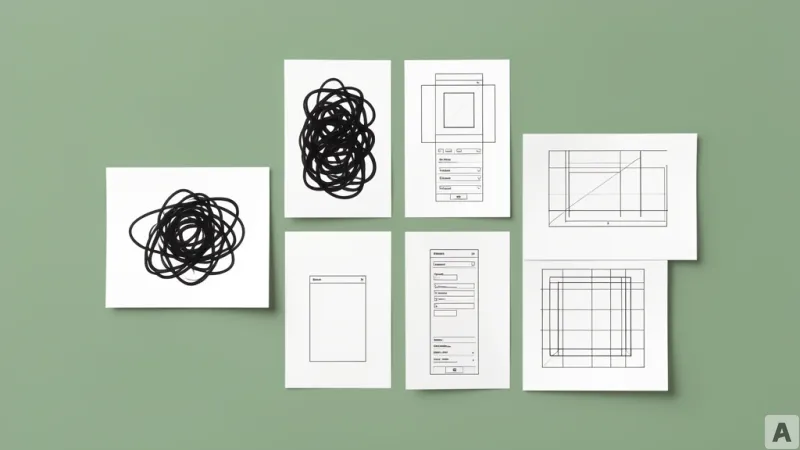
Most generative AI tools for visuals produce flat images that are difficult to edit without starting over. Claude Design departs from this paradigm by creating functional, editable prototypes. When a user describes an app interface or a presentation slide, the system generates a layout that remains fluid. Users can engage in a continuous dialogue with the AI to refine the output, but they are not limited to prompting. The tool provides a tactile interface where users can directly edit text or use adjustment sliders to fine-tune spacing and color palettes in real time.
For enterprise users, the most significant breakthrough is the ability of the AI to ingest and adhere to existing corporate design systems. In a professional setting, brand consistency is non-negotiable. Claude Design can learn a company's specific design language, including its primary color schemes, typography, and component libraries. Once these rules are established, the AI automatically applies them to every generated asset. This ensures that a prototype created by a product manager in a brainstorming session looks and feels like an official company product, eliminating the need for a designer to manually fix brand inconsistencies after the fact.
Versatility in output is another core pillar of the tool. Recognizing that design does not exist in a vacuum, Anthropic allows users to export their work into a variety of industry-standard formats. Whether the goal is a collaborative design board in Canva, a formal PDF document, a presentation deck in PPTX, or a functional web layout in HTML, the tool bridges the gap between AI generation and professional distribution.
Redefining the Designer's Role
The introduction of Claude Design fundamentally alters the power dynamics and workflows between planners and designers. In the traditional model, the planner acted as the narrator and the designer as the translator. This often led to a bottleneck where designers spent the majority of their time on low-level execution, such as adjusting margins or creating multiple versions of the same button to satisfy a stakeholder's whim.
With Claude Design, the sequence of production is reversed. Planners and non-designers can now generate high-quality initial drafts independently. This shifts the designer's role from a creator of the first draft to a curator and refiner of the final product. Instead of spending hours on the initial layout, designers can focus on high-level UX strategy, accessibility, and complex user flows. The repetitive, mechanical aspects of design are automated, freeing human creativity to focus on the problems that AI cannot yet solve, such as deep emotional resonance and complex user psychology.
This shift represents a broader democratization of design. The barrier to entry is no longer the mastery of complex software like Figma or Adobe XD, but the ability to clearly define a problem and a solution. When the technical skill of drawing is decoupled from the intellectual skill of designing, the competitive advantage shifts toward those who can articulate the best ideas and iterate on them the fastest.
The Design-to-Code Pipeline
While the visual capabilities are impressive, the strategic masterstroke of this release is the integration with Claude Code. The most painful point in the software development life cycle is the transition from a design file to a working codebase. Developers often struggle to replicate the exact spacing, animations, and responsiveness of a design, leading to a cycle of endless tweaks and frustration.
Claude Design solves this by treating the design not as a picture, but as a structured data package. The tool can bundle the design specifications and pass them directly to Claude Code, which then translates the visual prototype into functional, production-ready code. This creates a seamless, integrated pipeline where an idea can move from a text prompt to a visual prototype and finally to a deployed application within a single ecosystem.
By unifying design and development, Anthropic is positioning itself as more than just a provider of LLMs. It is building a comprehensive operating system for product creation. For companies, this means a drastic reduction in time-to-market. Features that previously took weeks of cross-departmental coordination can now be prototyped and coded in a matter of hours.
As the boundary between imagination and implementation continues to blur, the value of technical tool proficiency is declining. The ability to navigate a specific menu in a design program is becoming less important than the ability to define exactly what a product should achieve for its user. In the era of Claude Design, the primary constraint is no longer the skill of the hand, but the clarity of the mind.