You open the Gemini app and type a request: plan a three-day trip to Rome next summer. Instead of a bullet list of hotel names and flight times, the screen fills with a magazine-style layout—photos, modules, and interactive cards you can tap, drag, and edit on the spot. The interface itself becomes part of the answer.
That shift—from static text to a dynamically generated visual environment—is the core of what Google is shipping with Gemini 3. The company released the model today, and the changes go far beyond benchmark scores.
Section 1: What Gemini 3 Actually Ships
Google has launched Gemini 3 Pro, a mid-scale high-performance model, and it is rolling out globally starting today. Users can select a "Thinking" mode from the model picker, which forces the model to reason step-by-step before producing an answer. Subscribers to Google AI Plus, Pro, and Ultra tiers get higher usage caps. U.S. college students receive a free one-year Google AI Pro subscription.
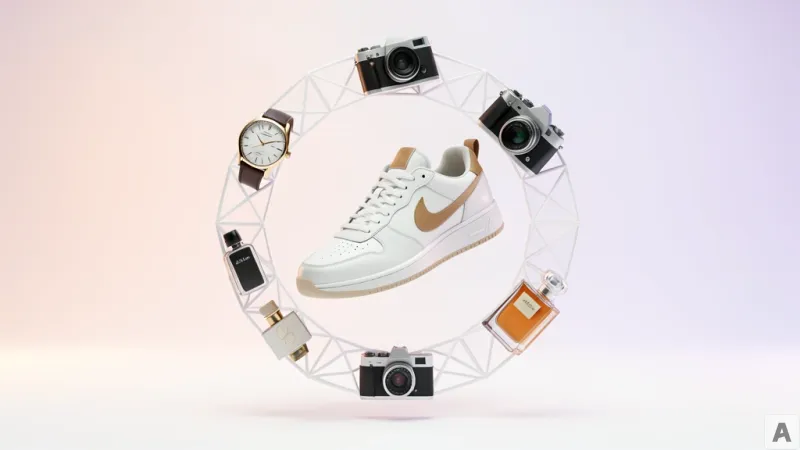
The update also rewires how the app looks and what data it can reach. A new folder called "My Stuff" collects every image, video, and report you have generated, making past work searchable in one place. The shopping experience now connects directly to Google's Shopping Graph—a database of over 50 billion product listings. When you ask about a product, the response includes a comparison table, live pricing, and a product list pulled from that index.
For developers, the most tangible change is in Vibe Coding—building software through intuitive prompts rather than precise specs. The Canvas workspace, where you write and edit code alongside the model, now produces apps with higher functional completeness. Multimodal understanding has improved: uploading a photo of a homework assignment or transcribing a lecture recording yields noticeably better accuracy.
Section 2: The Twist—Generative Interfaces Replace Static Replies
The old paradigm of AI responses was a fixed structure: a block of text, maybe an image, arranged in a predictable order. Gemini 3 introduces what Google calls Generative Interfaces—user interfaces that the model builds on the fly, tailored to each request.
Two features drive this. Visual Layout generates an immersive magazine-style view that arranges information spatially rather than linearly. Dynamic View goes further: the model writes code in real time to construct a custom UI. Ask about the Van Gogh Museum, and Gemini 3 produces an interactive page with tabs, scrollable galleries, and embedded details—something you can explore, not just read.
This is not a cosmetic layer. It changes how users interact with information. Instead of parsing a paragraph, you swipe through a gallery. Instead of copying a link, you tap a card that opens a reservation flow. The model is no longer just answering—it is designing an interface for that answer.
The agent layer deepens the shift. U.S. subscribers to Google AI Ultra get access to Gemini Agent, an experimental feature for complex multi-step tasks. It is built on insights from Project Mariner, Google's web-browsing automation research, and integrates with Deep Research, Gmail, and Google Calendar. You can say: "Book a midsize SUV under $80 a day for my trip next week." The agent searches flight info, compares rental cars within budget, and prepares the reservation. Before any payment or message is sent, the agent pauses and asks for your confirmation.
This is not a chatbot that retrieves facts. It is an interface operating system that reshapes itself around your intent.
The era of the static reply is over. What comes next is an app that builds itself for every question you ask.