A quantum computing engineer begins their week not with complex algorithm design, but with the tedious ritual of calibration. For days, they manually tweak hardware parameters, fighting a losing battle against environmental noise that threatens to collapse the fragile state of qubits. In these high-stakes laboratories, the preparation phase often eclipses the actual computation time, creating a systemic bottleneck where the hardware is ready to calculate, but the control system is still catching up.
The Architecture of NVIDIA Ising
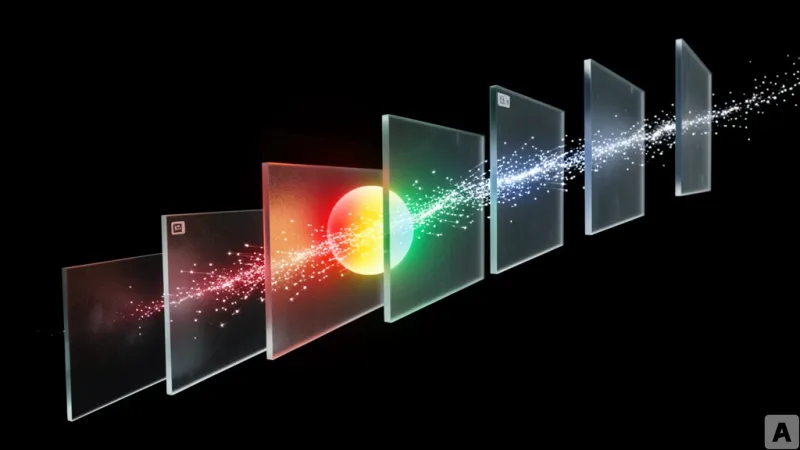
NVIDIA is addressing this operational friction with the release of Ising, a specialized suite of AI models designed to automate the calibration and error correction of quantum processors. The framework is split into two primary functional components: Ising Calibration and Ising Decoding. Ising Calibration utilizes a Vision Language Model (VLM) architecture to interpret quantum processor measurements. By treating hardware diagnostic reports as visual and textual data, the VLM can monitor system health in real time and adjust parameters autonomously. This transition from manual tuning to AI-driven orchestration reduces the calibration window from several days to just a few hours.
Complementing this is Ising Decoding, which employs two distinct variations of a 3D Convolutional Neural Network (3D CNN). NVIDIA provides one model optimized for raw processing speed and another optimized for maximum precision. These models handle the real-time decoding required for quantum error correction, a process critical to maintaining the integrity of quantum information. When measured against pyMatching, the current open-source industry standard for quantum error correction, Ising Decoding demonstrates a significant performance leap, delivering up to 2.5x faster processing speeds and 3x higher accuracy.
To ensure these models can operate at the speeds required by quantum hardware, NVIDIA has integrated Ising into the CUDA-Q platform, its software environment for hybrid quantum-classical computing. The system leverages NVIDIA NVQLink, a high-speed hardware interconnect that enables low-latency communication between the GPU and the Quantum Processing Unit (QPU). This infrastructure is already being deployed across a diverse ecosystem of partners, including Atom Computing, the Harvard John A. Paulson School of Engineering and Applied Sciences, and Yonsei University, alongside various national laboratories and commercial quantum hardware firms.
Software Intelligence as a Hardware Proxy
For years, the quantum industry has operated under the assumption that the path to utility lay solely in the physical improvement of the hardware. The goal was simply more qubits and better isolation. However, the persistent reality is that physical hardware will always be subject to noise and decoherence. The true barrier to practical quantum computing has not been the lack of qubits, but the inability of control software to keep pace with the volatility of those qubits. If an error cannot be detected and corrected faster than the quantum state decays, the computation fails regardless of how many qubits are on the chip.
This is where the shift to AI-driven control changes the equation. By utilizing 3D CNNs, Ising does not just follow a set of pre-defined rules; it learns the complex, non-linear noise patterns of the specific hardware it is controlling. The 2.5x increase in decoding speed is not merely a benchmark victory; it is a temporal necessity. This speedup provides the critical window needed to execute more complex algorithms before the quantum state vanishes. Essentially, NVIDIA is using software intelligence to compensate for physical hardware limitations, creating a hybrid control system where the AI acts as a real-time corrective lens for the QPU.
By automating the diagnostic loop and accelerating the error correction cycle, the focus of quantum development shifts. The bottleneck is no longer the manual labor of the engineer or the raw error rate of the qubit, but the efficiency of the AI model managing the system. This transition transforms quantum computers from fragile laboratory experiments into stable machines capable of running actual applications.
The competitive frontier of quantum computing has moved from the pursuit of qubit quantity to the optimization of the AI models that control them.