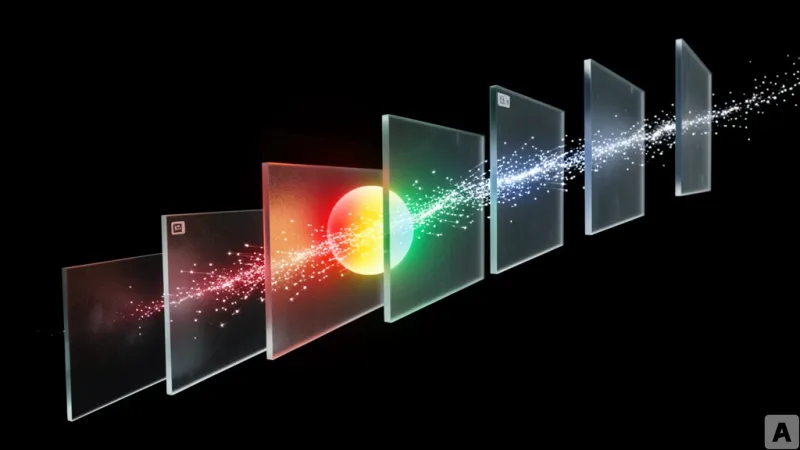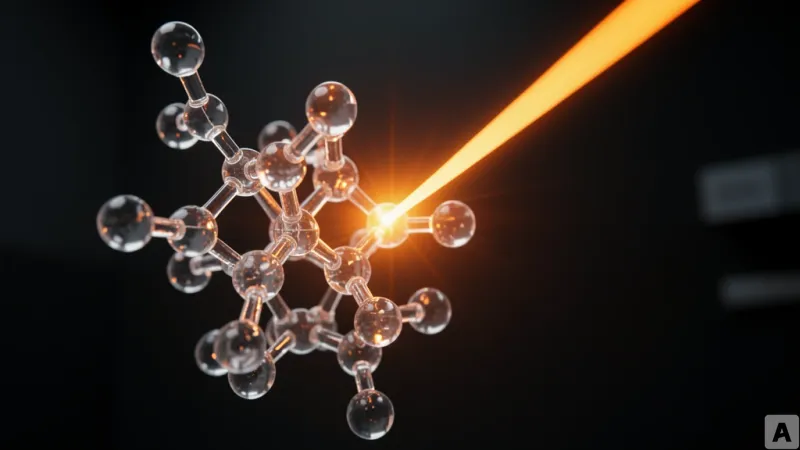
The bottleneck in modern material science is no longer a lack of imagination but a lack of compute. For decades, physicists have been trapped by the exponential complexity of quantum mechanics, where adding a single particle to a simulation can double the required memory and processing power. This computational wall has made the discovery of high-efficiency batteries and room-temperature superconductors a game of trial and error rather than precise engineering. Now, a new approach combining the Transformer architecture with the NetKet framework is breaking this deadlock, allowing researchers to simulate quantum magnetic states that were previously deemed mathematically impossible to calculate.
The Crisis of Quantum Frustration
To understand why this breakthrough matters, one must first understand the concept of frustration in quantum magnetism. Imagine thousands of microscopic magnets, known as spins, arranged in a complex lattice. These spins interact by pushing and pulling against one another. In a simple system, they might all align in one direction, reaching a state of equilibrium. However, in frustrated systems, the geometry of the lattice prevents the spins from satisfying all their interactions simultaneously. It is a quantum tug-of-war where no single configuration is perfectly stable.
Predicting the final arrangement of these spins is a nightmare for classical computing. Traditionally, scientists relied on Exact Diagonalization (ED), a method that calculates every possible state to find the absolute ground truth. While ED is 100% accurate, it suffers from the curse of dimensionality. As the number of magnets increases, the number of possible configurations explodes exponentially. Even the most powerful supercomputers on Earth cannot handle a system with more than a few dozen particles. For years, this meant that quantum physics was limited to toy models—simulations so small they barely resembled the complex materials found in the real world.
How Transformers Solve the Hilbert Space Problem
Researchers have now bypassed this limitation by integrating NetKet, a specialized tool for simulating quantum states, with JAX and Flax. JAX provides the high-performance numerical computing backbone, while Flax allows for the seamless implementation of neural networks. The secret weapon in this stack is the Transformer, the same architecture that powers large language models like GPT-4.
In a language model, the Transformer uses an attention mechanism to understand the relationship between words regardless of how far apart they are in a sentence. The research team applied this same logic to the Heisenberg spin chain. Instead of words, the model processes the states of quantum spins. The Transformer can identify long-range correlations and complex patterns across the entire magnetic system simultaneously, rather than analyzing the particles one by one.
To train the model, the team employed Variational Monte Carlo (VMC). Unlike ED, which tries to find the perfect answer through brute force, VMC is an iterative process of educated guessing. The AI proposes a quantum state, the system evaluates how close that state is to the lowest energy level, and the model adjusts its parameters to improve the next guess. By treating the quantum state as a learnable function, the Transformer effectively navigates the vast Hilbert space, finding near-perfect solutions for systems that would crash a traditional supercomputer.
From Theoretical Physics to Industrial Application
This shift from exact calculation to efficient AI approximation is not just a win for theoretical physics; it is a roadmap for the next generation of industrial materials. The ability to predict how spins arrange themselves in a frustrated state is the exact same mathematical challenge involved in designing new superconductors or optimizing the ion flow in next-generation batteries.
When engineers design a new material, they need to know the most stable atomic arrangement to ensure durability and efficiency. Currently, this process involves expensive and time-consuming laboratory experiments. By integrating Transformer-based predictive models into material science software, the industry can move toward a simulation-first approach. We are looking at a future where the properties of a new alloy or a chemical catalyst are fully mapped out in a virtual environment before a single gram of material is synthesized in a lab.
Practically, this means the development cycle for energy-dense storage solutions could shrink from decades to years. The ability to handle larger systems means AI can now simulate materials at a scale that actually reflects real-world conditions, moving beyond the limitations of the toy models that have dominated the field for half a century.
As AI continues to migrate from generating text and images to solving the fundamental equations of the universe, the boundary between computer science and physics is disappearing. The success of NetKet and Transformers in solving quantum magnetism proves that neural networks are not just tools for pattern recognition, but powerful engines for scientific discovery. By replacing brute-force computation with intelligent approximation, we are finally unlocking the secrets of the microscopic world.