A traveler standing in a crowded Tokyo subway or a student practicing a new language in a quiet bedroom usually starts their day with the same ritual: opening a smartphone to bridge a communication gap. For two decades, this ritual has centered on a single tool that transformed from a niche experiment into a global utility. The conversation among developers and power users has recently shifted from the simple accuracy of text replacement to the nuance of real-time conversational flow. This week, as the platform celebrates its 20th anniversary, the focus moves beyond what a word means to how a word sounds.
The Gemini-Powered Shift to Active Learning
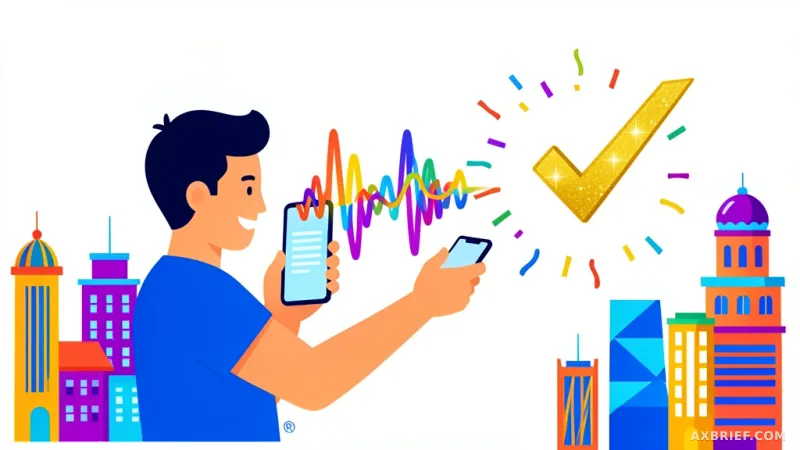
Google is marking two decades of its translation service by integrating a sophisticated pronunciation practice tool into the Android version of the Translate app. This update moves the platform from a passive reference tool to an active coaching system. The feature utilizes AI to analyze user speech in real time, providing immediate feedback to help learners refine their accent and cadence. Currently, the rollout is targeted at learners of English, Spanish, and Hindi within the United States and India, allowing users to record their voice and receive an AI-driven evaluation to prepare for real-world interactions.
This capability is not a standalone add-on but a result of merging decades of machine learning research with Gemini, Google's multimodal large language model. By leveraging Gemini's ability to understand context and reason through linguistic patterns, the app maintains its existing ability to suggest translation alternatives based on the specific intent of a query. The integration ensures that the pronunciation tool is grounded in the same contextual intelligence that powers the rest of the ecosystem, turning a translation app into a personalized language tutor.
From Statistical Probability to Neural Intelligence
To understand why a pronunciation tool is a significant leap, one must look at the architectural evolution of the service. In its early years, the platform relied on Statistical Machine Translation. This approach functioned by calculating the frequency of words and short phrases across massive datasets, treating translation as a probability problem. The primary challenge during this era was the sheer scale of data processing required to maintain trillions of word pairings.
Everything changed in 2016 with the pivot to Neural Machine Translation. This transition was driven by Sequence-to-Sequence research, which allowed the model to process entire sentences as single units rather than fragments. To scale this deep learning approach globally, Google deployed Tensor Processing Units, the custom AI accelerators designed to handle the immense computational load of neural networks. This shift enabled the system to move past literal word-for-word translation and begin grasping idioms, local slang, and subtle emotional contexts through the Gemini model.
This evolution means translation is no longer a destination or a separate task. It has become the invisible infrastructure supporting other Google services. The same neural intelligence now powers Google Lens for visual translation and Circle to Search for instantaneous on-screen identification. The most critical shift for developers is the transition from text-to-text processing to audio-to-audio interaction. Modern Gemini models can maintain the tone, speed, and inflection of a speaker, allowing users with headphones to experience a seamless, near-human interpretation of live dialogue.
Accessibility remains a core pillar of this growth, particularly in environments where connectivity is unreliable. Users on both Android and iOS can download dedicated language packs to maintain text translation capabilities offline. The most frequently downloaded offline languages currently include English, Arabic, Spanish, French, Japanese, German, Hindi, Chinese, Russian, and Italian. By combining these offline capabilities with real-time AI coaching, Google Translate has transitioned from a digital dictionary into a real-time connectivity engine.
The technical barrier of language is dissolving, shifting the goal of translation technology from mere accuracy to the speed of human connection.