Robotics engineers are currently facing a paradoxical crisis where the brain of the machine has far outpaced its nervous system. In the race to deploy autonomous mobile robots, the industry has seen a surge in monstrous GPU compute power, yet the interfaces used to feed data into these processors remain stubbornly archaic. A developer might spend weeks optimizing a cutting-edge transformer model only to find the entire system failing because two cameras are out of sync by a few milliseconds. This gap between raw TFLOPS and actual data ingestion has turned the final stages of robot deployment into a battle against cable clutter and timestamp drift.
The AVS300 Architecture and the GMSL2 Expansion
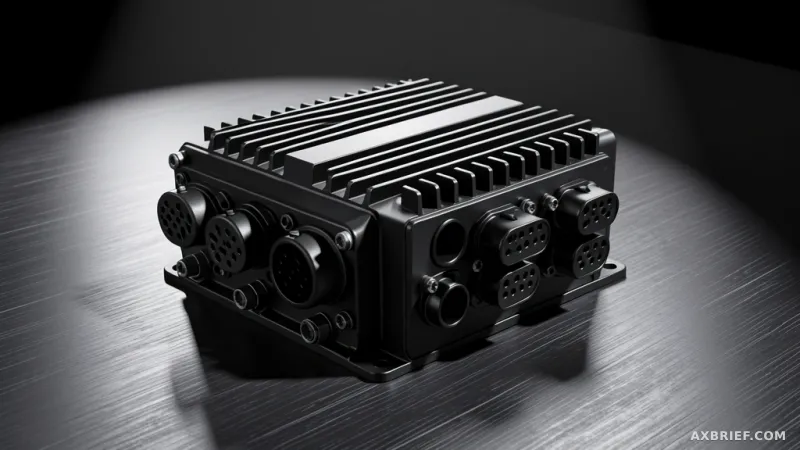
On the 19th, Telelian addressed this systemic friction with the release of the AVS300, an AI robotics platform designed to unlock the full potential of the NVIDIA Jetson AGX Thor. While the official developer kits provide a foundational entry point into the Thor ecosystem, they often leave engineers struggling with physical interface limitations. The AVS300 targets this specific pain point by implementing 8-channel GMSL2 (Gigabit Multimedia Serial Link 2) support directly on the controller. This allows developers to connect up to eight high-resolution cameras without relying on cumbersome external bridges or complex conversion hardware.
For practitioners working on stereo vision, 3D mapping, or LiDAR-camera fusion, the move to 8-channel GMSL2 is not merely a convenience of port count but a fundamental simplification of the data path. In traditional setups, increasing the number of sensors typically leads to a linear increase in cabling complexity and a geometric increase in synchronization errors. By integrating these channels directly, the AVS300 minimizes the physical latency inherent in distributed sensor paths. This architectural choice ensures that high-bandwidth visual data reaches the Jetson AGX Thor with minimal interference, effectively removing the hardware-level bottlenecks that often cause AI models to miscalculate spatial coordinates.
Beyond the specifications, the fact that this platform is developed and manufactured domestically in Korea provides a strategic advantage in supply chain management and hardware optimization. Engineers no longer have to force software workarounds to accommodate the limitations of overseas interface boards or invest in prohibitively expensive custom PCBs. By pairing the raw power of the Jetson Thor with a purpose-built 8-channel GMSL2 nervous system, Telelian has created a tool that is particularly potent for industrial AI and unmanned platforms where real-time reliability is a non-negotiable requirement.
Shifting from Compute Power to Pipeline Integrity
The true technical pivot of the AVS300 lies in its transition from a fragmented sensor array to a unified single-pipeline structure. Most legacy robotic systems operate with a chaotic web of interfaces where cameras, LiDAR, and IMUs each follow their own communication protocols and cabling routes. This fragmentation makes timestamp management a nightmare, as each data packet arrives at the processor via a different path with varying degrees of latency. Telelian has redefined this physical flow by utilizing an FPGA-based sensor collection unit at the front end of the pipeline.
This FPGA acts as the primary gatekeeper, collecting and aligning disparate sensor data at the hardware level before it ever reaches the AI compute module. Once refined, this data is transmitted via a high-speed optical link based on QSFP28 (Quad Small Form-factor Pluggable 28). By leveraging a massive bandwidth of 4x25GbE, the system can push vast amounts of sensor data into the AI engine with virtually zero lag. This approach strips away the software overhead typically required to manage data ingestion, moving the burden of synchronization from the CPU/GPU to the dedicated hardware logic of the FPGA.
To further harden the system, Telelian integrated the NVIDIA Holoscan Sensor Bridge (HSB) technology, which allows for the complete physical separation of the sensor collection unit and the AI compute unit. In a real-world deployment, the sensor collection unit is placed at the hazardous edge—the front lines where the robot interacts with the environment—while the expensive Jetson AGX Thor is housed in a protected, shock-resistant enclosure. This separation is critical for applications in defense and heavy industry, where electromagnetic interference (EMI) and physical vibrations can crash a standard integrated board. By using optical links for transmission, the AVS300 achieves electrical isolation, ensuring that noise from industrial motors or military-grade equipment does not corrupt the data stream.
This shift in philosophy suggests that the next frontier of robotics is not about who has the fastest chip, but who has the cleanest data pipeline. The AVS300 solves the two most persistent headaches in the field: cable hell and timestamp jitter. While software-based synchronization always introduces a margin of error, the AVS300 employs a hardware-level precision system using Frame Sync and PPS (Pulse-Per-Second) pulses. This forces every sensor to capture data at the exact same moment, eliminating the temporal drift that leads to recognition errors in high-speed autonomous navigation.
Furthermore, the implementation of PTP (Precision Time Protocol) ensures that the system clock of the Jetson Thor is perfectly aligned with external GPS, IMU, and LiDAR sources. In multi-robot collaborative environments, where a one-millisecond discrepancy can result in a collision or a failed hand-off, this hardware-level clock integration is the difference between a laboratory prototype and a deployable product. By providing a pristine, synchronized dataset, the AVS300 allows the AI model to focus entirely on perception and decision-making rather than spending cycles correcting for sensor misalignment.
This level of data integrity transforms the operational capacity of AMRs (Autonomous Mobile Robots) and AGVs (Automated Guided Vehicles). In smart factories performing high-speed visual inspections or in unmanned defense platforms operating in extreme environments, the ability to maintain a stable, noise-free data stream is a matter of survival. The AVS300 proves that the final puzzle piece of autonomous driving is not more TFLOPS, but a ruggedized, high-bandwidth pipeline that can withstand the chaos of the physical world.
The industry is moving toward a reality where the quality of the data pipeline defines the ceiling of AI performance.