The moment a patient receives an MRI report, they are often thrust into a state of linguistic vertigo. The document is typically a dense thicket of Latinate terminology and clinical shorthand that leaves the patient hovering between confusion and anxiety. This gap between clinical data and patient understanding creates a vacuum where the desire for a second opinion is not just a preference, but a psychological necessity. Recently, a user decided to fill this gap not with another human consultant, but by deploying Claude Code, Anthropic's terminal-based coding agent, to parse their own medical imaging data.
The Technical Architecture of a Medical Audit
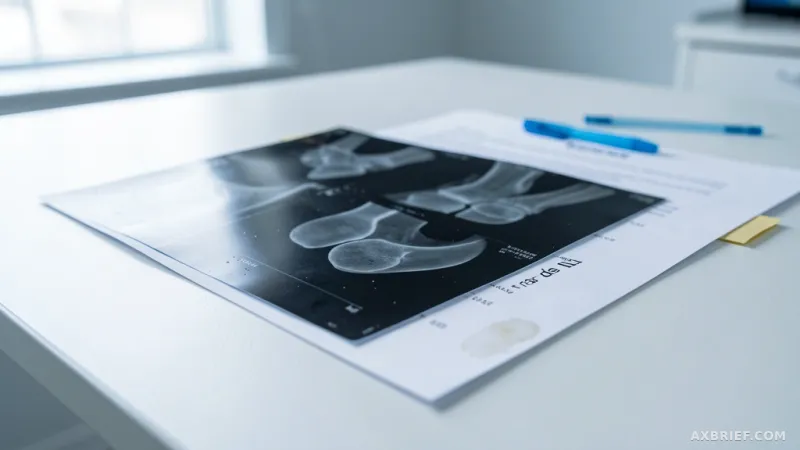
The clinical starting point was a definitive diagnosis from an orthopedic specialist. The physician identified a Grade III partial-thickness tear located at the apical insertion of the subscapularis tendon. The report was specific, noting that the width of the tear exceeded 50 percent, a metric that typically triggers a more aggressive and extensive treatment plan. Based on this clinical evidence, the patient began a rigorous course of therapy, accepting the specialist's interpretation of the MRI as the absolute ground truth.
To verify this, the user moved beyond the standard chat interface of a Large Language Model and entered the environment of Claude Code using the Opus 4.8 model. The technical challenge was significant: the user had to process a 266MB DICOM (Digital Imaging and Communications in Medicine) package. This was not a simple text file but a complex directory containing hundreds of files, many without extensions, following the standard medical imaging export format. By utilizing the terminal-based nature of Claude Code, the user was able to install necessary packages and execute code directly to navigate and analyze the raw data structure of the MRI.
This approach transformed the AI from a conversational partner into a data processing pipeline. The user provided the model with the raw DICOM data and the existing medical report, tasking the AI with an independent analysis of the imaging evidence. The goal was to determine if the visual data supported the physician's conclusion of a Grade III tear or if there was a discrepancy in how the apical insertion was being interpreted.
The Conflict of Consensus and the Arbiter's Verdict
The initial analysis produced a jarring contradiction. While the human specialist saw a severe tear, Opus 4.8 reported that the tendon appeared entirely intact. This immediate clash between clinical experience and algorithmic analysis created a new form of tension: the uncertainty of which authority to trust. To resolve this, the user implemented a multi-agent comparison system designed to eliminate the hallucinations or biases of a single model.
This system introduced an AI Arbiter, a specialized agent tasked with synthesizing conflicting viewpoints. The Arbiter was provided with the original human-written report and a detailed discussion conducted by GPT 5.5 Pro regarding the imaging data. The Arbiter's role was to evaluate the logical consistency of both arguments and determine which interpretation held more weight based on the provided evidence. After reviewing the cross-model discourse, the Arbiter concluded that the analysis provided by the primary reader was more plausible, assigning a moderate-to-high confidence level to this finding.
The final verdict delivered by the AI system was a complete reversal of the original diagnosis. The agents found no evidence of either a partial or complete tear at the apical insertion. Instead, they redefined the condition as insertional tendinosis, characterized by mild inflammatory changes at the tendon attachment site rather than a structural rupture. This shift in diagnosis changed the narrative from a severe injury requiring extensive intervention to a manageable inflammatory condition.
This discrepancy highlighted a profound psychological shift for the user. The authority of the medical professional, once absolute, was now in direct conflict with a logically sequenced, multi-model consensus. The result was a state of decision paralysis, where the user had to weigh the prestige of a medical degree against the data-driven precision of a multi-agent AI pipeline.
The divergence in these results suggests that the true utility of the next generation of LLMs lies not in their ability to summarize text, but in their ability to operate within a functional execution environment. By combining the reasoning of Opus 4.8 with the ability to manipulate DICOM files via a terminal, the AI moved from the realm of speculation into the realm of empirical analysis. The capacity to execute code and handle domain-specific binary data allows these models to reach an analytical threshold that is impossible within a standard chat window.
The transition from a Grade III tear diagnosis to a finding of mild tendinosis demonstrates that the execution environment is the primary catalyst for AI reliability in specialized fields.