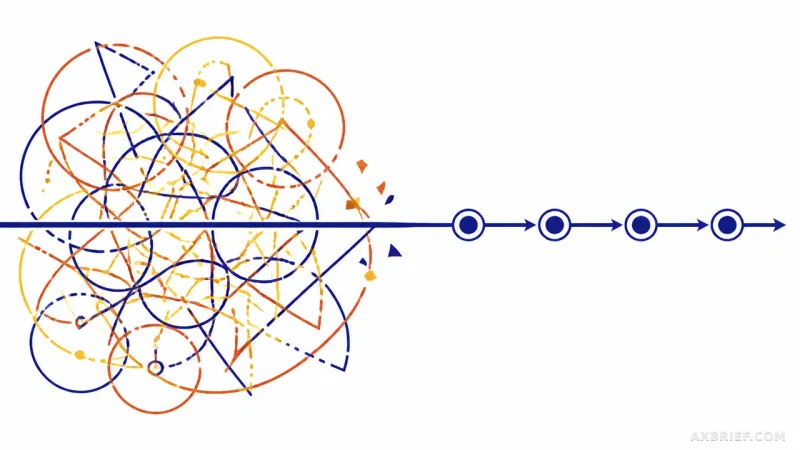
The modern developer's workflow is currently trapped in a linear bottleneck. Even with the advent of powerful LLMs, most engineers interact with AI in a sequential loop: prompt, wait, review, and repeat. When managing complex features across a massive codebase, this process often collapses into a chaotic struggle with context switching. Developers find themselves juggling multiple chat threads, manually syncing changes across branches, and fighting the inherent limitations of a single-session AI that cannot simultaneously tackle three different bugs without losing the thread of the first. This friction has created a ceiling for AI-assisted productivity, where the speed of code generation is negated by the overhead of session management.
The Architecture of Parallelism in Claude Code
Anthropic is addressing this linear constraint through Claude Code, a CLI-based tool designed to move beyond the single-session paradigm. The most significant technical shift is the integration of `worktree` functionality. In a standard local repository, running multiple AI sessions simultaneously often leads to file conflicts and overwritten changes. Claude Code solves this by creating isolated copies of the repository. When a developer executes the following command:
claude --worktreeThe system automatically checks out a new branch and establishes a dedicated environment. This allows an engineer to operate four or five Claude sessions in parallel, each working on a distinct feature or bug fix without interfering with the others. To support this high-concurrency environment, the tool leverages the Opus 1M model, providing a 1-million-token context window. This ensures that the AI maintains a comprehensive understanding of the entire codebase across all parallel sessions.
To further reduce latency and friction, the tool employs a fast mode to minimize response times during high-velocity tasks. This is paired with an auto mode, which utilizes an internal classifier to evaluate the risk level of proposed actions. If the classifier determines a task is safe, the AI executes the command automatically, removing the need for the developer to manually click accept for every minor file change.
Beyond session management, the workflow introduces a specialized `/prototype` skill. This is a user-defined slash command that instructs the AI to generate five or more distinct implementation strategies for a single feature simultaneously. These options are rendered as HTML previews, allowing the developer to compare different architectural approaches side-by-side. To ensure these prototypes reach a production-ready state, the system uses a standard prompt known as the Loop, which forces the AI to iteratively refine the code until the objective is fully met.
The Transition from Coder to Pipeline Architect
While the ability to generate code in parallel is a leap in productivity, it reveals a deeper systemic tension: the bottleneck of software development is no longer the act of writing code, but the act of verifying it. When an AI can produce five different versions of a feature in seconds, the human developer's role shifts from a writer to a filter. The risk is that the sheer volume of AI-generated code can overwhelm the review process, leading to a decline in overall system quality if the verification layer remains manual.
Claude Code attempts to solve this by automating the evidence-gathering phase of the Pull Request (PR). Rather than requiring a human to manually run the code and take screenshots, Claude directly controls the Chrome browser. It executes the front-end changes, tests the functionality, and records the process as a series of GIF screenshots. These visual proofs are then automatically attached to the PR, allowing the human reviewer to verify the behavior of the code before they even read the first line of the diff.
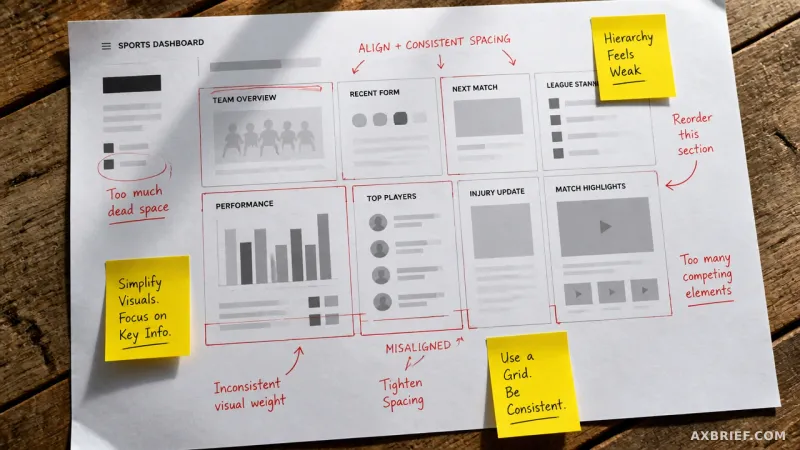
This automation extends into the operational layer of the development lifecycle. Using internal tools called `simplify` and `code review`, the system prunes the codebase and integrates with Slack to notify on-call engineers or specific reviewers via direct messages. One of the most critical safeguards implemented is a routine that scrapes all front-end changes to verify designer involvement. If a design change is detected without a designer's sign-off, the system flags the PR or even generates an adversarial design PR draft to challenge the current implementation.
This shift acknowledges a fundamental limitation of current LLMs: they are proficient at generation but struggle with nuanced design judgment. By restricting the AI to the role of a high-speed generator and validator, and reserving final decision-making for the human, the workflow prevents the quality degradation that typically occurs when AI is given too much autonomy over the final product.
As the cost of code production drops toward zero, the value of a developer is no longer measured by their ability to implement a feature, but by their ability to design the pipeline that filters, validates, and deploys that feature. The focus moves from the micro-level of syntax to the macro-level of system orchestration.