The modern developer is currently experiencing a strange, exhilarating shift in the nature of work. The era of meticulously crafting every line of syntax is giving way to vibe-coding, a paradigm where the primary skill is no longer knowing where the semicolon goes, but knowing how to describe a vision so clearly that the AI can manifest it. This week, that shift moved from the fringes of the indie-hacker community into the core of the enterprise. The speed at which an idea transforms into a functional product has collapsed from months to minutes, and the infrastructure supporting this acceleration is scaling at a rate that defies traditional SaaS growth curves.
The Infrastructure of Instant Applications
Lovable, the Stockholm-based startup pioneering this vibe-coding movement, has entered into a multi-year agreement with Google to expand its infrastructure and AI usage within Google Cloud by five times. The scale of this expansion is a direct response to an unprecedented growth trajectory. With a lean team of only 146 employees, Lovable surpassed an annual recurring revenue (ARR) of 400 million dollars in February, subsequently adding another 100 million dollars in revenue in a single month. This velocity is mirrored in its market penetration, with more than half of the Fortune 500 companies already utilizing the platform to build internal tools and customer-facing applications.
This growth is fueled by a new tier of reasoning models that allow agents to handle professional-grade engineering tasks. Anthropic has introduced Opus 4.8, a model specifically optimized for complex reasoning, deep engineering workflows, and high-fidelity content creation. By significantly reducing hallucinations in long-form agentic tasks, Opus 4.8 has enabled a level of integrated implementation that was previously impossible. This technical edge is translating into financial dominance; despite massive operational spending, Anthropic is projected to become the first major foundation model lab to achieve a quarterly profit.
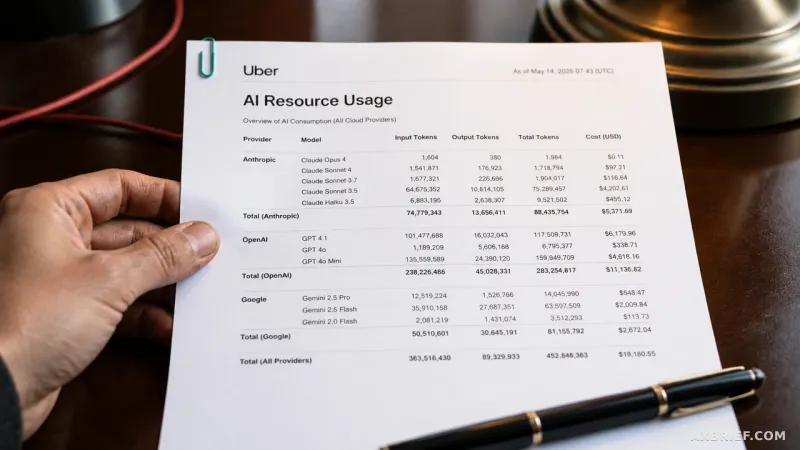
Parallel to this, the economic landscape of AI development is being rewritten. OpenAI has seen its ARR reach 30 billion dollars, while Anthropic has seen its revenue skyrocket from 3 billion dollars in early 2025 to an ARR of 47 billion dollars within a year. This explosion is not driven by a simple increase in the number of paid subscribers, but by a fundamental shift in the unit of value. The industry is moving away from seat-based pricing—where a company pays per user—toward a consumption-based model centered on token usage. To manage the costs of this shift, developers are adopting tiered model strategies. For instance, Gemini 3.5 Flash is deployed for high-volume, low-complexity tasks like UI design due to its aggressive pricing of 1.50 dollars per million input tokens, while the more expensive Opus 4.8 is reserved for high-stakes logic and planning.
The Architecture of Reliability and Verification
While the industry initially focused on the raw power of single models, the real breakthrough is emerging from hybrid orchestration. The most sophisticated web applications are no longer the product of a single prompt in a single window. Instead, they are built through a handoff workflow: Gemini 3.5 Flash handles the initial user interface design, and the resulting specifications are passed via a `context.md` markdown file to Opus 4.8, which then executes the full-stack implementation and writes the page copy. By separating these stages into distinct sessions and using structured markdown as the bridge, developers can bypass the limitations of a single provider and achieve a level of polish that mimics human-led design.
This tension between general-purpose scalability and specialized precision is playing out across different domains. In the medical field, Google has integrated the specialized capabilities of MedLM and MedPaLM directly into the base Gemini models, replacing standalone specialized models with retrieval-augmented generation and custom prompting. Conversely, Axiom Math has doubled down on specialization. By focusing on Formal Verification—the process of proving mathematical conjectures through rigorous logic—Axiom Math achieved a perfect score on Putinome last December. This approach attracted a 200 million dollar Series A investment at a 1.6 billion dollar valuation, despite the company being only eight months old with a team of 30 people. For Axiom Math, the goal is not merely to remove hallucinations but to create a Verified AI that compounds mathematical genius.
As AI-generated code floods the enterprise, the bottleneck has shifted from creation to security. To solve this, Lovable has integrated with Wiz, the cloud security giant acquired by Google for 32 billion dollars. This integration allows for the real-time identification of vulnerabilities in code written by both humans and agents, moving security from a post-deployment audit to a real-time guardrail. Developers are also evolving their toolsets, moving away from Model Context Protocol (MCP) servers toward a skills-based approach using sophisticated markdown files. These skills are evolving into listeners that observe user behavior to automatically generate new capabilities.
This operational evolution is also solving the problem of sticker shock. Many US enterprises have been blindsided by the soaring costs of AI tokens. By listing Lovable agents within the Gemini Enterprise Agent Gallery, Google has simplified the procurement and billing process for corporate clients. This mirrors the evolution of early machine learning frameworks; where TensorFlow 1 required developers to maintain three separate code paths for CPU, GPU, and TPU, the current challenge is being solved at the operational layer through streamlined procurement and cost-optimized model mixing.
Google is backing this ecosystem with massive capital, planning capital expenditures (CapEx) between 180 billion and 190 billion dollars this year. The strategy is a closed-loop system: Google provides the deep-pocketed infrastructure to support the growth of partners like Lovable and Anthropic, and the resulting surge in enterprise token consumption provides the revenue to fund the next generation of hardware. This cycle is further supported by community initiatives like the Dollar Vibe Club, which incubates early-stage products, and Replit, which provides 25 dollars in credits and 100 percent discount codes to lower the barrier to entry for new developers.
For those operating in the field, the most immediate impact is the democratization of high-end frontend development. Gemini 3.5 Flash can now produce UI components that are visually indistinguishable from those crafted by professional designers, drastically reducing the cost of rapid prototyping. When combined with tools like Archon, an open-source harness builder that bundles individual skills into a single execution unit, it is now possible to build entire websites in a single shot. The competitive advantage has shifted from the ability to write code to the ability to design the overall workflow and verify the output.
The promise of vibe-coding is no longer a theoretical experiment; it is an infrastructure reality. As Lovable scales its footprint on Google Cloud and integrates enterprise-grade security via Wiz, the barrier between a spoken idea and a deployed application is effectively vanishing. The success of the next wave of AI agents will not be determined by the size of the model, but by the speed at which they can be integrated into secure, cost-effective enterprise standards.