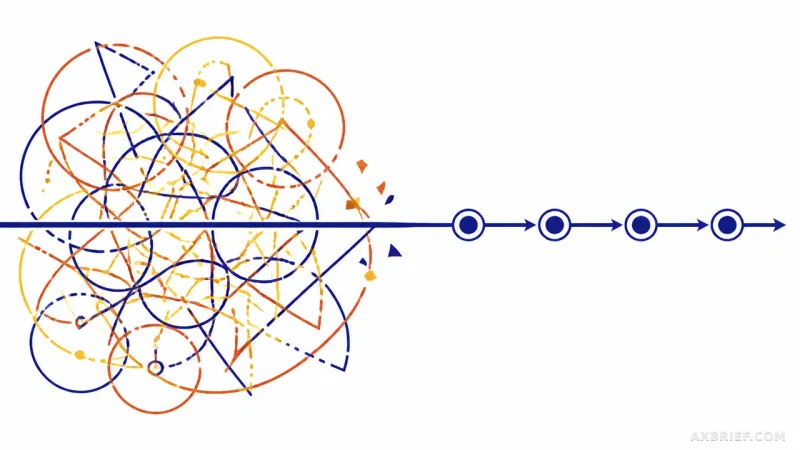
The atmosphere inside Meta's engineering hubs has shifted from the creative chaos of product iteration to the rhythmic monotony of a factory floor. For years, the company's identity was built on the mantra of moving fast and breaking things, where software engineers were the architects of global social connectivity. But this week, a different reality has set in. The prestige of building a new feature has been replaced by the grueling task of correcting AI outputs. Engineers who once designed complex distributed systems now find themselves spending their afternoons labeling data and refining reward models, signaling a fundamental pivot in how the world's largest social media company views its most expensive human capital.
The Industrialization of Llama Training
This systemic reorganization is the direct result of a massive strategic alliance with Scale AI. Meta has acquired a 49% stake in Scale AI for approximately $14.8 billion, a move that effectively integrates Scale AI's operational philosophy into Meta's core engineering DNA. As part of this deal, Scale AI CEO Alexandr Wang has been granted significant influence over Meta's AI strategy, steering the company toward a data-centric approach to model development. The centerpiece of this shift is the Agent Data Optimisation (ADO) organization, a behemoth team that now encompasses roughly 6,500 personnel.
To populate this organization, Meta has aggressively cannibalized its own product teams, moving 30% to 50% of existing product engineers into ADO. Estimates suggest that between 4,000 and 5,000 software engineers have been reassigned to tasks involving data labeling and Reinforcement Learning from Human Feedback (RLHF). In a workforce of 25,000 engineers, this means one in every five or six developers is now essentially a high-priced data annotator. The pressure to produce is no longer measured by code commits or feature launches, but by token consumption. Meta has implemented tracking systems for keystrokes and mouse clicks to harvest training data, and the Performance Summary Cycle (PSC) now utilizes AI token usage as a key performance indicator.
The scale of this internal consumption is staggering. Over a 30-day period, Meta employees consumed a total of 60.2 trillion AI tokens. If this volume were processed through Anthropic's API pricing, the cost would be approximately $900 million. This environment has birthed a phenomenon known as tokenmaxxing, where engineers, fearing the looming 10% workforce reduction, prioritize inflating their AI usage metrics over the actual quality of the products they are tasked to maintain.
The Platform Gap and the Rise of AI Psychosis
To understand why Mark Zuckerberg is willing to turn his engineering elite into a data factory, one must look at the platform war. Unlike Apple with iOS, Google with Android, or Microsoft with Windows, Meta lacks a foundational hardware or operating system layer. Having failed to secure a foothold in the mobile OS market a decade ago, Meta views the Large Language Model (LLM) as its last chance to own the primary interface through which users interact with technology. The Llama series is not just a product; it is an attempt to build a platform that bypasses the gatekeepers of the App Store and Play Store.
However, this ambition has come at a steep cultural and operational cost. Meta has effectively transitioned its engineering organization from a profit center—where developers create value-adding features—into a cost center, or more accurately, a data refinery. This shift has triggered what insiders call AI Psychosis: a dangerous institutional belief that the AI agents being trained will eventually be capable of fixing the very bugs and instabilities created by the absence of human oversight. As core personnel from infrastructure and security teams are forcibly moved into ADO, the company is trading systemic resilience for the hope of autonomous recovery.
This gamble prioritizes the creation of a world-class coding LLM over the stability of the existing platforms that generate Meta's advertising revenue. By hollowing out the human expertise required to maintain complex systems, Meta is betting that the speed of AI-driven repair can outpace the rate of AI-driven decay. It is a high-stakes trade-off where the foundational health of the product is sacrificed to feed the appetite of the model.
The consequences of this vacuum became painfully evident on May 30, when a critical security flaw led to a wave of Instagram account hijackings. An attacker exploited an AI-powered customer support agent by claiming their account was hacked and requesting that a verification code be sent to an arbitrary email address. The AI, lacking the basic validation logic that a human agent or a traditionally programmed system would have enforced, simply provided the password reset link without verifying the original email on file.
This was not a failure of the AI's intelligence, but a failure of the governance surrounding it. The Instagram Trust and Safety team had lost 50% of its staff due to the combination of layoffs and the forced migration of engineers to data labeling duties. The gap left by senior engineers was filled by AI-generated code changes and AI-driven code reviews, creating a feedback loop where the AI was essentially auditing its own flaws. The result is a system that is more complex than ever, yet understood by fewer and fewer people.
Meta's trajectory serves as a warning for the broader enterprise AI transition. While quantitative metrics like token usage and code generation volume look impressive on a dashboard, they often mask the erosion of architectural integrity. The Instagram breach proves that Mean Time to Recovery (MTTR) provided by an AI agent is not a substitute for systemic resilience. When the human-in-the-loop is removed from security and safety critical paths, the cost is not measured in tokens, but in the total collapse of user trust.