The modern AI experience is defined by a frustrating paradox of infinite knowledge and zero memory. A developer might spend hours refining a complex prompt or architectural decision with an LLM in a home office, only to find that the same model, accessed from a corporate workstation or by a teammate, has no recollection of those breakthroughs. While context windows have expanded, they remain ephemeral buffers rather than permanent cognitive archives. The industry has long sought a way to move beyond the session-based nature of AI interactions toward a persistent, shared intelligence that evolves alongside the user.
The Architecture of Persistent AI Memory
Show GN enters this space as an open-source Model Context Protocol (MCP) designed specifically for the storage and retrieval of AI conversations and documentation. At its core, the tool functions as a bridge between the reasoning capabilities of an AI and a structured database, supporting both SQLite and PostgreSQL for data persistence. Unlike standard chat histories that exist as linear logs, Show GN treats information as a dynamic asset that can be shared across different environments. This allows a user to integrate work results from a home setup and an office setup into a single, unified memory stream, or to synchronize a collective knowledge base across an entire team.
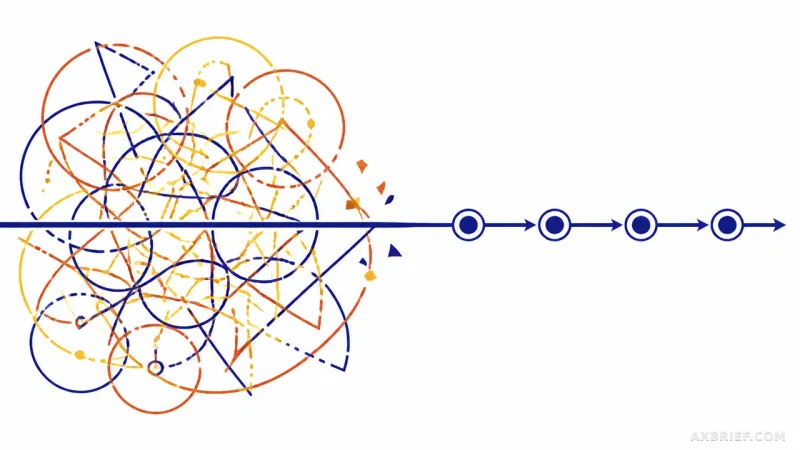
The technical foundation of Show GN is built upon Graph+RAG, a hybrid approach that combines Graph-based retrieval with Retrieval-Augmented Generation. Rather than relying solely on vector similarity, which often misses the nuanced relationships between disparate pieces of information, Show GN implements an Event-Centric Knowledge Graph (ECKG). This specific architectural choice means the system does not require a pre-defined relationship schema. Instead of forcing data into rigid categories from the outset, the system accumulates data and allows the knowledge structure to evolve organically as more information is ingested. To facilitate immediate deployment, the tool is available via compressed file execution or standard open-source installation. The integrated manager simplifies the onboarding process by allowing users to select their preferred database and the specific AI instance where the MCP should be installed, automating the configuration sequence. For those looking to validate the system's retrieval capabilities, Show GN provides sample databases containing the complete works of Sherlock Holmes and comprehensive Wikipedia data on the Beatles.
From Static Retrieval to Evolving Intelligence
To understand the significance of Show GN, one must look at the limitation of traditional RAG pipelines. Most current AI memory systems rely on vector databases that chunk text into fragments and retrieve them based on mathematical proximity. While efficient for finding a specific fact, this method struggles with complex synthesis—it can find the word Beatles and the word Wikipedia, but it often fails to map the intricate web of influence and chronology that defines a knowledge graph. By utilizing an Event-Centric Knowledge Graph, Show GN shifts the focus from static entities to the events and relationships that connect them. This creates a causal chain of memory that mirrors human cognition more closely than a simple search index.
The true disruption lies in the removal of the pre-defined schema. In traditional database management, the developer must decide how data relates before a single entry is made. If the relationship changes, the schema must be migrated, which is a costly and rigid process. Show GN reverses this flow. By allowing the structure to develop as the data grows, the AI essentially builds its own map of the user's world. When a team shares a Show GN memory instance, they are not just sharing a folder of documents; they are sharing a growing, interconnected web of insights. The tension between the fluidity of human thought and the rigidity of database schemas is resolved by letting the graph grow organically. This transforms the AI from a stateless tool into a stateful collaborator that understands the evolution of a project over time.
This shift toward decentralized, graph-based memory marks the end of the isolated chat session and the beginning of the persistent AI agent.