For many early-stage founders, the most frustrating gap is not the distance between an idea and a product, but the distance between a product and a network. You have a working MVP, your initial users are engaged, and the code is stable, yet the doors to Sand Hill Road remain firmly shut. This invisibility is the primary hurdle for teams operating outside the immediate orbit of Silicon Valley, where the difference between a struggling project and a scaling company often comes down to a single introduction to the right venture capitalist.
The Mechanics of Global Exposure
Startup Battlefield 200 serves as a high-velocity bridge across that gap. The application window for the next cohort closes on June 8 at 11:59 PM PT, marking the final opportunity for founders to secure a spot on one of the most scrutinized stages in the tech ecosystem. Those selected will travel to San Francisco to compete on the Disrupt Stage at Moscone West during Disrupt 2026. This is not a standard pitch competition; it is a concentrated exercise in brand acceleration and capital attraction.
The historical data validates the program's impact. Alumni of Startup Battlefield have collectively raised over $32 billion in funding and achieved more than 250 exits. The roster of past participants reads like a directory of modern tech giants, including Dropbox, Discord, Mint, Fitbit, and Trello. Many of these companies transitioned from total obscurity to market dominance after being acquired by titans such as Microsoft, Google, Salesforce, Uber, and Amazon. For a seed-stage team, the program provides a proven trajectory that bypasses years of traditional networking.
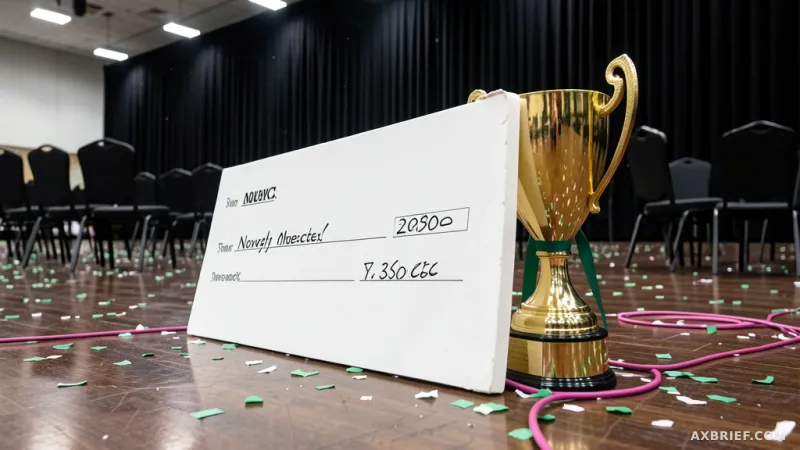
Eligibility is strictly tailored to the early-growth phase. TechCrunch is seeking startups at the pre-seed, seed, and certain Series A stages. While the program is open to bootstrapped teams, the core requirement is a functioning MVP and a vision for industrial innovation. Even for Series A companies, entry is typically reserved for those in capital-intensive sectors where early infrastructure costs necessitate a higher initial funding round. The ultimate reward for the top performer is a $100,000 equity-free prize, though the financial windfall is secondary to the strategic visibility granted to all finalists.
The Shift from Vision to Validation
Most startup competitions reward the quality of a slide deck or the charisma of a founder's vision. Startup Battlefield 200 operates on a different logic: it prioritizes the existence of a working product over the elegance of a business plan. This creates a sharp divide between teams that are merely dreaming of a solution and teams that have already built one. By demanding a functional MVP, the program filters for execution capability, which is the only metric that truly resonates with top-tier VCs in the current market.
The equity-free nature of the $100,000 prize is a critical detail. In an era where early-stage founders often surrender significant ownership for modest seed checks, receiving non-dilutive capital allows a team to extend its runway without sacrificing governance. However, the true value proposition is the signal it sends to the market. A selection for the Battlefield 200 acts as a third-party validation stamp. When a company pitches at Moscone West, it is no longer asking for permission to exist; it is demonstrating its viability to a global audience of investors and potential customers.
This transition from a local player to a global contender happens through the compression of time. The exposure gained during a single event in San Francisco can replace months of cold emailing and iterative pitching. By placing a working product in front of the world's most aggressive capital allocators, the program transforms the act of pitching into a competitive auction for talent and technology.
The window for global validation closes on June 8 at 11:59 PM PT for those ready to prove their product on the world stage.