The modern developer's workflow is a fragmented landscape of context switching. A typical hour involves jumping between a terminal, an IDE, and a browser tab where a LLM like Claude or GPT-4 resides. Every time a developer leaves their code to search for a specific shell command or research a library implementation, they pay a cognitive tax that disrupts their flow state. This friction has remained a constant even as AI models have become more capable, because the interface—the keyboard and mouse—remains a bottleneck for the speed of thought.
The Low-Latency Pipeline and Gaze-Driven Interaction
TalkMode enters this space not as another chatbot wrapper, but as a native macOS AI voice agent designed to eliminate these bottlenecks. The core of the system is a high-performance, low-latency pipeline that connects Speech-to-Text (STT), Large Language Models (LLMs), and Text-to-Speech (TTS) in a seamless stream. By optimizing for the macOS native environment, TalkMode minimizes the data transmission bottlenecks that typically plague cloud-based voice interfaces. This architecture allows the agent to support high-performance models from OpenAI and Anthropic, ensuring that the gap between a user's spoken word and the AI's response is nearly imperceptible.
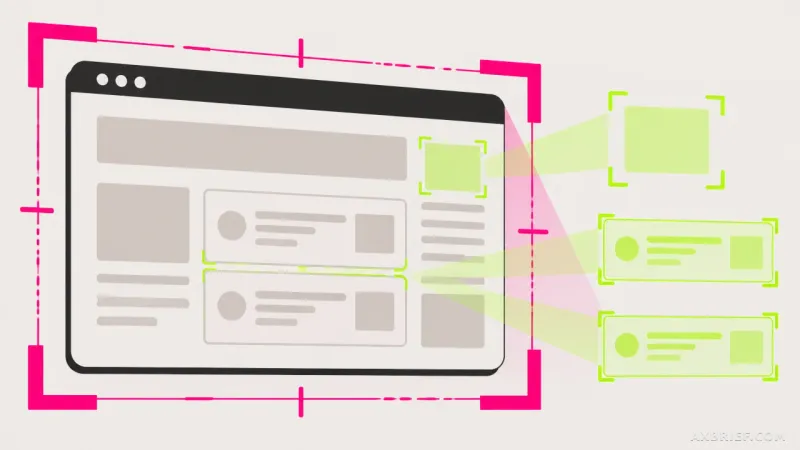
Beyond the audio pipeline, TalkMode introduces a sophisticated interaction layer based on gaze tracking. By monitoring where a user is looking on the screen, the agent can determine the current context of the conversation. If a developer is staring at a specific block of code in their IDE, the agent understands that the subsequent voice command refers to that specific line. This is paired with a turn-taking mechanism that manages the timing of speech, preventing the AI from interrupting the user and creating a natural, human-like conversational cadence. The system is built on a local-first architecture, prioritizing efficiency and security by keeping as much processing as possible on the device.
The operational workflow is a linear progression designed for speed. It begins with microphone input, which feeds into streaming STT. This text is then processed alongside context and memory references before being passed to the LLM agent. The agent then decides whether to provide a verbal answer or trigger a tool call, such as executing a command in the CLI. The final output is delivered via real-time TTS. This entire loop is accessible and documented through the project's official site at https://talkmode.baryon.ai/ and its source repository at https://github.com/baryonlabs.
From Mobile Assistants to the Developer Agent Paradigm
To understand the significance of TalkMode, one must contrast it with the existing generation of voice assistants. Siri and Alexa were built for the mobile era, where the primary use case was single-turn, low-complexity requests like checking the weather or setting a timer. These assistants operate on a passive request-response model: the user asks, the AI answers, and the session ends. This model is fundamentally incompatible with the needs of a knowledge worker or a software engineer who requires a persistent, context-aware partner capable of manipulating a complex system.
TalkMode rejects the mobile assistant grammar in favor of an Agent-OS approach. By directly linking the voice interface to the IDE and the CLI, it transforms the AI from a distant consultant into an internal engine of the development environment. When integrated with high-performance coding models like Claude Code or OpenAI's Codex, the agent can perform complex shell operations that would otherwise require tedious manual typing. A developer can now instruct the agent to research a bug and apply the fix directly to the terminal without ever lifting their hands from the keyboard or shifting their gaze from the code.
This shift moves the center of gravity for AI interfaces from mere convenience to high-level productivity. The agent does not just generate snippets of code in a chat window for the user to copy and paste; it executes the workflow. This includes recording ideas during a brainstorming session, conducting real-time research, and managing the deployment pipeline through voice commands. By removing the transition cost between tools, TalkMode allows the developer to maintain a state of deep work, where the AI handles the mechanical overhead of system control while the human focuses on architectural logic.
This evolution suggests a broader trend in the AI agent market. While the general-purpose assistant market is saturated by tech giants, there is a massive opening for specialized agents that dominate professional workflows. By layering a voice control system over the text-heavy CLI environment, TalkMode creates a powerful lock-in effect. It redefines the interface for knowledge work, suggesting a future where the operating system is not a collection of apps, but a single, multimodal agent that interprets intent through sight and sound to manipulate the underlying system.
The integration of gaze tracking and voice control represents a fundamental departure from the cursor-based interaction model that has dominated computing for decades. When a user can look at a line of code and say fix this, the physical step of moving a mouse and highlighting text is deleted from the process. This is the realization of a truly multimodal interface where human intention is projected directly onto the system with minimal friction.
As the industry moves toward local-first AI to solve privacy and latency issues, the battle for the next generation of computing will be fought at the OS level. The goal is no longer to build the best app, but to build the most intuitive intent layer. The ability of an agent to hold system-wide permissions and execute complex CLI tasks based on visual and auditory cues positions it as the primary interface for the machine. The trajectory set by TalkMode indicates that the future of the OS is not a desktop of icons, but a conversational partner with full administrative access to the machine's capabilities.