For years, the boundary between a sound recording and a picture of that recording was considered an absolute security wall. Government agencies and forensic investigators treated spectrograms—visual representations of audio frequencies—as safe, non-auditory artifacts. They were the blueprints of a sound, not the sound itself, and thus were shared openly in public dockets while the original audio remained locked away under federal law. This assumption of safety evaporated this week as the AI community demonstrated that a picture is no longer just a picture; it is a recoverable data stream.
The UPS Flight 2976 Breach and the NTSB Response
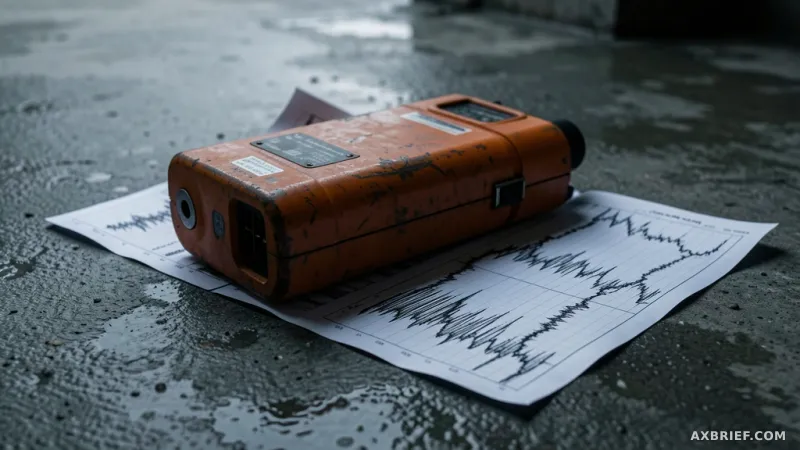
The National Transportation Safety Board (NTSB) recently took the drastic step of temporarily disabling external access to its public docket system. The catalyst for this shutdown was the discovery that AI tools were being used to reconstruct the voices of deceased pilots from a crash investigation. Specifically, the incident centered on the investigation of UPS Flight 2976, which crashed in Louisville, Kentucky. Under strict federal law, the NTSB is prohibited from releasing cockpit voice recordings to the public. To comply with these laws while still providing transparency for researchers, the NTSB uploaded spectrograms—mathematical conversions of sound signals into image files—to its public records.
The vulnerability was first highlighted by Scott Manley, a YouTuber known for his content on physics and astronomy. Manley pointed out on X (formerly Twitter) that the megabytes of data encoded within these images could potentially be used to reconstruct the original audio. Following this observation, users began combining these public spectrogram images with existing, publicly available crash transcripts. By utilizing AI tools, including Codex, the code-generation model developed by OpenAI, these users were able to translate visual patterns back into approximate audio signals. The result was a hauntingly accurate approximation of the cockpit conversations leading up to the crash.
Upon realizing that these reconstructed audio files were circulating on the internet, the NTSB immediately severed external access to the docket system to prevent further leaks. While the system returned to service last Friday, the agency has not fully restored all data. Currently, 42 investigation records, including those for UPS Flight 2976, remain classified and hidden from public view. The NTSB is now conducting a granular review of these files to determine if other sensitive information can be reverse-engineered by AI, signaling a shift in how the agency views the security of its public data.
The Mechanics of Audio Reverse Engineering
To understand why this happened, one must look at the difference between a traditional data leak and a mathematical reconstruction. Most audio leaks occur because of poor permission management or unsecured servers. This case is fundamentally different because the original audio files were never leaked; instead, the information was extracted from a derivative visual format. A spectrogram is not a simple drawing of a sound wave; it is a precise mapping of frequency intensity over time. Every pixel in a spectrogram represents a specific frequency and amplitude at a specific millisecond. In essence, the image is a high-resolution map of the original physical signal.
The reconstruction process begins by extracting the raw numerical data from the image pixels. While a human sees a series of colors and shapes, an AI sees a coordinate system of values. By treating the image as a dataset, the AI performs a form of reverse engineering, converting the visual intensity of the pixels back into acoustic oscillations. However, the raw signal extracted from a spectrogram is often noisy or imprecise. This is where the synergy of multi-modal AI becomes critical.
Users leveraged the publicly available transcripts as a ground-truth reference. The AI model uses the spectrogram to establish the basic structure and cadence of the speech, but it uses the text of the transcript to refine the pronunciation, inflection, and clarity. By treating the transcript as a corrective layer, the AI can fill in the gaps of the visual data, effectively guessing the most likely audio signal that matches both the image and the text. The use of Codex in this process suggests that the reconstruction was treated as a data-processing task, where the AI wrote the necessary logic to map visual frequencies back to audio samples with high precision.
This reveals a critical flaw in traditional data masking. For decades, the standard for protecting sensitive audio was to either delete the file or mute specific segments. The NTSB believed that converting audio to a visual format was a sufficient form of de-identification. In reality, they were providing the public with a mathematical blueprint of the voices they were legally required to protect. The AI did not find a back door into the NTSB servers; it simply solved the math problem that the NTSB assumed was too difficult for humans to solve.
A New Paradigm for Unstructured Data Security
The NTSB's decision to scrub its docket system marks a turning point in the philosophy of data security. We are entering an era where the file extension—whether it is .jpg, .png, or .pdf—no longer defines the nature of the data it contains. The risk is no longer about the format, but about the entropy and information density stored within that format. When AI can bridge the gap between a visual representation and a physical signal, the concept of a safe derivative file disappears.
For engineers and data architects, this incident demands a complete overhaul of de-identification strategies. Traditional masking, which focuses on hiding Personally Identifiable Information (PII) or redacting text, is insufficient when dealing with unstructured data that can be transformed. If a data pipeline produces a visualization—such as a heat map, a spectrogram, or a complex graph—that is based on sensitive raw data, that visualization must be treated with the same security classification as the raw data itself. The industry must move toward a validation step that asks: can this visual output be used to reconstruct the input?
This shift will likely accelerate the adoption of differential privacy. Unlike simple masking, differential privacy adds calculated statistical noise to a dataset, ensuring that while the overall trends remain visible, the specific individual data points cannot be reverse-engineered. In the case of the NTSB, adding a layer of strategic noise to the spectrograms would have made it mathematically impossible for an AI to reconstruct the original voices without destroying the image's utility for legitimate research.
The boundary of security has shifted from the perimeter of the server to the mathematics of the data. The belief that visual transformation equals anonymity is now a dangerous fallacy. As AI continues to master the art of reverse engineering, the only way to truly protect information is to ensure that the transformation process is mathematically irreversible.