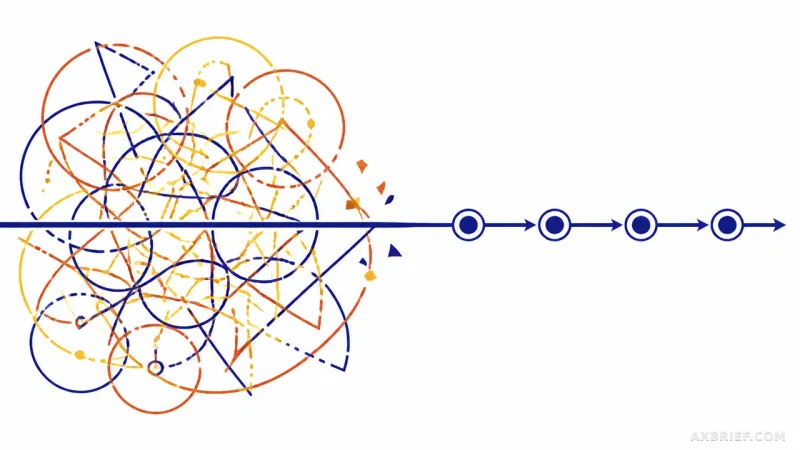
The modern developer's workflow has been reduced to a rhythmic dance with the Tab key. A ghost in the machine suggests a complex function, the developer glances at the syntax, finds it plausible, and accepts the suggestion in a fraction of a second. This cycle repeats hundreds of times a day, creating an intoxicating sensation of velocity. On the surface, productivity is skyrocketing, and the friction of boilerplate is vanishing. Yet, beneath this veneer of efficiency, a quiet erosion is taking place. The industry is moving away from a world where developers understand the machinery they build toward a world where they simply manage the output of a black box.
The Shift from Deterministic Abstraction to Probabilistic Agency
For decades, the evolution of software engineering was defined by abstraction. Tools like React or Object-Relational Mapping (ORM) libraries were designed to hide complexity, but they remained fundamentally deterministic. If a developer encountered a bug in an ORM, they could climb down the ladder of abstraction, inspect the generated SQL, and trace the causal link between the input and the failure. The logic was fixed; the output was predictable. The developer remained the primary architect of the causal chain, even if they were using a higher-level language to express it.
Generative AI introduces a paradigm shift by replacing deterministic abstraction with probabilistic agency. An LLM does not follow a fixed set of rules to produce code; it predicts the most likely sequence of tokens based on a vast statistical distribution. This means the AI is not a tool in the traditional sense, but a probabilistic agent. While the resulting code is often readable and syntactically correct, it arrives without a logical trajectory. The AI provides the destination—the working code—but it deletes the journey—the reasoning, the trade-offs, and the causal necessity of why the code was written that way.
This gap creates a crisis of cognitive ownership. Cognitive ownership is not about who physically typed the characters into the IDE, but about who possesses the causal map of the system in their mind. When a developer writes code manually, the act of creation is an act of mapping. When an AI generates the code, the developer is essentially signing a contract written in a language they only partially understand. The AI standardizes plausibility rather than competence. It produces code that looks professional, with clean variable names and a standard structure, but it often hides redundant functions or blurred responsibility boundaries. The collapse of cognitive ownership becomes evident the moment a developer is asked why a specific implementation choice was made and finds themselves unable to answer.
The Automation Irony and the Death of the Forge
This loss of ownership is not merely an individual failing but an organizational contagion. In a traditional development cycle, cognitive ownership was distributed across two layers: the author and the reviewer. This redundancy ensured that at least two humans understood the causal logic of every merge. However, the current trend is moving toward a closed loop of automation. AI writes the code, an AI-powered review bot suggests fixes, and the human developer, overwhelmed by the volume of generated output, provides a cursory LGTM (Looks Good To Me). In this loop, the causal logic of the codebase exists in no one's mind. The fundamental principle of you build it, you run it is effectively dismantled.
This phenomenon mirrors the automation irony observed in high-stakes fields like aviation, neuroscience, and medicine. In aviation, the crash of Air France Flight 447 highlighted how extreme reliance on automated flight systems can leave pilots unable to fly the plane manually when those systems fail. In medicine, the introduction of Computer-Aided Detection (CAD) for mammography led to a documented decrease in the sensitivity of human radiologists. As the system becomes more capable, the human operator becomes more dependent, and the practical wisdom required to intervene during a system failure atrophies.
In the software domain, this atrophy is accelerated by economic pressure. The cost of generating code has plummeted toward zero, but the cost of verifying that code remains constant. This creates a dangerous incentive structure where the developer who spends an hour critically verifying a one-second AI generation is viewed as the slowest member of the team. Critical adoption is sacrificed for the appearance of speed. This is particularly damaging because technical taste and architectural intuition are not developed by reading perfect code, but by the experience of failure. True growth happens in the forge of debugging, where a developer must painstakingly trace a bug to its root cause. By removing the experience of breaking things and the subsequent struggle to fix them, AI is closing the forge where the next generation of senior engineers is supposed to be tempered.
To combat this, technical leadership must move beyond individual willpower and implement structural safeguards. The first step is to redefine the meaning of LGTM. It must shift from a gesture of approval to a declaration of ownership: I can fully explain every line of this change. Organizations should implement random spot checks to ensure that cognitive ownership is actually being maintained rather than simulated.
Furthermore, leaders must identify core domains—the critical architectural pillars of the product—where AI is strictly forbidden from leading the design. In these zones, humans must hold the blueprint, using AI only to flesh out constraints or specify edge cases. The inefficiency that arises from this rigorous verification should not be viewed as waste, but as an insurance premium paid to ensure the organization's survival. The ultimate crisis for a leader begins when they become an approver of things they cannot verify. When the dual layers of cognitive ownership vanish, the decline in judgment becomes the organizational default. The new mandate for AI-era management is not to maximize output, but to control the speed of the anesthesia, ensuring the team remains awake enough to distinguish between a plausible answer and a correct one.