The AI gold rush has shifted from the cloud to the chassis. For the past few years, the industry's obsession centered on parameter counts, token windows, and the sheer scale of compute. But as the novelty of the chatbot interface fades, the frontier has moved toward the physical. The race is no longer just about who has the smartest model, but who can house that intelligence in a device that feels intuitive, premium, and indispensable. In this high-stakes transition, the boundary between aggressive talent acquisition and industrial espionage has blurred, leading to a collision between the world's most valuable hardware company and the vanguard of generative AI.
The Blueprint for a Hardware Empire
Apple has officially initiated legal action against OpenAI, io Products, and former employees Tang Tan and Chang Liu, alleging a systematic campaign to steal trade secrets. The core of the dispute centers on OpenAI's ambitious push into physical AI hardware, a venture spearheaded by former Apple design chief Jony Ive. To build the necessary infrastructure, OpenAI executed a massive $6.5 billion deal to acquire io, Ive's startup, effectively importing a turnkey hardware development ecosystem. This acquisition brought more than 50 engineers and developers into the OpenAI fold, including key figures like Tang Tan, who were tasked with translating AI capabilities into a tangible consumer product.
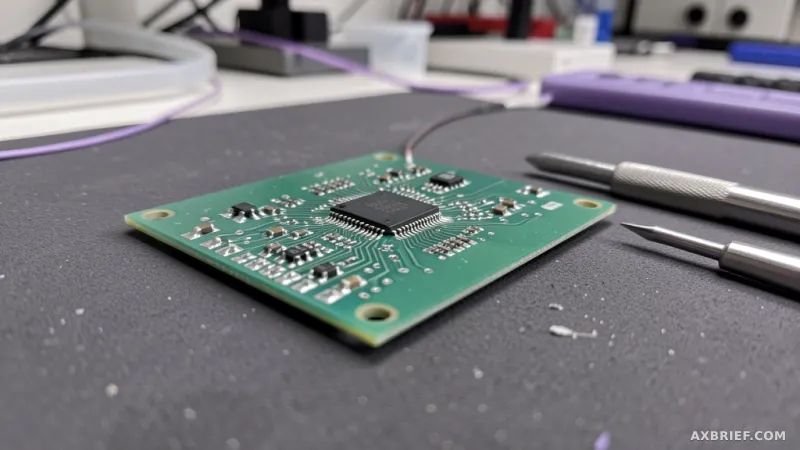
According to the legal filings, this transition of talent was accompanied by a transition of proprietary data. Apple alleges that Chang Liu, after leaving the company, did not simply rely on his professional expertise but actively exploited security vulnerabilities to exfiltrate confidential engineering files. The scale of the breach is significant: Liu is accused of downloading a technical dossier exceeding 1,000 pages. These documents were not general guidelines but specific, high-level manufacturing blueprints for complex circuit boards—the very nervous system of Apple's hardware products. By securing these files, Apple claims OpenAI gained unauthorized access to the internal design logic that defines Apple's hardware efficiency and reliability.
The Weaponization of the Interview Process
While the theft of digital files represents a traditional security breach, the more unsettling allegations involve the weaponization of the hiring process. Apple claims that OpenAI, through Tang Tan, transformed technical interviews into intelligence-gathering operations. In a practice described as show and tell sessions, candidates currently employed at Apple were allegedly encouraged to bring physical hardware samples and internal components into interviews to prove their capabilities. This went beyond discussing general engineering principles; candidates were reportedly asked to utilize internal project codenames for unreleased Apple products to verify their level of access and knowledge.
This tactic suggests a calculated effort to bypass traditional corporate security by leveraging the ambition of job seekers. By framing the request as a competency check, the recruiting process became a conduit for the physical transfer of Apple's assets. The tension here lies in the distinction between a candidate's innate skill and the proprietary tools they used to achieve that skill. When a candidate is asked to produce a physical prototype from their current employer, the interview ceases to be an evaluation of talent and becomes a procurement of intellectual property.
The deception extended beyond the interview room and into the supply chain. Apple alleges that OpenAI manipulated a trusted third-party partner to gain access to a proprietary metal-finishing technique. This specific process, which gives Apple products their signature tactile and visual quality, is a closely guarded secret. OpenAI allegedly misled the partner into believing they had received formal authorization from Apple to use the technique. By exploiting the trust established between Apple and its vendors, OpenAI allegedly bypassed the need for independent R&D, attempting to clone the physical identity of Apple hardware through deceit.
The Breakdown of Corporate Diplomacy
This legal escalation did not happen in a vacuum. Apple asserts that it attempted to resolve the matter through private channels long before filing the lawsuit. In February, Apple reached out to OpenAI to express its concerns regarding the leaked documents and the conduct of the former employees. Apple requested a thorough internal investigation and a clear plan for remediation. However, according to the complaint, OpenAI met these requests with total silence. The failure to respond to a direct inquiry from a strategic partner transformed a potential settlement into a public legal battle, signaling that the relationship between the two giants has reached a point of irreconcilable friction.
This conflict highlights a critical risk in the current AI talent war. In the software world, the movement of engineers is common and often viewed as a natural flow of ideas. However, in hardware, the intellectual property is often tied to physical specifications, chemical compositions, and manufacturing tolerances that cannot be replicated through general knowledge alone. When a company like OpenAI acquires a startup like io and hires dozens of specialists from a single competitor, the risk of trade secret contamination becomes an existential threat to the original creator.
For the broader AI industry, this case serves as a warning about the governance of talent acquisition. The line between a professional's experience and a company's trade secret is thin, but the legal consequences of crossing it are severe. As AI companies move toward creating autonomous agents and wearable devices, the temptation to shortcut the R&D process by absorbing the blueprints of established hardware leaders will only increase. The resolution of this case will likely define the legal boundaries of how AI firms can scale their physical ambitions without infringing on the proprietary foundations of the companies they seek to disrupt.
The battle for the future of AI is no longer just about who has the best weights and biases, but who owns the blueprints for the machines that will run them. This lawsuit proves that in the race for hardware dominance, the most valuable asset is not just the talent, but the silence that protects the secret.