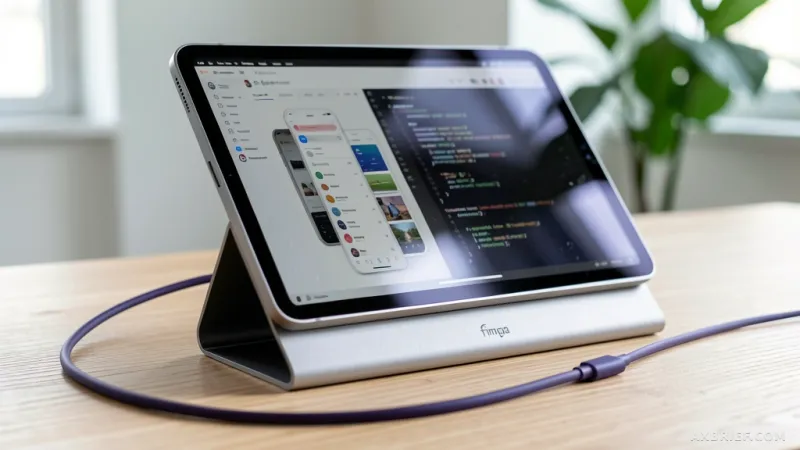
The ritual of the design handoff has long been the most fragile point in the product development lifecycle. For years, designers have meticulously crafted high-fidelity mockups in a vacuum, only to hand them over to engineers who must then reverse-engineer those pixels back into functional code. This gap between the visual intent and the technical execution creates a persistent tension, where the design is a static promise and the code is the messy reality. This week, the industry is witnessing a fundamental shift in this dynamic as the boundary between the canvas and the codebase begins to dissolve entirely.
The Expansion of the Canvas into Production
At Config 2026, Figma signaled a strategic pivot intended to move the platform beyond the role of a digital drawing board. The company introduced a suite of features designed to integrate the design process directly into the technical stack, effectively expanding the canvas to include code, motion, and agentic workflows. Central to this evolution are Code layers, which allow developers to bring actual production code directly onto the canvas. By doing so, Figma aims to eliminate the translation error that occurs when a developer attempts to guess the padding or color hex of a static element.
Complementing this is Figma Motion, a tool that integrates animation and timing settings directly into the design file. Rather than providing a separate video or a descriptive note about how a transition should feel, designers can now define the precise properties of motion within the tool. To ensure these assets are not trapped within a proprietary ecosystem, Figma Motion supports exports in a wide array of industry-standard formats, including CSS, JSON, React, MP4, WebM, animated SVG, and GIF. This ensures that the motion data is portable and immediately usable in a production environment.
Further technical expansions include new shader tools for high-end visual effects and the introduction of AI agents that can manage complex workflows across the platform. To facilitate the movement of data between design environments and AI tools, Figma has implemented the Model Context Protocol (MCP), Code Connect, and the ability to use Figma Make within local code environments. These updates transform the canvas from a place where pixels are manually dragged and dropped into a hub where design data flows fluidly between the editor, the browser, and the IDE.
The Threat of the Agentic Workflow
This aggressive expansion is not merely a feature update but a survival strategy. The rise of AI agents, specifically those from Anthropic, has created a scenario where the traditional mockup phase is becoming an unnecessary bottleneck. With the introduction of Claude Code and Claude Design, Anthropic is normalizing a workflow that bypasses the canvas entirely. Claude Code can edit multiple files across a codebase simultaneously, translating a user's high-level intent directly into executable code. When an AI agent can generate a functional, interactive prototype that feels like a real product in seconds, the need for a static, high-fidelity mockup vanishes.
This shift creates a direct existential threat to Figma's primary economic engine: the enterprise seat model. Historically, Figma's growth was driven by expanding the number of stakeholders—product managers, engineers, and marketers—who needed to enter the file to review designs and leave comments. However, if an engineer can generate and validate a UI directly within their coding environment using an AI agent, the incentive to log into a shared canvas disappears. The passive user, who once occupied a paid seat just to provide feedback, is replaced by an automated pipeline that translates design intent into software without human mediation in the design tool.
Figma is responding to this by repositioning itself as an operating layer. An operating layer is a system that preserves design intent, component logic, and implementation alignment regardless of which tool is being used. By moving away from the exclusivity of the .figma file and emphasizing data portability, Figma is attempting to ensure that its design systems remain the source of truth even if the canvas is no longer the primary workspace. The goal is to transition from a tool for visual drawing to a system for the architecture of intent. In this new paradigm, the designer's value shifts from the ability to manipulate pixels to the ability to architect a structured design system that AI agents can interpret and deploy across any platform.
The winner of this transition will not be the tool with the best drawing capabilities, but the one that creates the most resilient bridge between human intent and machine execution.