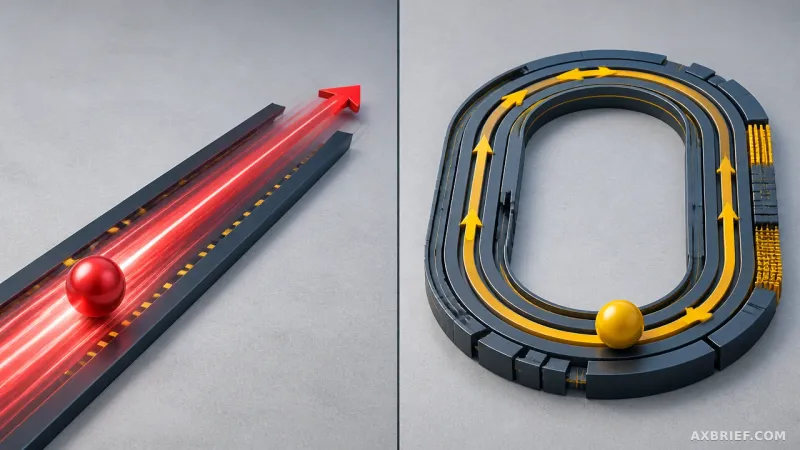
Most users currently interact with artificial intelligence through a series of ephemeral chat sessions. You open a new window, provide a set of instructions, and hope the model maintains the necessary context until the thread becomes too long and the memory begins to fray. When the window closes or a new session starts, the relationship effectively resets. The unit of value in the current AI era is the conversation, but this creates a fundamental friction for anyone trying to build a long-term workflow. We are treating the most powerful cognitive tools in history as disposable chat rooms rather than enduring collaborators.
The Architecture of Persistent Agency
To break this cycle, Grok Bot shifts the primary interface from a history of chats to a curated list of bots. This is not a mere cosmetic change to the sidebar; it is a structural reimagining of how an AI agent exists. In this system, the agent is the primary entity, and the chat is simply the interface used to communicate with it. The architecture is divided into a strict hierarchy of account-level and bot-level management to balance efficiency with specialization.
Common capabilities, categorized as Tools and Skills, are managed at the account level. This means that foundational abilities—such as the capacity to browse the web or send emails—are shared across all bots within a single account. By centralizing these tools, the system avoids the redundancy of configuring the same API access for every individual agent. However, the cognitive layer is handled differently. Memory and Routines are strictly bound to the individual bot. This ensures that a bot designed for codebase maintenance does not bleed its context into a bot designed for market research, maintaining a clean boundary between different professional roles.
The most potent aspect of this design is the implementation of Routines. Unlike standard AI interactions that require a human prompt to begin, Routines allow Grok Bot to operate as a persistent agent that triggers based on external events. These triggers are not limited to simple calendar schedules. The system integrates directly with development and operational workflows, allowing bots to activate upon specific system events. This includes opening or merging Pull Requests, pushing code, or receiving POST requests via Webhooks. The granularity of these triggers is extensive, covering issue creation, status changes, incident reports, label additions, specific string detections in comments, review approvals, and the resolution of threads. The bot does not wait for a command; it assumes responsibility for a domain and acts when the environment changes.
This operational framework is supported by five core conceptual pillars: the Bot, the Chat, the Prompt, the Tool, and the Artifact. The Bot is the persistent agent with a unique identity and memory. The Chat is the communication channel. The Prompt is the instruction set, which can be used once or saved as a Skill for repetition or a Routine for automation. Tools are the mechanisms of action, utilizing APIs, shell access, or direct computer manipulation to interact with the world. Finally, Artifacts are the tangible outputs—documents, code, or data—that exist independently of the chat history. By treating results as Artifacts rather than messages in a bubble, the system ensures that the work produced is a permanent asset rather than a lost fragment of a conversation.
From Chatbot to Digital Employee
The true departure from the industry standard becomes evident when observing how Grok Bot handles execution. In a typical LLM interaction, the AI simulates a response based on probability. Grok Bot, however, provides each agent with its own independent computer environment. When a bot begins a task—such as executing software or navigating a complex web workflow—the icon in the title bar turns purple. This visual cue signals that the bot is no longer just predicting text but is actively operating within its own isolated workstation.
This isolation is critical. By giving each bot its own virtual environment, the system mimics the real-world delegation of tasks to a human employee who has their own laptop and file system. This prevents cross-contamination of data and allows for complex file manipulations that would be impossible in a stateless chat window. Users can monitor this activity in real-time via a side panel without leaving the main conversation. If the bot encounters a blocker it cannot resolve, the system facilitates a seamless hand-off. The user can switch to a full-screen view, take direct control of the bot's environment to fix the issue, and then hand control back to the agent.
This shift extends to the way information is presented. The traditional long-form text response is replaced by context-aware widgets. Instead of describing the weather in a paragraph, the bot deploys a weather forecast widget. Instead of listing tasks in a bulleted list, it presents a board-style to-do list. The email integration is particularly telling; rather than drafting a message for the user to copy and paste, the bot provides a dedicated email widget showing the sender, recipient, subject, and body, allowing the user to send or delete the mail with a single click.
By moving the focus from the session to the agent, the design solves the problem of cognitive overhead. The user is no longer a prompt engineer constantly reminding the AI who it is and what it is doing. Instead, the user becomes a manager of a digital workforce, overseeing agents that possess their own tools, their own memory, and their own workstations.
This evolution suggests a future where the primary interface for AI is not a blank text box, but a dashboard of specialized agents who operate autonomously in the background and only request human intervention when the boundaries of their autonomy are reached.