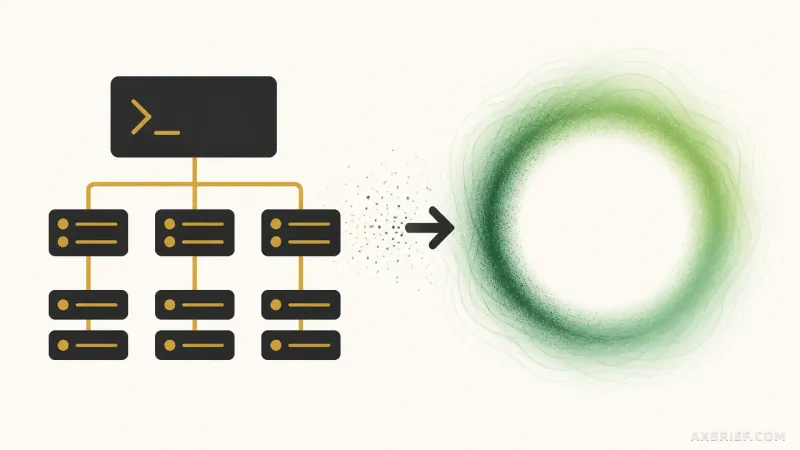
Autonomous Agents and the Shift in Workflow Automation
Modern enterprise workflows are increasingly defined by the friction of switching between disparate applications to complete repetitive tasks. Amazon Quick is addressing this operational bottleneck by introducing autonomous AI agents capable of executing background processes without requiring manual intervention or programming expertise. Users can now define workflows through natural language instructions, allowing the agent to learn the specific context of a task and execute it across multiple steps.
These agents are designed to handle persistent, high-frequency responsibilities such as updating CRM notes, drafting email correspondence, or summarizing complex regulatory changes. To maintain operational integrity, the agents function within predefined guardrails, ensuring that all actions remain compliant with organizational security policies. Users retain oversight through a real-time monitoring interface, where they can review agent outputs and provide iterative feedback. This feedback loop allows the agent to refine its accuracy over time, effectively offloading routine execution so that human teams can prioritize strategic decision-making.
Expanding Connectivity with 16 New Integrations
For these autonomous agents to function effectively, they require deep access to the fragmented data ecosystems typical of modern businesses. Amazon Quick has significantly expanded its integration capabilities by adding 16 new connectors, enabling seamless data flow between the platform and external applications. The newly supported services include Adobe, Cisco Webex, Dun & Bradstreet, Figma, Google Chat, HG Insights, Microsoft OneNote, Moody’s, Shopify, Smartsheet, Snowflake, Visier, WhatsApp, Zapier, and ZoomInfo.
Beyond simple connectivity, the platform has enhanced its Activity Feed to synthesize multiple notifications into single, prioritized summary cards. For instance, the system can consolidate multiple escalation messages into one actionable brief or prepare meeting agendas before an invite is even opened. This design prevents the context loss that typically occurs when users jump between different software interfaces. Furthermore, the platform provides a library of over 30 pre-configured skills, covering tasks such as sales lead generation, invoice processing, marketing analysis, and payroll forecasting. Organizations can deploy these skills immediately without writing code or publish their own custom skills to a curated internal library. Detailed documentation and setup guides are available at https://quick.amazon.com.
Breaking Data Silos Under AWS Security Standards
One of the primary challenges in data-driven decision-making is the existence of data silos, where critical information is trapped in isolated systems like Salesforce transaction histories or Databricks engagement metrics. Amazon Quick now enables the real-time synthesis of these disparate data sources. When a user poses a question in natural language, the platform aggregates the necessary data to generate interactive dashboards or analytical reports. Once an application is developed, it can be deployed as a web application and shared across teams, facilitating immediate collaborative decision-making.
Security remains a foundational element of this architecture, as the platform adheres to standard AWS infrastructure protocols. Access control is managed via AWS IAM, ensuring that agents only interact with data for which they have explicit authorization. Furthermore, VPC-based network isolation and encryption are applied to protect sensitive information. Security teams maintain full visibility through administrative controls, including comprehensive audit trails and granular, task-level permission settings. Current Amazon Quick Plus users can access these features immediately, while Professional and Enterprise tier users will receive access through a phased gate preview.
By reducing the time spent on manual data collection and cross-platform navigation, this update shifts the focus of the modern worker toward high-level strategy. Success in this new environment is no longer determined by technical proficiency in tool management, but by the precision and clarity of the natural language instructions provided to the agent.