A quiet afternoon in a Daegu manufacturing plant reveals a troubling pattern. Production lines stand idle, not for lack of demand, but for lack of hands. Recruitment posters cling to factory walls, their promises of competitive wages ignored by a shrinking working-age population. This silence is the catalyst for a new industrial experiment, where the void left by skilled laborers is filled not by static machinery, but by AI-driven humanoid robots capable of navigating the human world.
The 2.37 Billion KRW Blueprint for Humanoid Integration
To combat the deepening labor crisis, the city of Daegu has established the AI-based Humanoid Robot Manufacturing Specialized Hub. This initiative, part of the 2025 Robot Flagship Regional Hub project led by the Korea Institute for Robot Industry Advancement (KIRIA), represents a strategic shift from simple automation to humanoid deployment. The project is a collaborative effort centered around the Daegu Machinery & Parts Research Institute (DMI), with participation from the Kyungpook National University Industry-Academic Cooperation Foundation, IM Robotics, and Isoll. The development and verification phase spanned 11 months, running from July of last year through May of this year.
Financial backing for the hub totals 2370 million KRW. The funding structure is a public-private partnership, consisting of 950 million KRW in national funds, 950 million KRW in city funds, and 470 million KRW in private investment. This allocation ensures that over 80 percent of the budget is guaranteed by government and municipal sources, providing a stable foundation for high-risk R&D. The expenditure is divided into four strategic pillars: the construction of the manufacturing-specialized hub, the acquisition of core elemental technologies, the cultivation of specialized companies, and the creation of a collaborative network.
At the heart of the hub is a sophisticated simulation analysis system that bridges the gap between virtual design and physical execution. By creating a high-fidelity testbed, the center allows developers to synchronize virtual movements with real-world robot actions. This synchronization is critical; it allows the system to identify and eliminate potential physical collisions or operational errors before a robot ever touches a factory floor. The result is an optimized process path that minimizes downtime and maximizes safety during the transition from simulation to reality.
As a tangible outcome of this localization effort, the hub has unveiled a bipedal humanoid robot platform standing 140cm tall and weighing 50kg. Beyond the hardware, the project has identified five robot supply and System Integration (SI) companies and trained 15 field-ready specialists. To ensure these tools are not just prototypes, a Humanoid Technology Research Association was formed, resulting in the development of two standard process models. This creates a full value chain, from hardware platform development to professional training and process standardization, ensuring the regional industry can sustain itself independently.
Engineering the Sim-to-Real Transition
When designing a robot for the factory floor, engineers face a fundamental choice: mimic the average human for maximum versatility or optimize the form factor for specific industrial constraints. The Daegu platform chooses the latter. The decision to set the height at 140cm and the weight at 50kg is a calculated response to the spatial limitations of existing manufacturing plants. Unlike traditional industrial robots that are bolted to the floor, this bipedal platform must navigate narrow aisles and maneuver between heavy equipment. The 50kg weight is a physical compromise, providing enough mass to handle required loads while remaining light enough to maintain energy efficiency and safety during movement.
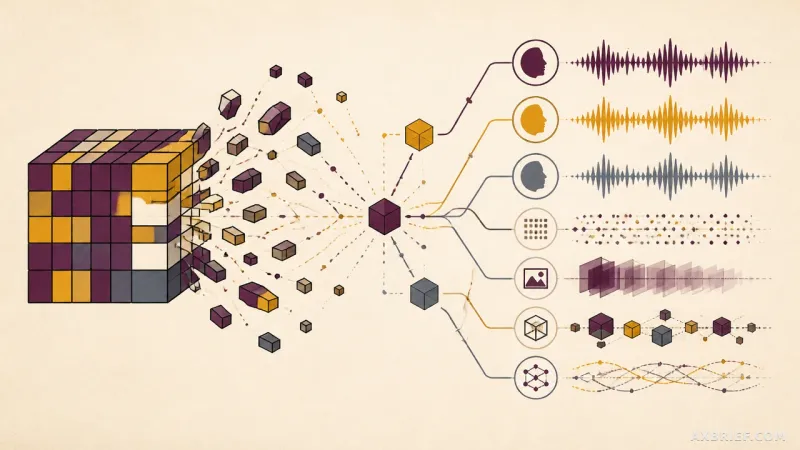
However, the hardware is only as effective as the software controlling it. The real innovation lies in the simulation framework used to close the sim-to-real gap. The development team refined dynamic models to ensure that movements executed in a virtual space are replicated with precision in the physical world. Variables such as floor material, ambient lighting, and the exact distance to workpieces are reflected in a digital twin in real-time. The walking algorithms learned in the virtual environment are passed through the simulation testbed for error correction before being uploaded to the physical hardware. This iterative loop allows the team to update control algorithms without the cost and risk of repeated physical failures.
This verification structure operates through the manufacturing-specialized hub, which serves as more than a research lab. It is a mirrored environment of actual manufacturing processes. Here, the robot is tasked with executing the two developed standard process models, proving it can complete missions in a physical environment that matches the virtual parameters. By reducing the error margin between the simulation and the site to near zero, the 140cm platform evolves from a laboratory curiosity into a viable industrial tool.
This approach specifically targets the limitations of wheeled robots. Bipedal movement allows the platform to traverse stairs and navigate complex obstacles that would stop a traditional AGV (Automated Guided Vehicle). Furthermore, the 140cm height aligns with standard workbench levels, and the 50kg weight reduces the kinetic energy involved in potential collisions, enhancing worker safety. The system is designed as a virtuous cycle: data collected from the physical floor is fed back into the virtual environment to further refine the simulation, continuously improving performance over time.
Moving Beyond Fixed Automation
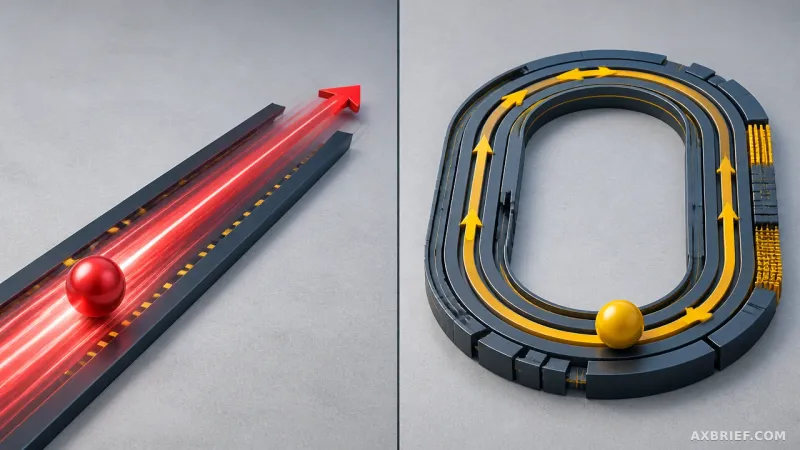
For decades, industrial robots have operated on a fixed-coordinate system. They are powerful but rigid, confined to a specific radius. In this traditional model, the human is the flexible element, tasked with bringing parts to the robot or adjusting the environment to fit the machine's limited reach. The humanoid standard process models developed in Daegu invert this relationship. The robot now adopts the human's role, moving flexibly within the existing workspace rather than requiring the workspace to be rebuilt around the robot.
To achieve this, the city focused on four execution areas: hub construction, core technology acquisition, company growth, and network building. This is a holistic strategy; introducing a single robot is useless without the infrastructure to support it. The hub provides the testbed, the core technology ensures precision and environmental awareness, and the network of companies ensures the technology is updated based on real-world feedback. By establishing standard process models, Daegu is creating a universal language for humanoid movement in factories, ensuring that different robot models can operate under the same operational standards.
Sustainability is managed through the Humanoid Technology Research Association. By bringing together DMI, Kyungpook National University, IM Robotics, and Isoll, the project moves away from isolated corporate development toward a shared standard. This interoperability is key. If multiple manufacturers follow the same standard process models, factories can mix and match robot platforms without needing to rewrite their entire operational logic. The research association currently focuses on sharing empirical data to increase the precision of these standard models, ensuring they can handle the unpredictability of a live factory.
The SI Bottleneck and the Path to an AI Robot Capital
The identification of five SI companies is perhaps the most critical commercial milestone of the project. In robotics, the hardware is rarely the primary bottleneck; the challenge is System Integration. An SI company is the entity that weaves sensors, controllers, and communication networks into a cohesive system that talks to the factory's existing software. Bipedal robots are significantly more complex to integrate than fixed arms because their spatial footprint and movement paths are dynamic. By securing five specialized SI firms, Daegu has removed the primary barrier to commercial adoption, ensuring there are organizations capable of actually installing these robots into production lines.
Similarly, the training of 15 specialists addresses the operational gap. These are not theoretical roboticists but field engineers capable of optimizing robot behavior in real-time. A humanoid robot can lose balance or malfunction due to a minor change in the environment—a spilled liquid or a shifted pallet. Without on-site personnel who can troubleshoot these exceptions and maintain the hardware, a humanoid robot becomes an expensive ornament. These 15 specialists serve as the technical bridge between the developers and the end-users, drastically reducing the cost of early-stage adoption errors.
Together, these five companies and 15 specialists form the minimum viable ecosystem for a regional robot industry. By combining academic research from Kyungpook National University with the practical application of DMI and private firms, Daegu is building a self-sustaining loop. The development of the two standard process models provides the operational manual, while the SI firms provide the installation capability and the specialists provide the maintenance.
This entire infrastructure is designed to plug into the National Robot Test Field, a massive state-level facility for verifying robot performance and safety. By linking the local hub to national infrastructure, Daegu reduces the cost and time required for final certification. The 140cm, 50kg platform will undergo final validation at the national level, ensuring that the sim-to-real synchronization achieved in the hub meets national safety and efficiency standards. This trajectory transforms Daegu from a city struggling with labor shortages into the AI Robot Capital, where the gap between human labor and machine automation is finally closed.