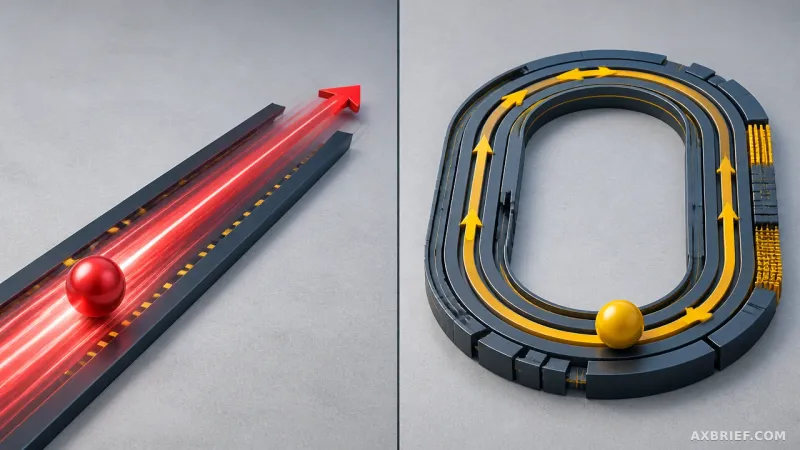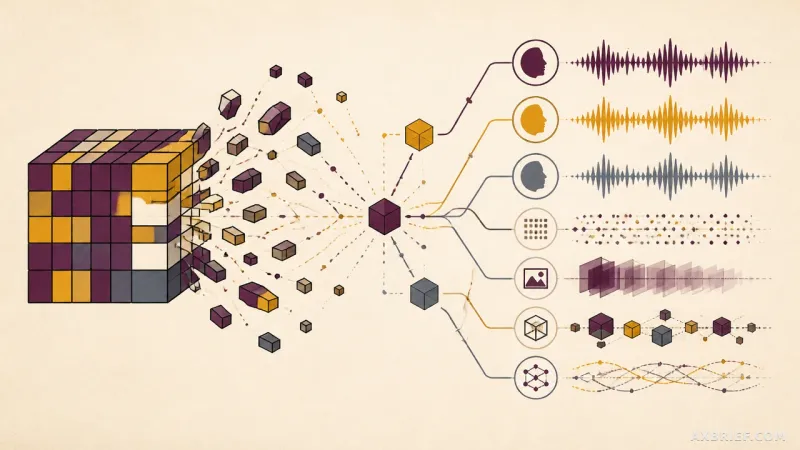
For years, the primary friction in the AI development cycle has been the migration tax. When a new model emerges that promises better reasoning or lower latency, engineering teams face a daunting choice: stick with a suboptimal model or spend days rewriting API wrappers, updating environment variables, and debugging SDK mismatches. This lock-in effect has historically favored the largest providers, as the cost of switching often outweighed the marginal gains of a new model. However, the industry is shifting toward a plug-and-play architecture where the model is no longer a fixed foundation but a hot-swappable component.
The Architecture of API Standardization
DeepSeek has positioned itself at the center of this shift by ensuring its API is natively compatible with the industry standards set by OpenAI and Anthropic. This design choice means that any software built to communicate with OpenAI or Anthropic SDKs can, in theory, communicate with DeepSeek by modifying only the API key and the endpoint URL. There is no requirement to import new libraries or restructure the request-response logic, effectively eliminating the development overhead typically associated with model migration.
This compatibility extends to the core model naming and behavior logic, though a significant transition is scheduled for the near future. As of July 24, 2026, at 15:59 UTC, DeepSeek will update its model naming convention. The existing deepseek-chat and deepseek-reasoner identifiers will be deprecated. In their place, the deepseek-v4-flash model will serve as the primary engine, operating in two distinct modes. The non-thinking mode will replace deepseek-chat for standard, fast interactions, while the thinking mode will replace deepseek-reasoner for tasks requiring complex chain-of-thought processing. This consolidation simplifies the model portfolio while maintaining the functional distinction between rapid response and deep reasoning.
The Shift Toward Model Agnostic Agents
The true impact of this compatibility is felt not in simple chat interfaces, but in the burgeoning ecosystem of AI coding agents. Tools such as Claude Code, GitHub Copilot, and OpenCode are designed to act as autonomous or semi-autonomous collaborators within the terminal and IDE. Traditionally, these tools were tightly coupled with their respective providers. The ability to redirect these agents to a DeepSeek backend without writing a single line of code transforms the developer's workflow from a commitment to a provider into a strategic selection of a tool.
By designating DeepSeek as the backend model within the settings of these agents, practitioners can perform real-time A/B testing between different LLMs. This allows a team to compare the actual cost-to-performance ratio of deepseek-v4-flash against other frontier models using their own proprietary codebase as the benchmark. The tension here is no longer about which model is objectively better, but which model is most efficient for a specific task. When the cost of switching drops to zero, the competitive pressure on model providers shifts from ecosystem lock-in to raw performance and pricing efficiency.
For those implementing these changes, the process is streamlined through the Agent Integrations Guide and the existing Anthropic API documentation. Because the request formats are mirrored, the transition is a matter of configuration rather than engineering. This accessibility allows developers to optimize their AI pipeline on the fly, swapping to a reasoning-heavy model for complex refactoring and switching back to a flash model for routine documentation or boilerplate generation.
This decoupling of the agent interface from the model backend signals the end of the proprietary API moat. When the most powerful coding tools in the world can be powered by any compatible backend, the value migrates from the API gateway to the intelligence of the model itself.