
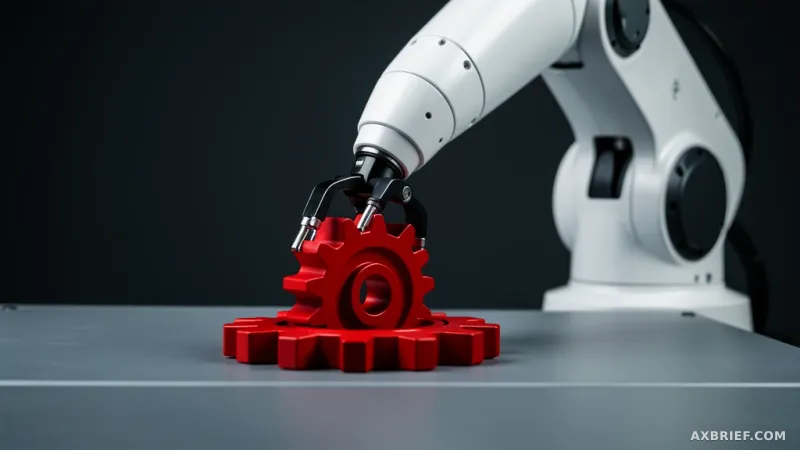
For decades, the path to mastering robotics has been defined by a frustrating paradox. Engineering students spend years studying complex kinematic equations and circuit diagrams on whiteboards, yet they rarely touch a physical actuator until their final senior project or their first professional internship. It is the equivalent of reading a textbook on swimming for four years without ever stepping into a pool. This gap between theoretical physics and physical implementation has created a bottleneck in the workforce, where graduates possess the mathematical knowledge but lack the tactile intuition required to debug a real-world automation line.
The Architecture of a Structured Robotics Ecosystem
Electromate is attempting to collapse this gap by officially launching the Dobot educational robot lineup and its accompanying accessory suite across the Canadian market. This expansion is not a simple hardware distribution play; it is the deployment of a structured ecosystem designed specifically for universities, vocational training centers, and research laboratories. By integrating Dobot's platforms into the Canadian supply chain, Electromate is providing the infrastructure necessary for students to engage with robot programming, automation systems, and mechatronics—the multidisciplinary fusion of mechanical engineering, electronics, and computer control.
The core of this offering lies in the transition from standalone hardware to integrated packages. Rather than selling a robotic arm in isolation, the ecosystem provides a suite of specialized accessories that allow learners to build functional, miniature versions of industrial processes. This approach transforms the classroom into a living laboratory where control theory is no longer an abstract concept but a visible movement of a joint. Students can experiment with how a specific line of code translates into a precise physical coordinate, effectively turning the learning process into a series of iterative, physical experiments.
For educational institutions, the primary hurdle has always been the barrier to entry. High-end robotics typically require massive budgets, specialized installation teams, and rigorous safety certifications. By focusing on a platform optimized for education, Electromate is lowering these hurdles. Research labs can now move from a theoretical hypothesis to a physical prototype in a fraction of the time, while students can receive immediate physical feedback on their code. This stability in the supply chain ensures that the hardware is not just present in the room, but is supported by a technical framework that prevents educational delays due to maintenance or procurement issues. More detailed information on the specific product tiers is available through Electromate.
Breaking the Steel Fence of Industrial Robotics
To understand why this shift matters, one must look at the physical reality of the industrial factory floor. In a professional manufacturing environment, robotic arms are almost always sequestered behind heavy steel fences or guarded by light curtains—optical sensors that trigger an emergency stop the moment a human limb breaks the beam. This isolation is a necessity because industrial robots are designed for raw power and extreme velocity. A minor calibration error or a misplaced line of code in a high-torque industrial arm can result in catastrophic equipment failure or severe human injury. For a student, the industrial environment is a place of high stakes and high fear, which inherently stifles the trial-and-error process essential to learning.
Dobot's educational platform fundamentally removes this fence. The design philosophy shifts the priority from maximum throughput and power to safety and repeatability. By scaling down the force and increasing the safety guardrails, the platform allows the learner to stand inches away from the machine, observing the nuances of its motion in real-time. It replaces the heavy steel hammer of industry with a precision carving tool, allowing students to fail safely. When a student makes a mistake in a Dobot environment, the result is a misplaced object or a halted program, not a destroyed facility.
This accessibility extends to the software layer. Industrial robots often require mastery of proprietary, arcane languages that vary wildly between manufacturers. A mistake in these languages can be prohibitively expensive. In contrast, the educational lineup emphasizes intuitive interfaces and graphical programming environments. This shift allows beginners to construct logic blocks and define movement paths without getting bogged down in syntax errors. It moves the educational focus away from the struggle of coding and toward the logic of automation. The goal is not to teach a student how to use one specific brand of software, but to teach them how to think like a systems architect.
Furthermore, the modularity of the hardware mirrors the flexibility of a LEGO set. While industrial robots are typically custom-built for a single, unchanging task, the Dobot ecosystem uses standardized modules. Students can swap a mechanical gripper for a vacuum suction cup or integrate various sensors to change the robot's function entirely. This modularity forces the learner to consider the entire system—how the electrical signal from a sensor triggers a software decision, which then manifests as a mechanical action. This is the essence of mechatronics, and providing it in a modular format allows students to simulate diverse industrial scenarios without needing a million-dollar budget for every new project.
Accelerating the Prototyping Cycle in Research
The impact of this rollout extends beyond the undergraduate classroom and into the realm of professional research and prototyping. In a traditional research setting, the time spent building the physical apparatus often outweighs the time spent on the actual experiment. If a researcher wants to test a new control algorithm, they might spend weeks designing a custom joint or machining a specific bracket. This physical overhead slows the pace of innovation, turning the research cycle into a slog of hardware fabrication.
By utilizing a standardized platform with a wide array of pre-built accessories, researchers can bypass the fabrication phase. They can rapidly assemble a mock-up of a production line to verify a theory, identify structural flaws, and refine their algorithms before ever moving to a full-scale industrial prototype. This acceleration of the prototyping cycle means that the distance between a conceptual breakthrough and a physical proof-of-concept is drastically shortened. When the hardware becomes a reliable, standardized variable, the researcher can focus entirely on the optimization of the process and the precision of the logic.
Ultimately, this creates a new breed of engineer. The industry is moving away from the era of the specialist who only knows one machine and toward an era of the generalist who understands the logic of automation. By experiencing the full lifecycle of a robotic system—from the first line of code to the final physical movement—students develop a level of professional intuition that cannot be taught through simulation software. They learn the friction of the real world, the unpredictability of physical sensors, and the necessity of robust error handling.
The result is a pipeline of engineers who enter the workforce not as novices, but as practitioners ready to manage the complexities of a fully automated future.



