Every robotics engineer has faced the cable nightmare. It is the moment when a sophisticated mechanical design meets the reality of electrical routing, and suddenly, the interior of a robotic arm or a mobile chassis becomes a chaotic nest of wires. In these tight spaces, a single pinched cable or a slightly misplaced connector can lead to intermittent signal loss or total mechanical failure. The struggle is not just about organization; it is a fundamental battle against physics where the volume of wiring often dictates the minimum size of the robot itself.
The Hardware Blueprint for Extreme Density
Elmo Motion Control is addressing this physical bottleneck with a new generation of ultra-compact, multi-axis servo drives and motion controllers designed to survive where most electronics fail. From the crushing pressures of the deep ocean to the thin air of high-altitude environments, these systems are engineered to maintain performance despite extreme temperature swings, humidity, and vibration. The company is expanding its existing Platinum line and introducing the Titanium line, a series specifically designed to push control logic down to the drive level, thereby stripping away the need for extensive safety wiring and external hardware.
This new portfolio will be showcased at Automate 2026 in Chicago from June 22 to June 25, 2026. The lineup consists of five primary products: the Titanium Castanet, Titanium Harmonica, Titanium Maestro, Platinum Gold (Jori), and Platinum Symbol. Together, these devices cover the entire spectrum of robotic motion, from the massive motors that drive a cobot's primary joints to the miniature actuators required for high-precision robotic fingers. This allows designers to synchronize motors with wildly different power requirements under a single, unified architecture.
At the top of the control hierarchy sits the Titanium Maestro. This motion controller can manage up to 256 axes and supports the EtherCAT protocol at a blistering speed of 100 microseconds. In precision manufacturing where hundreds of motors must move in perfect unison, this level of communication speed is critical to eliminating lag and ensuring sub-micron accuracy. By consolidating the control of hundreds of axes into a single unit, the Maestro drastically reduces the amount of cabling required to link the brain of the robot to its limbs.
For smaller-scale applications, the Titanium Harmonica offers a compact two-axis control structure. It achieves impressive power densities, supporting up to 50A/100V and 35A/200V. This allows a single, tiny component to handle two axes of motion while enduring high current loads, effectively halving the wiring bulk in the drive section of small robots. When the application demands raw power, the Platinum line takes over. The Platinum Gold (Jori) 30A/60A models provide continuous power between 20kW and 40kW, utilizing Silicon Carbide (SiC) power stages to handle high voltages and temperatures. Similarly, the Platinum Symbol provides up to 17kW of power. Both Platinum models integrate Gallium Nitride (GaN) technology, which enables faster switching speeds, reduces energy loss, and minimizes heat generation, allowing for smaller cooling systems and further reducing the robot's overall footprint.
From Component Shrinkage to Factory Floor Transformation
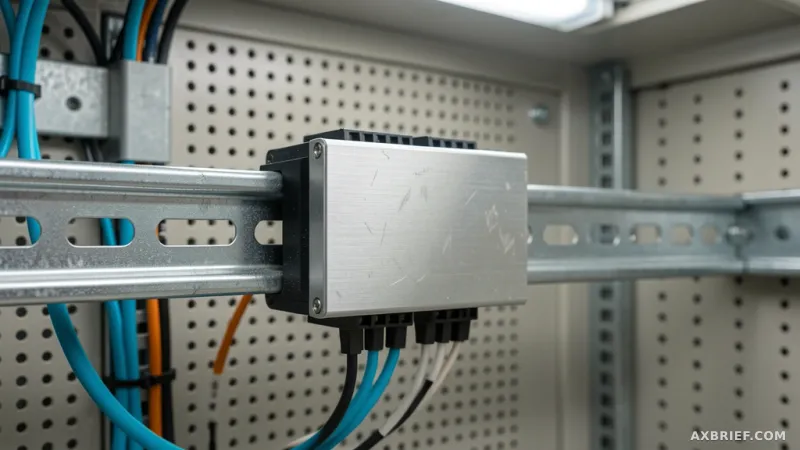
While the raw specs are impressive, the real shift occurs when looking at the Titanium Castanet. This device is roughly the size of a matchbox but manages two axes of control. In practical terms, one Castanet replaces two Elmo Tweeters. This is not just a 50% reduction in part count; it is a cascading reduction in the number of mounting brackets, connectors, and cables required. When the physical footprint of the drive is halved, engineers no longer have to enlarge the robot's chassis or compromise the mechanical design just to make room for the electronics.
The technical breakthrough here is the move to a single-bus synchronization structure. Traditional multi-axis control often requires operating two separate data buses and then running a complex synchronization process to align them. The Castanet integrates this into a single bus, synchronizing X and Y axis positioning simultaneously. By collapsing the communication path, Elmo has removed the signal interference and wiring complexity that typically plague multi-axis systems, ensuring higher signal integrity with fewer physical connections.
This drive toward integration extends into the realm of functional safety. In most industrial settings, the presence of a robot necessitates the installation of yellow safety fences—physical barriers that protect humans from accidental collisions. These fences are space-inefficient and disrupt the flow of the factory floor. Elmo has integrated functional safety directly into the controllers and servo drives, allowing manufacturers to implement safety protocols at the foundational level of the motion subsystem. By meeting strict international safety standards through certified hardware, companies can reduce or entirely eliminate the need for physical fences.
Elmo provides up to 17 certified functional safety features at the drive level. This means that instead of designing and verifying external safety relays and additional wiring loops, engineers can rely on the drive's internal logic to maintain a safe state during a hardware failure. This is particularly transformative for Autonomous Mobile Robots (AMRs), Automated Guided Vehicles (AGVs), and exoskeletons, where the robot must interact closely with humans. When safety is handled by the drive, the physical constraints of the robot are determined by the task it performs, not by the safety perimeter it requires.
To manage this complexity, Elmo provides the Elmo Application Studio III (EASIII) and Composer2 software toolsets. These tools allow engineers to move beyond off-the-shelf configurations and build custom control algorithms tailored to the specific physics of their machine. By validating these algorithms in a software environment before deploying them to the GaN and SiC hardware, developers can iterate faster and reduce the risk of physical collisions during the prototyping phase. This integration of software and hardware accelerates the transition from a custom prototype to mass production, ensuring that the performance gains seen in the lab are maintained on the assembly line.
The evolution of robot motion control is no longer about how many wires an engineer can possibly cram into a joint. It is about how many components can be eliminated without sacrificing power. By combining 100-microsecond communication, wide-bandgap semiconductors, and integrated safety, the focus shifts from managing complexity to maximizing density.
Robot design success is now measured by the ability to achieve maximum output with minimum physical infrastructure.