
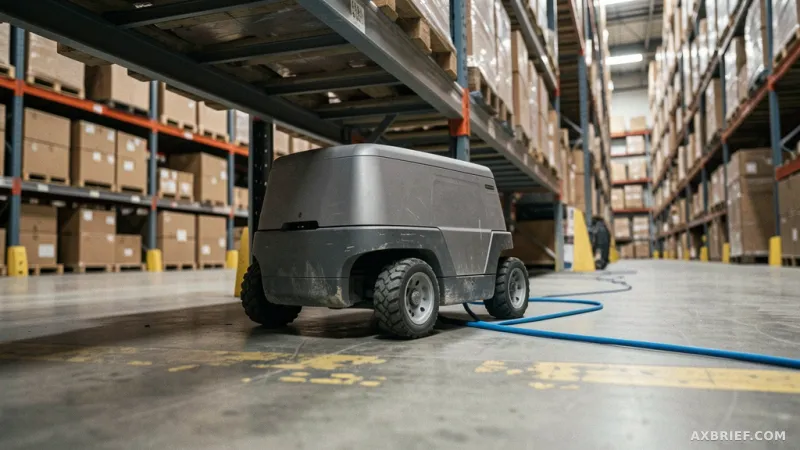
The modern fulfillment center is currently locked in a silent war of milliseconds. As consumer expectations for hyper-fast delivery evolve, the bottleneck has shifted from the speed of the delivery truck to the efficiency of the warehouse floor. For years, the industry relied on static automation—conveyor belts and pre-programmed paths that functioned well in isolation but struggled with the chaotic variability of real-world logistics. The current shift in the developer and robotics community is no longer about building a faster robot, but about creating a seamless cognitive link between the digital order and the physical movement of goods.
The Capital Engine for Physical AI
Fassto Robotics is positioning itself at the center of this transition. On July 2, the company completed its first round of Pre-IPO investment to accelerate the expansion of its Physical AI framework—artificial intelligence specifically designed to operate and adapt within physical environments. This funding round was led by a robot new technology association comprising Ion Asset Management, Cornerstone Investment Partners, and NH Hedge Asset Management.
The company already holds a significant regulatory advantage as the first entity in South Korea to receive the Grade 1 Smart Logistics Center certification from the Ministry of Land, Infrastructure and Transport. This certification serves as a validation of its system operational capabilities. Fassto Robotics intends to deploy the newly acquired capital toward three primary objectives: the advancement of its AI-based Warehouse Execution System (WES), the development of an integrated control solution for on-site robots, and the strategic expansion of its global partnership network.
Operational milestones are set for the immediate future. The company expects the results of its robotics business to become visible starting in the third quarter of this year. With NH Investment & Securities already appointed as the lead manager for its listing, Fassto Robotics is preparing to file for the preliminary IPO review in the second half of the year. The technical foundation for this growth is a comprehensive integration of the fulfillment process. The company utilizes a Fulfillment Management System (FMS) that synchronizes five critical layers: Order Management (OMS), Warehouse Management (WMS), Warehouse Execution (WES), Robot Control (RCS), and Transport Management (TMS).
From Automation to Physical Intelligence
Most logistics providers treat these five systems as separate silos, leading to a lag between when an order is placed and when a robot moves. The critical distinction in the Fassto Robotics approach is the convergence of Autonomous Mobile Robots (AMR), automated hardware, and the AI-WES into a single feedback loop. By feeding real-time data from orders, inventory levels, picking sequences, and shipping schedules directly into the robot control layer, the system moves beyond simple automation into the realm of Physical AI.
This integration solves the fundamental tension of the warehouse: the gap between the digital intent and the physical execution. In a traditional setup, a robot follows a path regardless of the current congestion or a sudden change in order priority. In a Physical AI environment, the AI-WES analyzes the entire warehouse state and adjusts the AMR's pathing and task priority in real-time. The effectiveness of the AI is not measured by the sophistication of the algorithm alone, but by how tightly the actual logistics data is coupled with the robot's physical movement.
Fassto Robotics is currently refining this operational model through collaborations with major partners, including Hanjin, to enhance on-site AMR operations. This domestic scaling serves as the blueprint for a larger global ambition. By partnering with international stakeholders, the company has set a target to achieve tangible results in the North American market by early 2027.
The ultimate success of logistics automation no longer depends on the raw hardware specifications of the robot. Instead, the industry's new benchmark is the level of data integration between the order management system and the robot control system. The ability to reflect real-time inventory and order shifts into a robot's path optimization is the only metric that determines true technical viability.
The convergence of high-level warehouse orchestration and low-level robotic control marks the end of the era of isolated automation.



