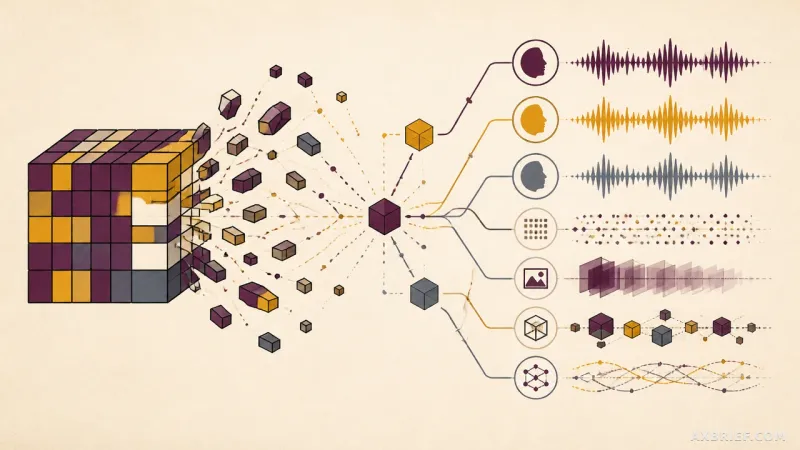
Modern software development is currently trapped in a paradox of abundance. Developers have access to more powerful large language models than ever before, yet the friction between a conceptual spark and a deployed product remains stubbornly high. The industry is grappling with the tool-switching tax—the cognitive load and time lost jumping between disparate environments for prompting, coding, testing, and deployment. This gap is where most AI-driven innovation stalls, as the latency of the model and the fragmentation of the pipeline create a bottleneck that slows the pace of iteration.
The Convergence of Speed and Infrastructure
On July 13, 2026, Google Korea addressed these systemic frictions during the 2026 Responsible AI X App Ecosystem Joint Forum. This event marked the first collaborative effort between the Responsible AI Forum, which focuses on development principles and social trust, and the App Ecosystem Forum, which tracks the evolution of IT technology within the mobile and app landscape. The gathering brought together a concentrated group of over 30 experts, including Professor Choi Jae-sik from the KAIST Kim Jaechul Graduate School of AI and Professor Cho Chang-hwan from Yonsei University's Department of Communication. The presence of venture capitalists, legal experts, and startup founders underscored the event's goal: defining a sustainable growth path for developers in an AI-first economy.
Representing Google, Shin Kyung-ja, head of Platform and Device Marketing for Asia-Pacific and Marketing Lead for Google Korea, alongside Shin Kyung-jun, head of Google Play Korea Partnerships, led the discussion on how to empower local developers to scale globally. The technical centerpiece of the forum was the introduction of Gemini 3.5 Flash and the updated Antigravity 2.0 platform. Gemini 3.5 Flash is positioned as a lightweight model specifically optimized for efficiency and speed. By reducing the computational overhead typically associated with frontier models, Gemini 3.5 Flash minimizes service response times, which directly translates to a more fluid and responsive end-user experience.
Complementing the model is Antigravity 2.0, a development platform designed to eliminate the bottlenecks of the implementation phase. Antigravity 2.0 provides a unified environment that supports the entire lifecycle of an application, from the initial ideation stage to final deployment. By integrating these steps into a single workflow, Google aims to remove the waste associated with switching between individual tools, thereby compressing the overall app implementation cycle.
Beyond the Screen: The Shift to Ambient AI
While the introduction of a faster model and a streamlined pipeline offers incremental gains, the true shift lies in the intersection of these tools and the evolution of hardware. The forum highlighted a critical transition: the expansion of AI interfaces beyond the traditional mobile screen. The emergence of new form factors, specifically intelligent eyewear, is redefining how users interact with AI. When a lightweight model like Gemini 3.5 Flash is paired with a wearable device, the requirement for near-instantaneous latency becomes a hard requirement rather than a luxury. A delay of a few seconds is acceptable in a chat window but is a failure in an augmented reality overlay.
This creates a new strategic imperative for startups and developers. The competitive advantage is no longer found simply in the capability of the AI model, but in the speed of the execution loop. By utilizing Antigravity 2.0 to rapidly prototype and Gemini 3.5 Flash to ensure real-time performance, developers can move from a mobile-centric mindset to an ambient AI mindset. The tension here is between the complexity of the AI's reasoning and the physical constraints of the hardware. The resolution provided by Google's new stack is the prioritization of efficiency over raw parameter count, allowing AI to move seamlessly into the physical world through new devices.
For Korean developers, this represents a window to secure global differentiation. The ability to deploy highly responsive, AI-integrated experiences on emerging hardware allows them to leapfrog traditional app development cycles. The synergy between a lightweight, fast model and an end-to-end development platform transforms the developer's role from a coordinator of tools into a pure architect of experiences.
The integration of high-velocity models and unified development environments is turning the conceptual phase of app creation into a near-instantaneous reality.