The modern smartphone experience has become a fragmented exercise in app-switching. To organize a simple dinner with friends, a user must jump from a messaging app to a calendar, then to a restaurant reservation platform, and finally to a ride-sharing service. This digital friction, often described as life admin, has remained a constant despite the evolution of hardware. The industry has long promised a seamless assistant, but the reality has mostly been a series of voice commands that struggle to execute tasks across different software silos.
The Architecture of Life Admin Automation
Google is attempting to dissolve these silos by integrating Gemini Intelligence directly into the Galaxy Z Fold8 and Flip8 series. This integration expands the scope of AI automation to over 40 of the most popular applications, moving beyond simple queries to active task execution. The system is specifically designed to handle high-friction digital chores, including ride-hailing, food delivery, retail shopping, restaurant bookings, travel arrangements, and event ticketing. By targeting these specific life admin categories, Google is positioning the AI not as a chatbot, but as an operational layer that sits above the operating system.
For users of the Galaxy Z Flip8, the entry point is designed for speed. By long-pressing the power button on the Flex Window, users can trigger the automation engine without unfolding the device. Once a destination or a specific product is requested, Gemini navigates the necessary apps, inputs the required data, and manages the procurement process. This removes the need for the user to interact with individual app interfaces, shifting the burden of navigation from the human to the AI.
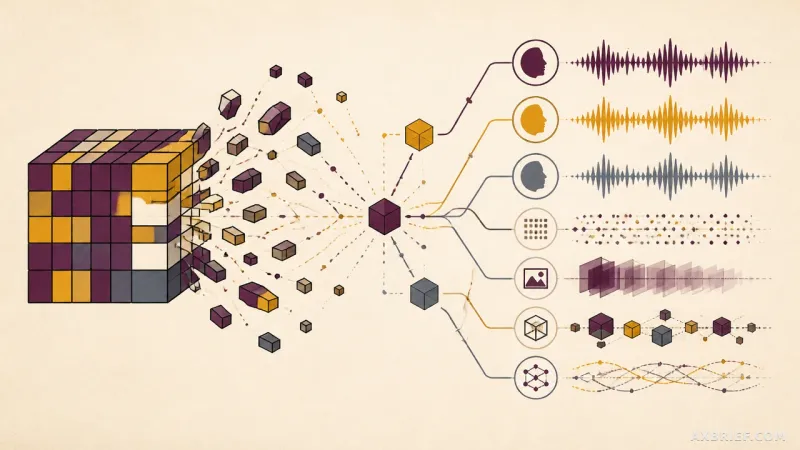
Beyond simple task execution, Google is leveraging the Z Fold8's larger canvas to introduce Gemini Notebook, formerly known as NotebookLM. This tool allows users to create a side-by-side workspace where multimodal data—including photographs, documents, whiteboard sketches, and voice recordings—can be dragged and dropped for analysis. To support this high-intensity research workflow, every purchaser of the Galaxy Z Fold8 Ultra, Fold8, and Flip8 receives a six-month trial of Google AI Pro. This subscription unlocks advanced capabilities such as Audio Overviews, Video Overviews, and automated slide generation, transforming the device into a synthesis engine for complex information.
From Chatbots to Autonomous Agents
The fundamental shift in this release is the move from reactive prompting to screen-aware reasoning. Gemini Intelligence does not simply wait for a text command; it parses the text and complex imagery currently displayed on the screen to understand context. If a user displays a shopping list or an inspirational image, the AI treats that visual data as a structured prompt. It analyzes the visual context to determine which app functions need to be triggered, effectively using the screen as a live input sensor.
This capability introduces a new delegation workflow. While Gemini executes a task in the background, the user is not locked out of their device. They can continue multitasking in other apps or even close the device entirely. The AI maintains the state of the operation, providing real-time tracking of the progress. If the AI encounters a detail that requires human judgment, it pauses and prompts the user for a correction. Once the user provides the necessary input, control is handed back to the AI to complete the sequence. The process concludes with a final notification, where the user performs a single approval action to authorize the final payment or booking.
This agentic behavior extends into the broader wearable ecosystem to reduce the reliance on a handheld screen. The Galaxy Watch 9 now integrates Gemini with a gesture-based trigger. By simply raising the wrist, users can activate the AI without needing a wake word, streamlining interaction in public environments. This hardware-software synergy reaches its peak with the upcoming intelligent glasses scheduled for release in the fall of 2026. These glasses will be available in four frame designs, including collaborations with Gentle Monster and Warby Parker. By utilizing Wear OS on a paired watch, users can control the glasses' functions through hand gestures, creating a hands-free interface that manages the AI agent without requiring physical touch on the frames.
Computing is shifting from a model where users find and operate apps to one where they delegate goals to an agent and simply approve the result.