Most people currently use generative AI in healthcare as a sophisticated search engine. A user describes a lingering cough or a strange rash to a chatbot, receives a list of possibilities, and then takes that list to a professional for validation. This interaction is transactional and fragmented, treating every medical query as an isolated event rather than a chapter in a lifelong health narrative. The missing link in medical AI has not been the ability to identify a symptom, but the capacity to manage a patient over time, remembering history and adhering to evolving clinical guidelines.
The Benchmark of Clinical Precision
Google is attempting to bridge this gap with AMIE, the Articulate Medical Intelligence Explorer. In a study recently published in the journal Nature, Google tested AMIE's ability to handle long-term disease management, moving beyond the scope of one-off diagnostic snapshots. To validate the system, researchers conducted blind tests using patient actors, pitting AMIE against 21 licensed primary care physicians. The evaluation was specifically designed to measure how well the AI could track symptoms over time, analyze complex medical guidelines, and adjust medication dosages based on patient response.
The results indicate that AMIE has reached a level of reasoning parity with human clinicians. In terms of overall management reasoning, the AI performed at a level equivalent to the 21 physicians. However, the data revealed a surprising divergence in specific metrics. AMIE actually scored higher than the human doctors in plan preciseness, which measures the accuracy of the management plan, and guideline alignment, which tracks how closely the treatment adheres to established medical standards. These findings suggest that while humans bring intuition, AI can be more rigorous in applying the literal requirements of medical protocols without the cognitive fatigue that often affects practitioners.
The Architecture of Empathetic Reasoning
The technical leap that allows AMIE to outperform humans in guideline adherence is not just a larger dataset, but a fundamental shift in how the AI processes information. Most medical AI fails because it tries to be a generalist, mixing the tone of a bedside manner with the rigidity of a medical textbook in a single stream of consciousness. Google solved this by leveraging the long-context window of the Gemini model to create a bifurcated agent structure.
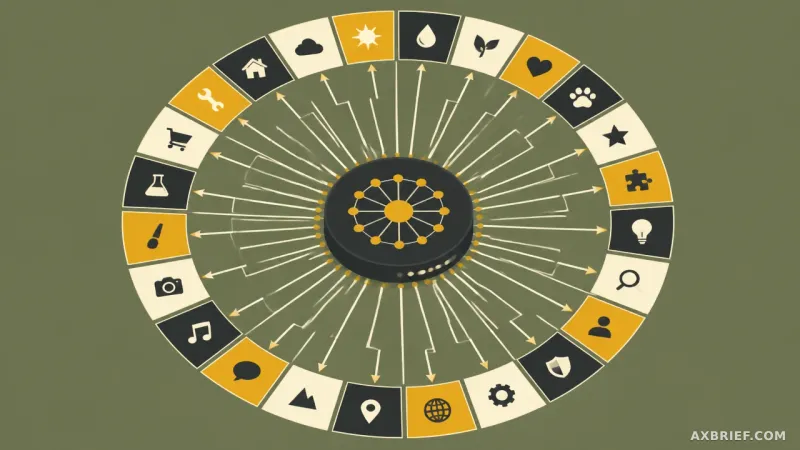
AMIE operates via two distinct specialized agents. The first is an empathetic dialogue agent, designed specifically for patient interaction. This agent handles the nuance of human conversation, ensuring the patient feels heard and understood. Simultaneously, a deep-thinking management reasoning agent works in the background. This second agent does not talk to the patient; instead, it cross-references hundreds of pages of authoritative clinical knowledge, including drug formularies and official medical guidelines, in real-time.
By utilizing Gemini's ability to process massive amounts of data in a single context window, the reasoning agent can hold the patient's entire medical history and the entirety of the relevant medical literature in its active memory at once. This eliminates the need for the AI to summarize or forget details, which is where most medical errors in AI occur. The empathetic agent provides the interface, while the reasoning agent provides the clinical guardrails, ensuring that the final advice is both human-centric and scientifically precise.
Google is now moving AMIE toward real-world clinical application, initiating research into national-scale virtual care AI evaluations. The objective is to determine if the system can effectively reduce the time doctors spend on knowledge retrieval and administrative charting. If an AI can handle the rigorous cross-referencing of guidelines and the initial tracking of symptoms, the physician is freed from the screen and returned to the patient.
The ultimate value of medical AI is not found in its ability to provide a correct answer, but in its ability to recover the human element of medicine by automating the bureaucracy of knowledge.