For years, the trajectory of a startup in a corporate accelerator has followed a predictable arc: enter the program, optimize for local user retention, and graduate with a polished product and a certificate of completion. But this week in Mountain View, the ceiling for that trajectory shifted. A select group of Korean developers found themselves not just attending a conference, but stepping into the inner sanctum of Google's technical roadmap. The air at I/O 2026 was thick with the transition from the era of the flat screen to the era of spatial intelligence, and for the first time, the graduates of Google's Changgoo program were invited to help define that transition.
The Cohort of Ten: From Language Learning to Spatial Commerce
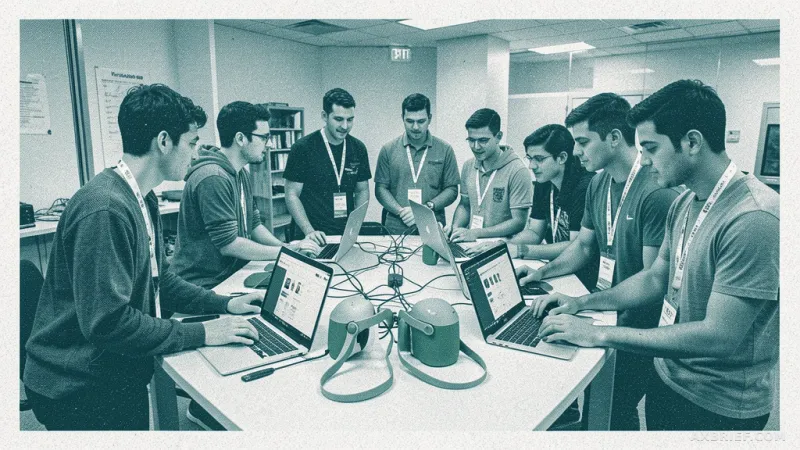
From May 19 to 20, Google hosted a specialized field trip for ten alumni of the Google for Startups Accelerator, known locally as Changgoo. This marked the first time the company officially invited graduates back to the Mountain View campus for I/O, signaling a shift in how Google views its relationship with these startups—moving from a temporary mentorship to a long-term technical partnership. The invited companies spanned the 3rd through 7th cohorts, representing a cross-section of the most promising AI and app-based ventures in the Korean ecosystem.
Among the early graduates, the focus remained on scaling personalized user experiences. Teuida, a 3rd cohort alumnus, continues to push the boundaries of conversational simulation, allowing users to practice foreign languages in virtual environments that mimic real-world interactions. Planfit, from the 4th cohort, leverages data-driven guidance to build global AI fitness habits, while DailyBean, a 5th cohort graduate, focuses on the intersection of mental health and digital journaling through its emotion-tracking diary.
As the cohorts progressed, the application of AI became more vertical and specialized. The 6th cohort representatives brought a diverse array of utility-driven AI. PitterPetter utilizes DNA analysis to provide preventative healthcare for pets, while Pianokiwis employs sheet-music recognition AI to lower the barrier for piano beginners. Orzo has integrated AI tutoring with tablet-optimized UX to revolutionize exam preparation for students. Meanwhile, Wrtn has evolved into a powerhouse of generative AI, expanding its service range to enhance both daily creativity and professional productivity.
The most recent graduates from the 7th cohort demonstrated a pivot toward generative implementation and spatial computing. Countdown AI is exploring new digital experiences through its generative apps, MeeAww and Plumic. The startup wyft is attempting to erase the physical boundaries of interfaces using AI-based Augmented Reality (AR) solutions. Finally, Carty is building a commerce AI platform that connects brands and consumers through the analysis of actual purchase data. Together, these ten companies represent a strategic bridge between the Korean startup scene and the global AI infrastructure.
The Shift from 2D Interfaces to Spatial Intelligence
While the keynotes provided the vision, the real value for these developers lay in the friction of implementation. The central technical theme of the trip was the integration of the Android XR (Extended Reality) ecosystem. In a dedicated session led by Justin Payne, the head of Android XR product management, the conversation moved past high-level roadmaps and into the gritty reality of hardware-software synergy. For startups accustomed to the 2D constraints of a smartphone, the transition to 3D space introduces significant technical hurdles, specifically regarding rendering loads and input latency.
Payne provided specific guidelines on how the Android XR framework optimizes these bottlenecks, offering a blueprint for how a mobile app can be expanded into a spatial environment without sacrificing performance. This was not a theoretical exercise; for the participating startups, it provided the necessary technical evidence to decide whether to pivot their current UX toward spatial computing. The realization was clear: the next generation of AI will not be trapped in a chat box, but will exist as an ambient layer over the physical world.
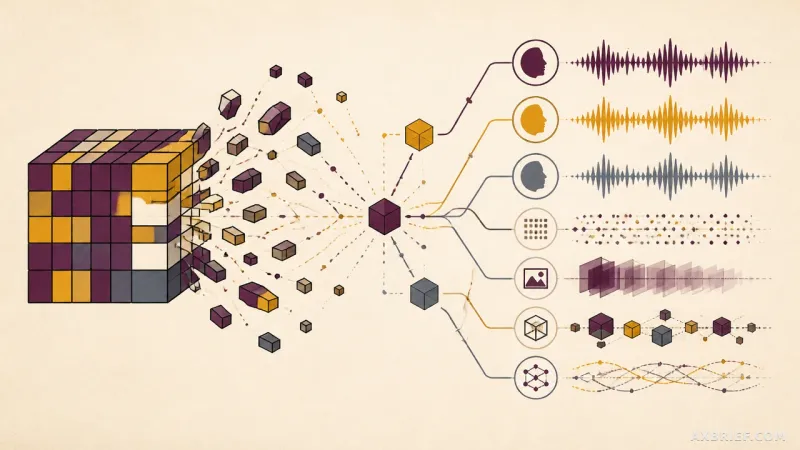
This vision was further validated in the demo zones through Google Omni, the multimodal AI model capable of integrating diverse data streams. Developers witnessed the process of generating 3D objects in real-time using only text or 2D image inputs, then placing those objects within an XR environment. This was complemented by Project Genie, which demonstrated the ability to generate high-quality advertising assets from text and video data. The precision of the prompt engineering and the level of quality control exhibited in Project Genie suggested that generative AI is moving beyond novelty and into the realm of automated, brand-consistent marketing pipelines.
To bridge the gap between demo and deployment, Google organized office hours with experts from Google DeepMind. These sessions functioned as a technical clinic where developers discussed the optimization of model inference speeds using Google Cloud infrastructure. A recurring point of tension was the memory footprint of on-device AI within XR headsets. By discussing parameter tuning and data pipeline efficiency directly with the architects of these models, the startups moved from reading API documentation to understanding the underlying design intent. This direct transfer of knowledge allows these companies to implement global standard AI architectures into their codebases far faster than they could through independent trial and error.
Beyond the Accelerator: The Moonshot Mandate
This shift in support—from a domestic accelerator program to a global field trip—reflects a fundamental change in the growth bottlenecks facing Korean startups. In the early stages, the primary goal was survival: optimizing retention rates and finding a product-market fit within the local ecosystem. However, for graduates who have already achieved a level of stability, the new bottleneck is the speed of technical adoption and the ability to scale globally. The transition from local optimization to global technical leapfrogging is the core of this new strategy.
This evolution is best exemplified by the adoption of the Moonshot philosophy. Jang Ji-woong, CEO of Teuida, recalled his time in the Changgoo program in 2021, noting that the exposure to Google's culture of 10x growth—rather than 10% incremental improvement—fundamentally altered his strategic vision. When a company stops aiming for marginal gains and starts aiming for a ten-fold increase in scale, the entire technical architecture must change. The scalability of the backend, the flexibility of the UX, and the priority of the feature roadmap are all rewritten to support a massive influx of global users.
This global perspective was further reinforced during networking events, including a happy hour for Google Play developers. Purnima Kochikar, VP of Google Play Partnerships, described the participating developers as the best of the best in the future of the Android ecosystem, noting that their innovations often provide inspiration back to Google. This bidirectional flow of influence suggests that these startups are no longer just consumers of Big Tech tools, but active contributors to the ecosystem's evolution.
For the developers in attendance, the most critical takeaway was the realization that the interface is expanding. The move toward intelligent eyewear and spatial computing means that the traditional boundaries of an app are disappearing. By integrating Gemini, Android XR, and Google Cloud, these ten companies are now positioned to move their services from the screen into the user's environment. The goal is no longer just to keep a user inside an app for more minutes per day, but to integrate the service into the fabric of the user's physical reality.
This transition from a structured program to a continuous global network ensures that the end of the accelerator is not a graduation, but an entry point. By reducing the information asymmetry between Mountain View and Seoul, Google is effectively exporting its engineering culture and Moonshot mindset to a new generation of AI practitioners. The result is a group of startups that are no longer thinking in terms of the Korean market, but are designing for a global standard of spatial intelligence.