
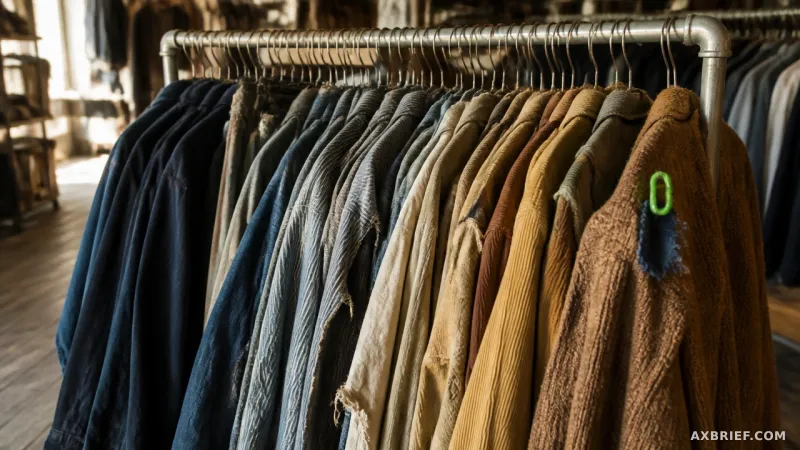
Walking into a crowded thrift store often feels like a high-stakes gamble. You spot a uniquely tailored blazer or a rare 90s jersey, but the tag is missing and the seller's description is vague. The hesitation is palpable: is this a hidden gem worth hundreds of dollars, or a fast-fashion relic overpriced by a hopeful vendor? This gap in information has long been the primary friction point of the second-hand economy. However, as search interest for vintage and thrifting hit an all-time high in 2026, Google is stepping in to replace guesswork with data. The company is deploying a coordinated ecosystem of AI tools designed to turn the chaotic process of treasure hunting into a precise, data-driven exercise in valuation.
The Architecture of the AI Shopping Pipeline
The Google AI suite operates as a multi-stage funnel that guides a user from the planning phase to the final purchase. It begins with AI Mode in Search, which handles complex, multi-dimensional queries that traditional keyword searches cannot process. Instead of searching for a store and then searching for a restaurant, a user can request a curated itinerary that identifies vintage clothing stores from a specific era in a specific neighborhood while simultaneously filtering for nearby dining options that meet strict dietary restrictions, such as gluten-free brunch spots. This transforms the search engine from a directory into a logistics coordinator, optimizing the physical path of the shopper before they even leave their home.
Once the user is on the ground, Google Lens serves as the primary tool for objective verification. By analyzing a photograph of a garment, Lens extracts visual feature points—including fabric weave, stitching patterns, logos, and color palettes—and cross-references them against a massive database of designers and production eras. The system does not just identify the item; it quantifies its rarity. By analyzing the volume of current online listings and their respective price points, Lens provides a real-time market valuation. If only three similar items exist globally, the AI flags it as a high-rarity find; if thousands are available, it is categorized as common. This provides the buyer with an objective baseline for negotiation, effectively stripping away the seller's subjective pricing power.
For those browsing digitally, Circle to Search streamlines the discovery process. By long-pressing the home button or navigation bar and circling an object on the screen, users can instantly identify an item and then pivot their search. The tool allows for iterative exploration, such as asking for other items with a similar 90s aesthetic after identifying a specific piece. This moves the experience beyond simple image matching and into the realm of metadata analysis, where the AI understands the stylistic essence of a garment rather than just its visual pixels.
The final hurdle in the vintage pipeline is the fit. Because second-hand clothing lacks standardized sizing, the risk of a poor fit often kills the sale. Google addresses this through Virtual Try-On. After identifying an item via Lens, users can click a try-it-on button and upload a full-body photo. The AI then maps the texture, drape, and dimensions of the garment onto the user's specific body data. This digital dressing room replaces the physical trial-and-error of the fitting room, reducing the psychological cost of the purchase and lowering the likelihood of returns.
From Treasure Hunting to Asset Management
The integration of these tools signals a fundamental shift in how we perceive second-hand goods. For decades, the vintage market operated on information asymmetry, where the person with the most knowledge held all the power. By democratizing access to designer identification and real-time pricing, Google is effectively collapsing that asymmetry. The time previously spent scouring forums or archives to verify a garment's authenticity is reduced from hours to seconds. This efficiency does more than just speed up a transaction; it changes the nature of the item itself. When a user can instantly determine the market value and rarity of a piece of clothing, that garment ceases to be a mere consumable and becomes a liquid asset.
This transition is particularly evident in the way users now approach the disposal of their own wardrobes. By using Lens to photograph an old garment and asking which resale shops are currently buying that specific style, the process of decluttering becomes a streamlined financial transaction. The AI identifies the most profitable exit strategy for the item, accelerating the cycle of purchase and resale. This creates a high-velocity circular economy where the friction of valuation is almost entirely removed.
This technological shift has profound implications for hyper-local marketplaces like Karrot or Bungaejangter. The current bottleneck in these platforms is the listing process, where sellers must manually input brands, categories, and descriptions—often inaccurately. By implementing an automated classification model similar to Google Lens, these platforms can move toward a zero-input registration system. A seller simply uploads a photo, and the AI automatically generates the metadata, assigns the category, and suggests an optimal price range based on real-time market trends. This not only reduces the time to list but also increases the searchability and precision of the entire marketplace.
To truly evolve, these platforms must move beyond simple visual similarity and adopt Attribute Extraction Models. Such models do not just look for a similar-looking shirt; they analyze the specific silhouette, material weight, and color saturation characteristic of a particular decade. By building a pipeline that contrasts extracted features against a historical style database, platforms can provide a technical certification of a product's era and authenticity. This transforms a listing from a claim made by a stranger into a verified data point.
When combined with Virtual Try-On APIs, the second-hand market can finally solve its most persistent problem: the fit mismatch. By allowing a buyer to virtually wear a unique, one-of-a-kind vintage piece before committing, the psychological barrier to purchase vanishes. The result is a seamless flow where a user discovers a piece via AI, verifies its value through market data, confirms the fit via virtual mapping, and completes the transaction with confidence.
Google is not merely adding features to a search engine; it is rewriting the grammar of commerce. By converting the act of searching into an act of verification, the AI suite removes the anxiety of the unknown. The transition from the uncertainty of a thrift store find to the certainty of a data-backed purchase marks the end of the guessing game in vintage shopping.



