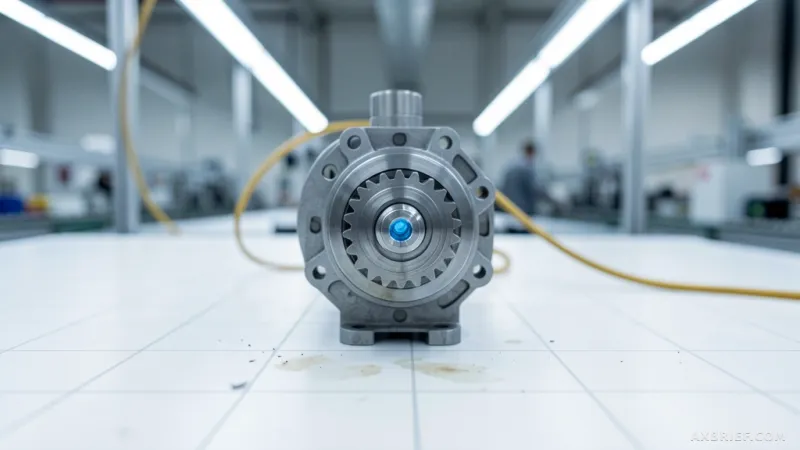
Engineers tasked with designing surgical robotics often face a fundamental mechanical paradox: how to fit increasingly complex drive components into ever-shrinking device footprints. As the demand for minimally invasive procedures grows, the internal real estate available for actuators, sensors, and controllers has become a primary bottleneck in medical device development. This week, Harmonic Drive addressed this spatial constraint by launching the LPA 20, an integrated servo actuator specifically engineered for the high-precision requirements of the surgical robotics market.
Precision Engineering in a Compact Form Factor
The LPA 20 functions as a critical drive component, translating electronic control signals into the precise, fluid movements required for robotic joints and articulated arms. Unlike traditional modular setups that require separate housing for motors and gearboxes, the LPA 20 utilizes an integrated architecture to minimize its physical footprint. By consolidating these elements, the unit allows manufacturers to maintain high-performance motion control without sacrificing the internal space necessary for other essential surgical instrumentation. Detailed technical specifications and performance metrics for the unit are available on the official Harmonic Drive website.
Solving the OEM Integration Dilemma
For original equipment manufacturers (OEMs), the development cycle for surgical robots has historically been defined by a series of compromises between component size and mechanical output. The integration of the motor and reducer within the LPA 20 serves as a technical solution to this trade-off, effectively lowering the barrier to entry for complex robotic design. By utilizing a single, unified component, engineers can significantly reduce the mechanical complexity of the robot’s architecture, which in turn simplifies the assembly process and improves overall system reliability. This shift toward high-density integration allows design teams to evaluate their systems against a standardized performance benchmark, ensuring that medical device compliance and motion precision are maintained from the initial prototyping phase through to final production.
By establishing a new standard for integrated motion control, the LPA 20 provides a pathway for the next generation of surgical robots to achieve greater miniaturization without compromising on surgical accuracy.