A developer triggers an AI coding agent to implement a new feature using a popular library. The agent spends ten minutes looping through outdated documentation, generating five versions of the same broken function, and consuming thousands of unnecessary tokens before finally stumbling upon the correct API call. To the developer, this is a frustrating waste of time. To a traditional benchmark, however, this is a success because the final answer is correct. This gap between theoretical accuracy and operational efficiency is where the current AI agent ecosystem is failing, and it is exactly what Hugging Face is attempting to solve.
The Architecture of Agentic Effort
Hugging Face has introduced a new benchmark harness designed to move the goalposts of AI evaluation from correctness to effort. While previous benchmarks focused on the binary outcome of whether an agent reached the right answer, this new framework quantifies the path taken to get there. The core philosophy is that two agents who both solve a problem are not equal if one does so in a single turn and the other requires a dozen trial-and-error loops. By measuring the actual work performed, Hugging Face provides a lens into the real-world cost of deploying agents in production.
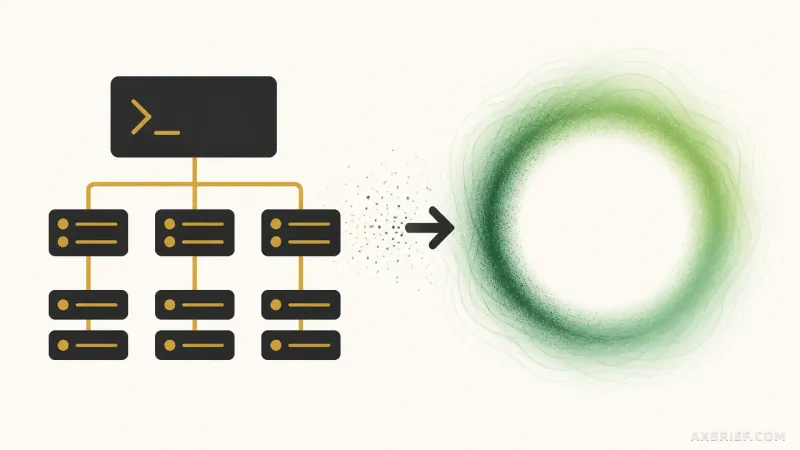
To demonstrate this, Hugging Face used the transformers library as a primary case study. The benchmark evaluates agents across three distinct tiers of information availability, which determines how much external support the model receives. The first tier is `bare`, where the agent relies solely on the internal knowledge acquired during its pre-training phase. The second tier is `clone`, which provides the agent with the entire source tree of the library, forcing the model to navigate and analyze raw code to find solutions. The third tier is `skill`, which provides curated documentation designed to lead the agent to the answer more efficiently.
Performance is no longer a single percentage score. Instead, the harness tracks four critical dimensions: turns, tokens, seconds, and API call paths. Turns represent the number of interactions between the agent and its environment, serving as a proxy for latency and user frustration. Tokens directly correlate to the financial cost of the API call. Seconds measure the wall-clock time of the operation. Finally, the API call paths are recorded and can be visualized via the agent-traces viewer on the Hugging Face Hub, allowing developers to see exactly where an agent diverged from the optimal path.
The Efficiency Paradox and Discovery Cost
This shift in measurement reveals a fundamental divide in how we should evaluate different classes of models. For frontier large-scale models, accuracy is often a ceiling rather than a variable. Because these models eventually reach the correct answer in most tasks, a match rate of 100 percent becomes a useless metric for differentiation. For these heavyweights, the only meaningful metric is efficiency. The goal is to minimize the turns and tokens required to reach that inevitable correct answer, reducing the operational overhead of the agent.
Small local models operate under a different set of constraints. For them, the match percentage remains the primary KPI because their performance varies wildly based on parameter size. The objective for small models is to identify the exact threshold where accuracy jumps in a step-function manner, determining if they are capable of handling a specific automation task at all. This creates a dual-track evaluation system: small models are judged on their ability to be correct, while large models are judged on their ability to be lean.
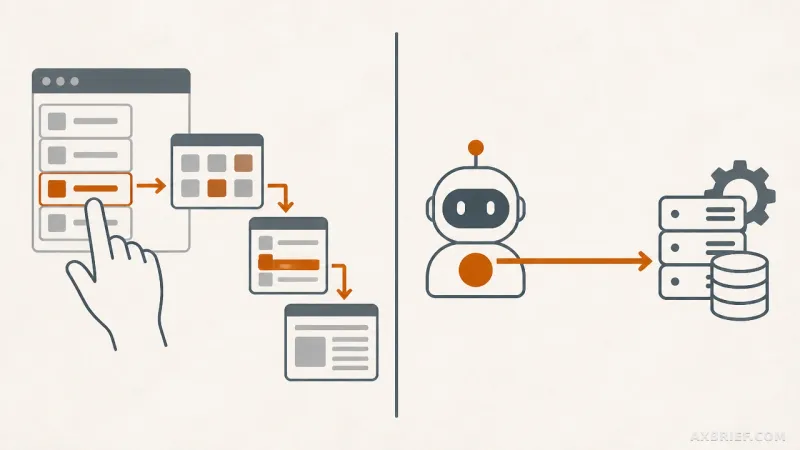
When Hugging Face applied this logic to the transformers library, they introduced a dedicated CLI and specific skill-based example codes to see if they could optimize the agent's path. The results highlighted a fascinating trade-off known as discovery cost. After implementing these optimizations, the median time to complete tasks decreased across three major large-scale models. The agents stopped guessing and started using the optimized interfaces.
However, this speed came at a price in tokens. In the `clone` tier, input tokens increased from approximately 4k to 6.4k. Trace analysis revealed that roughly one-third of the agent's activity was spent reading the `/cli/` directory and examining example files in `cli/agentic/*.py` to learn how to use the new interface. The agent essentially paid a token tax upfront to avoid the time tax of debugging Python code in a loop. In a production environment, this discovery cost is amortized over multiple tasks, making the initial token expenditure a worthwhile investment for a permanent reduction in execution time.
This realization transforms the role of the SDK designer. The traditional goal was to make a library intuitive for human developers. The new goal is to make it discoverable for AI agents. By including agent-specific entry points, such as the `cli/agentic/*.py` pattern, developers can provide a high-signal map that prevents agents from wandering through thousands of lines of irrelevant source code. When an agent can find a curated example in seconds, the total cost of the operation drops, even if the initial prompt is slightly larger.
Integrating these effort-based metrics into CI/CD pipelines is the next logical step for LLMOps. If a pull request changes an API structure, a traditional test might still pass if the agent can eventually figure out the new way to call the function. But an effort-based test would flag the change if the number of turns to reach the answer increases from two to ten. This allows teams to treat agentic efficiency as a first-class citizen in the software development lifecycle, ensuring that library updates do not inadvertently increase the cost of AI automation.
Ultimately, the success of an AI agent is not defined by the fact that it found the answer, but by how little it struggled to do so. The transition from accuracy-centric to effort-centric benchmarking marks the beginning of an era where the structure of our code is optimized not just for humans to read, but for agents to execute.